This book is devoted to an investigation of some important problems of mod- ern filtering theory concerned with systems of 'any nature being able to per- ceive, store and process an information and apply it for control and regulation'.
Recent results from high-energy scattering and theoretical developments of string theory require a change in our understanding of the basic structure of space-time.
Belief change is an emerging field of artificial intelligence and information science dedicated to the dynamics of information and the present book provides a state-of-the-art picture of its formal foundations.
The erratic motion of pollen grains and other tiny particles suspended in liquid is known as Brownian motion, after its discoverer, Robert Brown, a botanist who worked in 1828, in London.
The Feynman integral is considered as an intuitive representation of quantum mechanics showing the complex quantum phenomena in a language comprehensible at a classical level.
In this volume the investigations of filtering problems, a start on which has been made in [55], are being continued and are devoted to theoretical problems of processing stochastic fields.
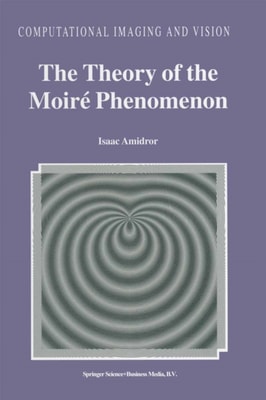
Who has not noticed, on one o~casion or another, those intriguing geometric patterns which appear at the intersection Of repetitive structures such as two far picket fences on a hill, the railings on both sides of a bridge, superposed layers of fabric, or folds of a nylon curtain?
In this volume, I have collected several papers which were presented at the international conference called "e;Venice-2/Symposium on Applied and In- dustrial Mathematics"e;.
This book is the outcome of a NATO Advanced Research Workshop on "e;The Eastern Mediterranean as a laboratory basin for the assessment of contrasting ecosystems"e; that was held in Kiev, Ukraine, March 23-27, 1998.
The NATO Advanced Study Institute on Diffuse Waves in Complex Media was held at the "e;Centre de Physique des Houches"e; in France from March 17 to 27, 1998.
Recent years have witnessed important developments in those areas of the mathematical sciences where the basic model under study is a dynamical system such as a differential equation or control process.
The NATO Advanced Study Institute on "e;The Arithmetic and Geometry of Algebraic Cycles"e; was held at the Banff Centre for Conferences in Banff (Al- berta, Canada) from June 7 until June 19, 1998.
Geometric dynamics is a tool for developing a mathematical representation of real world phenomena, based on the notion of a field line described in two ways: -as the solution of any Cauchy problem associated to a first-order autonomous differential system; -as the solution of a certain Cauchy problem associated to a second-order conservative prolongation of the initial system.
During the last twenty-five years quite remarkable relations between nonas- sociative algebra and differential geometry have been discovered in our work.
One of the characteristics of modern algebra is the development of new tools and concepts for exploring classes of algebraic systems, whereas the research on individual algebraic systems (e.
In this volume is presented the proceedings of a NATO Advanced Study Institute (ASI) on the theme of Electromagnetic Modelling and Measurements for Analysis and Synthesis Problems.
About three years ago, an idea was discussed among some colleagues in the Division of Statistics at the University of California, Davis, as to the possibility of holding an international conference, focusing exclusively on nonparametric curve estimation.
The main idea of the present study is to demonstrate that the qualitative theory of diffe- rential equations, when applied to problems in fluid-and gasdynamics, will contribute to the understanding of qualitative aspects of fluid flows, in particular those concerned with geometrical properties of flow fields such as shape and stability of its streamline patterns.