The 5th edition of Ross's Simulation continues to introduce aspiring and practicing actuaries, engineers, computer scientists and others to the practical aspects of constructing computerized simulation studies to analyze and interpret real phenomena.
For the engineering and scientific professional, A Physicist's Guide to Mathematica, Second Edition provides an updated reference guide based on the 2007 new 6.
Conceived for both computer scientists and biologists alike, this collection of 22 essays highlights the important new role that computers play in developmental biology research.
Fundamentals of Advanced Mathematics, Volume Three, begins with the study of differential and analytic infinite-dimensional manifolds, then progresses into fibered bundles, in particular, tangent and cotangent bundles.
The Handbook of Reliability, Maintenance, and System Safety through Mathematical Modeling discusses the many factors affect reliability and performance, including engineering design, materials, manufacturing, operations, maintenance, and many more.
Encompassing over fifty years of research, Professor Gotoh addresses the correlation function of spatial structures and the statistical geometry of random particle assemblies.
Computational Fluid Dynamics (CFD) is an important design tool in engineering and also a substantial research tool in various physical sciences as well as in biology.
Introduction to Nature-Inspired Optimization brings together many of the innovative mathematical methods for non-linear optimization that have their origins in the way various species behave in order to optimize their chances of survival.
From Dimension-Free Matrix Theory to Cross-Dimensional Dynamic Systems illuminates the underlying mathematics of semi-tensor product (STP), a generalized matrix product that extends the conventional matrix product to two matrices of arbitrary dimensions.
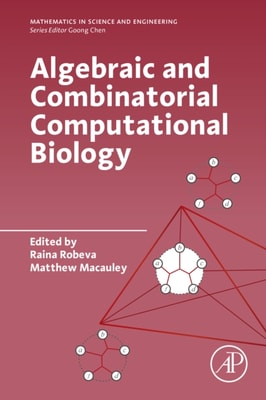
Algebraic and Combinatorial Computational Biology introduces students and researchers to a panorama of powerful and current methods for mathematical problem-solving in modern computational biology.
Incorporate the "e;tube sound"e; into your home audio systemLearn how to work with vacuum tubes and construct high-quality audio amplifiers on your workbench with help from this hands-on, do-it-yourself resource.
The third edition of the popular Structural and Stress Analysis provides the reader with a comprehensive introduction to all types of structural and stress analysis.
Transport in Biological Media is a solid resource of mathematical models for researchers across a broad range of scientific and engineering problems such as the effects of drug delivery, chemotherapy, or insulin intake to interpret transport experiments in areas of cutting edge biological research.
An Invitation to Applied Mathematics: Differential Equations, Modeling, and Computation introduces the reader to the methodology of modern applied mathematics in modeling, analysis, and scientific computing with emphasis on the use of ordinary and partial differential equations.
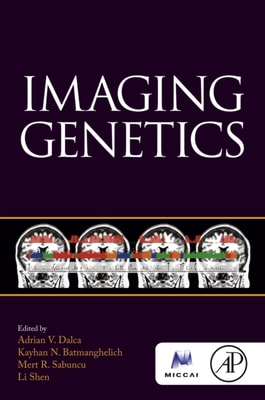
Imaging Genetics presents the latest research in imaging genetics methodology for discovering new associations between imaging and genetic variables, providing an overview of the state-of the-art in the field.
Uncertainties in GPS Positioning: A Mathematical Discourse describes the calculations performed by a GPS receiver and the problems associated with ensuring that the derived location is a close match to the actual location.
Introduction to Algorithms for Data Mining and Machine Learning introduces the essential ideas behind all key algorithms and techniques for data mining and machine learning, along with optimization techniques.
Biostatistics for Practitioners: An Interpretative Guide for Medicine and Biology deals with several aspects of statistics that are indispensable for researchers and students across the biomedical sciences.
Mathematics Applied in Engineering presents a wide array of applied mathematical techniques for an equally wide range of engineering applications, covering areas such as acoustics, system engineering, optimization, mechanical engineering, and reliability engineering.
Cyber-Physical Systems: AI and COVID-19 highlights original research which addresses current data challenges in terms of the development of mathematical models, cyber-physical systems-based tools and techniques, and the design and development of algorithmic solutions, etc.
Data Science: Theory and Applications, Volume 44 in the Handbook of Statistics series, highlights new advances in the field, with this new volume presenting interesting chapters on a variety of interesting topics, including Modeling extreme climatic events using the generalized extreme value distribution, Bayesian Methods in Data Science, Mathematical Modeling in Health Economic Evaluations, Data Science in Cancer Genomics, Blockchain Technology: Theory and Practice, Statistical outline of animal home ranges, an application of set estimation, Application of Data Handling Techniques to Predict Pavement Performance, Analysis of individual treatment effects for enhanced inferences in medicine, and more.
Advancements in Bayesian Methods and Implementation, Volume 47 in the Handbook of Statistics series, highlights new advances in the field, with this new volume presenting interesting chapters on a variety of timely topics, including Fisher Information, Cramer-Rao and Bayesian Paradigm, Compound beta binomial distribution functions, MCMC for GLMMS, Signal Processing and Bayesian, Mathematical theory of Bayesian statistics where all models are wrong, Machine Learning and Bayesian, Non-parametric Bayes, Bayesian testing, and Data Analysis with humans, Variational inference or Functional horseshoe, Generalized Bayes.
Simulation, Sixth Edition continues to introduce aspiring and practicing actuaries, engineers, computer scientists and others to the practical aspects of constructing computerized simulation studies to analyze and interpret real phenomena.
Digital Twins for Healthcare: Design, Challenges and Solutions establishes the state-of-art in the specification, design, creation, deployment and exploitation of digital twins' technologies for healthcare and wellbeing.
Principles and Methods for Data Science, Volume 43 in the Handbook of Statistics series, highlights new advances in the field, with this updated volume presenting interesting and timely topics, including Competing risks, aims and methods, Data analysis and mining of microbial community dynamics, Support Vector Machines, a robust prediction method with applications in bioinformatics, Bayesian Model Selection for Data with High Dimension, High dimensional statistical inference: theoretical development to data analytics, Big data challenges in genomics, Analysis of microarray gene expression data using information theory and stochastic algorithm, Hybrid Models, Markov Chain Monte Carlo Methods: Theory and Practice, and more.
Cognitive Computing: Theory and Applications, written by internationally renowned experts, focuses on cognitive computing and its theory and applications, including the use of cognitive computing to manage renewable energy, the environment, and other scarce resources, machine learning models and algorithms, biometrics, Kernel Based Models for transductive learning, neural networks, graph analytics in cyber security, neural networks, data driven speech recognition, and analytical platforms to study the brain-computer interface.
Conceptual Econometrics Using R, Volume 41 provides state-of-the-art information on important topics in econometrics, including quantitative game theory, multivariate GARCH, stochastic frontiers, fractional responses, specification testing and model selection, exogeneity testing, causal analysis and forecasting, GMM models, asset bubbles and crises, corporate investments, classification, forecasting, nonstandard problems, cointegration, productivity and financial market jumps and co-jumps, among others.
This second edition of Working with Dynamic Crop Models is meant for self-learning by researchers or for use in graduate level courses devoted to methods for working with dynamic models in crop, agricultural, and related sciences.
This book provides the first clear, comprehensive, and accessible account of complex adaptive social systems, by two of the field's leading authorities.
The goal of the Encyclopedia of Operations Research and Management Science is to provide decision makers and problem solvers in business, industry, government, and academia a comprehensive overview of the wide range of ideas, methodologies, and synergistic forces that combine to form the preeminent decision-aiding fields of operations research and management science (OR/MS).
This work, now in a thoroughly revised second edition, presents the economic foundations of financial markets theory from a mathematically rigorous standpoint and offers a self-contained critical discussion based on empirical results.
This book introduces a new approach in the field of macroeconomic inventory studies: the use of multivariate statistics to evaluate long-term characteristics of inventory investments in developed countries.
Probability Theory and Mathematical Statistics for Engineers focuses on the concepts of probability theory and mathematical statistics for finite-dimensional random variables.