Together with its compagnion volume this book presents a practical introduction to computing spline functions, the fundamental tools for fitting curves and surfaces in computer-aided design (CAD) and computer graphics.
These volumes present a practical introduction to computing spline functions, the fundamental tools for fitting curves and surfaces in computer-aided deisgn (CAD) and computer graphics.
Iterative Splitting Methods for Differential Equations explains how to solve evolution equations via novel iterative-based splitting methods that efficiently use computational and memory resources.
Exploring new variations of classical methods as well as recent approaches appearing in the field, Computational Fluid Dynamics demonstrates the extensive use of numerical techniques and mathematical models in fluid mechanics.
Exploring recent developments in continuum mechanics, Configurational Forces: Thermomechanics, Physics, Mathematics, and Numerics presents the general framework for configurational forces.
With its uncommon presentation of instructional material regarding mathematical modeling, measurements, and solution of inverse problems, Thermal Measurements and Inverse Techniques is a one-stop reference for those dealing with various aspects of heat transfer.
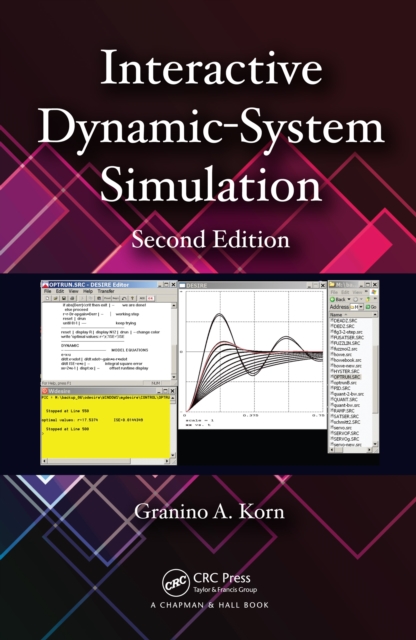
Showing you how to use personal computers for modeling and simulation, Interactive Dynamic-System Simulation, Second Edition provides a practical tutorial on interactive dynamic-system modeling and simulation.
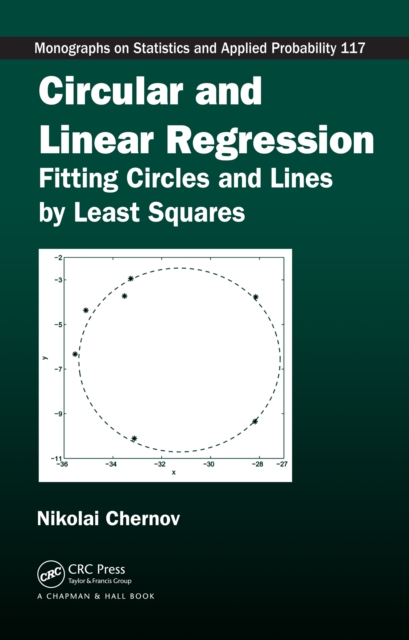
Find the right algorithm for your image processing applicationExploring the recent achievements that have occurred since the mid-1990s, Circular and Linear Regression: Fitting Circles and Lines by Least Squares explains how to use modern algorithms to fit geometric contours (circles and circular arcs) to observed data in image processing and comput
Readily available commercial software enables engineers and students to perform routine calculations and design without necessarily having a sufficient conceptual understanding of the anticipated solution.
Combinatorial Scientific Computing explores the latest research on creating algorithms and software tools to solve key combinatorial problems on large-scale high-performance computing architectures.
Prevalent in animation movies and interactive games, subdivision methods allow users to design and implement simple but efficient schemes for rendering curves and surfaces.
Emphasizing the connection between mathematical objects and their practical C++ implementation, this book provides a comprehensive introduction to both the theory behind the objects and the C and C++ programming.
Decomposition Methods for Differential Equations: Theory and Applications describes the analysis of numerical methods for evolution equations based on temporal and spatial decomposition methods.
Assuming no prior knowledge of plasma physics or numerical methods, Computational Methods in Plasma Physics covers the computational mathematics and techniques needed to simulate magnetically confined plasmas in modern magnetic fusion experiments and future magnetic fusion reactors.
Unique in its approach, Models of Network Reliability: Analysis, Combinatorics, and Monte Carlo provides a brief introduction to Monte Carlo methods along with a concise exposition of reliability theory ideas.
This book provides fifteen computational projects aimed at numerically solving problems from a broad range of applications including Fluid Mechanics, Chemistry, Elasticity, Thermal Science, Computer Aided Design, Signal and Image Processing.
Helps Students Understand Mathematical Programming Principles and Solve Real-World ApplicationsSupplies enough mathematical rigor yet accessible enough for undergraduatesIntegrating a hands-on learning approach, a strong linear algebra focus, Maple software, and real-world applications, Linear and Nonlinear Programming with Maple : An Interactive,
Understand How to Use and Develop Meshfree TechniquesAn Update of a Groundbreaking WorkReflecting the significant advances made in the field since the publication of its predecessor, Meshfree Methods: Moving Beyond the Finite Element Method, Second Edition systematically covers the most widely used meshfree methods.
Classroom-tested, Advanced Mathematical Methods in Science and Engineering, Second Edition presents methods of applied mathematics that are particularly suited to address physical problems in science and engineering.
Offers Both Standard and Novel Approaches for the Modeling of SystemsExamines the Interesting Behavior of Particular Classes of ModelsChaotic Modelling and Simulation: Analysis of Chaotic Models, Attractors and Forms presents the main models developed by pioneers of chaos theory, along with new extensions and variations of these models.
Bayesian Missing Data Problems: EM, Data Augmentation and Noniterative Computation presents solutions to missing data problems through explicit or noniterative sampling calculation of Bayesian posteriors.
Modern Tools to Perform Numerical DifferentiationThe original direct differential quadrature (DQ) method has been known to fail for problems with strong nonlinearity and material discontinuity as well as for problems involving singularity, irregularity, and multiple scales.
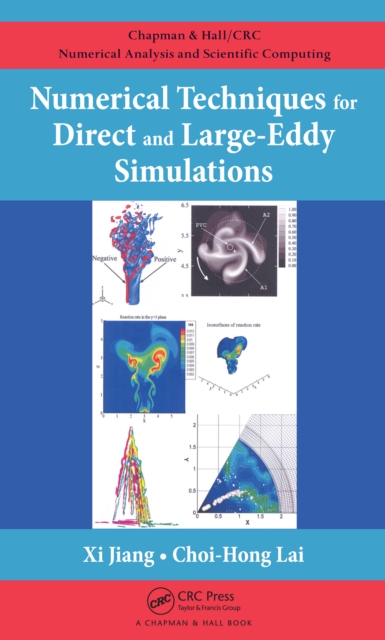
Compared to the traditional modeling of computational fluid dynamics, direct numerical simulation (DNS) and large-eddy simulation (LES) provide a very detailed solution of the flow field by offering enhanced capability in predicting the unsteady features of the flow field.
A Thorough Overview of the Next Generation in ComputingPoised to follow in the footsteps of the Internet, grid computing is on the verge of becoming more robust and accessible to the public in the near future.
Although the Trefftz finite element method (FEM) has become a powerful computational tool in the analysis of plane elasticity, thin and thick plate bending, Poisson's equation, heat conduction, and piezoelectric materials, there are few books that offer a comprehensive computer programming treatment of the subject.
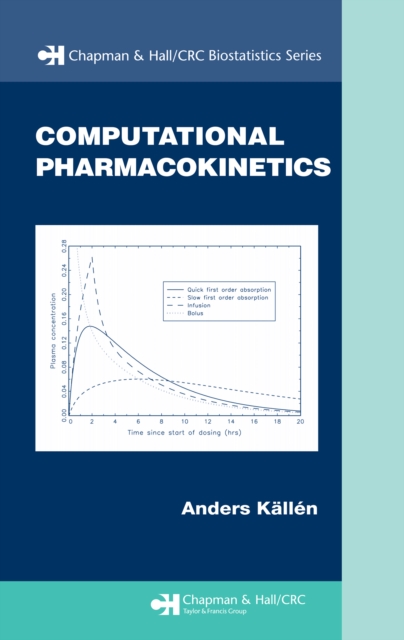
Being that pharmacokinetics (PK) is the study of how the body handles various substances, it is not surprising that PK plays an important role in the early development of new drugs.
From the fan motor in your PC to precision control of aircraft, electrical machines of all sizes, varieties, and levels of complexity permeate our world.
Surface Impedance Boundary Conditions is perhaps the first effort to formalize the concept of SIBC or to extend it to higher orders by providing a comprehensive, consistent, and thorough approach to the subject.
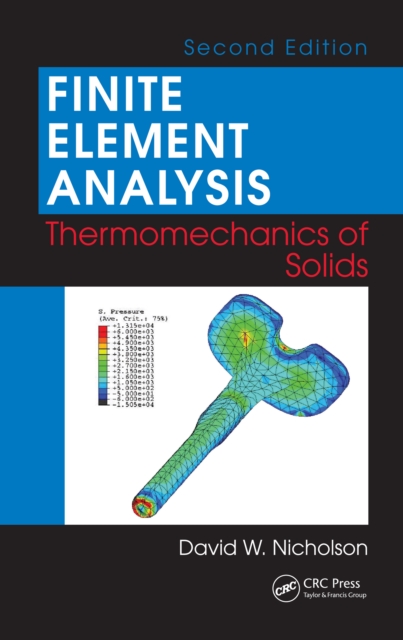
Explore a Unified Treatment of the Finite Element MethodThe finite element method has matured to the point that it can accurately and reliably be used, by a careful analyst, for an amazingly wide range of applications.
This book provides a concise introduction to numerical concepts in engineering analysis, using FORTRAN, QuickBASIC, MATLAB, and Mathematica to illustrate the examples.
A comprehensive and accessible primer, this tutorial immerses engineers and engineering students in the essential technical skills that will allow them to put Matlab(R) to immediate use.
Understanding and controlling vibration is critical for reducing noise, improving work environments and product quality, and increasing the useful life of industrial machinery and other mechanical systems.
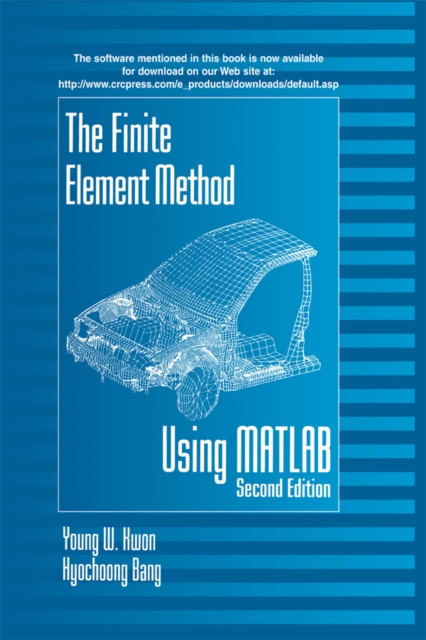
Expanded to include a broader range of problems than the bestselling first edition, Finite Element Method Using MATLAB: Second Edition presents finite element approximation concepts, formulation, and programming in a format that effectively streamlines the learning process.