This textbook provides a detailed treatment of abstract integration theory, construction of the Lebesgue measure via the Riesz-Markov Theorem and also via the Caratheodory Theorem.
In this book we suggest a unified method of constructing near-minimizers for certain important functionals arising in approximation, harmonic analysis and ill-posed problems and most widely used in interpolation theory.
This book contains survey papers based on the lectures presented at the 3rd International Winter School "e;Modern Problems of Mathematics and Mechanics"e; held in January 2010 at the Belarusian State University, Minsk.
Although much of classical ergodic theory is concerned with single transformations and one-parameter flows, the subject inherits from statistical mechanics not only its name, but also an obligation to analyze spatially extended systems with multidimensional symmetry groups.
This monograph is devoted to developing a theory of combined measure and shift invariance of time scales with the related applications to shift functions and dynamic equations.
This book convenes a collection of carefully selected problems in mathematical analysis, crafted to achieve maximum synergy between analytic geometry and algebra and favoring mathematical creativity in contrast to mere repetitive techniques.
This textbook covers key topics of Elementary Calculus through selected exercises, in a sequence that facilitates development of problem-solving abilities and techniques.
This textbook covers the majority of traditional topics of infinite sequences and series, starting from the very beginning - the definition and elementary properties of sequences of numbers, and ending with advanced results of uniform convergence and power series.
This contributed volume showcases research and survey papers devoted to a broad range of topics on functional equations, ordinary differential equations, partial differential equations, stochastic differential equations, optimization theory, network games, generalized Nash equilibria, critical point theory, calculus of variations, nonlinear functional analysis, convex analysis, variational inequalities, topology, global differential geometry, curvature flows, perturbation theory, numerical analysis, mathematical finance and a variety of applications in interdisciplinary topics.
This textbook explores the foundations of real analysis using the framework of general ordered fields, demonstrating the multifaceted nature of the area.
Motivated by recent increased activity of research on time scales, the book provides a systematic approach to the study of the qualitative theory of boundedness, periodicity and stability of Volterra integro-dynamic equations on time scales.
Transmutation operators in differential equations and spectral theory can be used to reveal the relations between different problems, and often make it possible to transform difficult problems into easier ones.
This book is aimed toward graduate students and researchers in mathematics, physics and engineering interested in the latest developments in analytic inequalities, Hilbert-Type and Hardy-Type integral inequalities, and their applications.
Theories, methods and problems in approximation theory and analytic inequalities with a focus on differential and integral inequalities are analyzed in this book.
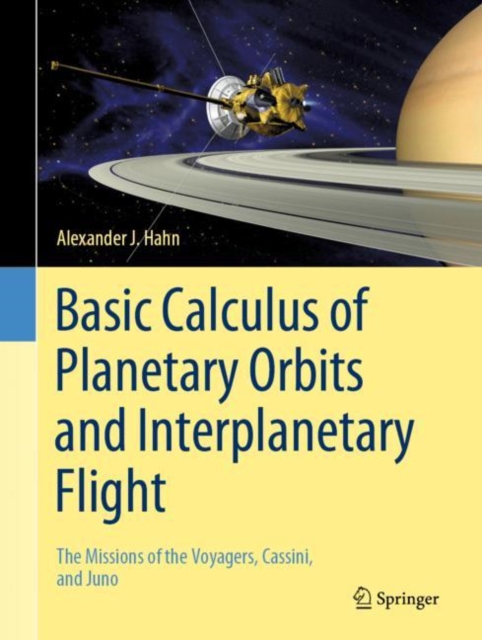
Intended for a one- or two-semester course, this text applies basic, one-variable calculus to analyze the motion both of planets in their orbits as well as interplanetary spacecraft in their trajectories.
The aim of this book is to present various facets of the theory and applications of Lipschitz functions, starting with classical and culminating with some recent results.
This book presents a systematic treatment of generalized Orlicz spaces (also known as Musielak-Orlicz spaces) with minimal assumptions on the generating F-function.
This book has two main objectives, the first of which is to extend the power of numerical Fourier analysis and to show by means of theoretical examples and numerous concrete applications that when computing discrete Fourier transforms of periodic and non periodic functions, the usual kernel matrix of the Fourier transform, the discrete Fourier transform (DFT), should be replaced by another kernel matrix, the eXtended Fourier transform (XFT), since the XFT matrix appears as a convergent quadrature of a more general transform, the fractional Fourier transform.
This book presents eleven peer-reviewed papers from the 3rd International Conference on Applications of Mathematics and Informatics in Natural Sciences and Engineering (AMINSE2017) held in Tbilisi, Georgia in December 2017.
This monograph develops an operator viewpoint for functional equations in classical function spaces of analysis, thus filling a void in the mathematical literature.
Intended for a one- or two-semester course, this text applies basic, one-variable calculus to analyze the motion both of planets in their orbits as well as interplanetary spacecraft in their trajectories.
Presents Real & Complex Analysis Together Using a Unified ApproachA two-semester course in analysis at the advanced undergraduate or first-year graduate levelUnlike other undergraduate-level texts, Real and Complex Analysis develops both the real and complex theory together.