Renewed interest in vector spaces and linear algebras has spurred the search for large algebraic structures composed of mathematical objects with special properties.
Significantly revised and expanded, this authoritative reference/text comprehensively describes concepts in measure theory, classical integration, and generalized Riemann integration of both scalar and vector types-providing a complete and detailed review of every aspect of measure and integration theory using valuable examples, exercises, and applications.
Set Theoretical Aspects of Real Analysis is built around a number of questions in real analysis and classical measure theory, which are of a set theoretic flavor.
Adding new results that have appeared in the last 15 years, Dictionary of Inequalities, Second Edition provides an easy way for researchers to locate an inequality by name or subject.
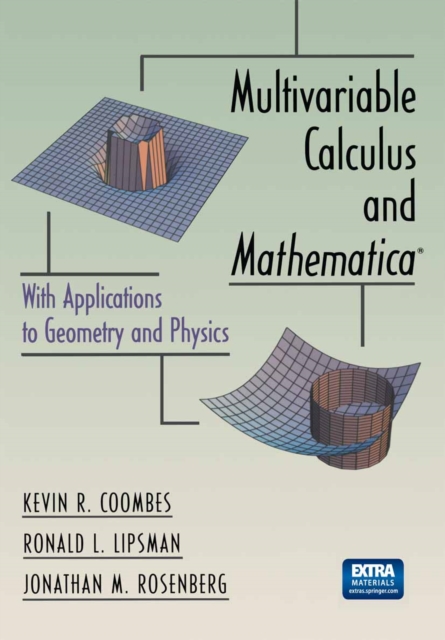
Preface Objectives of This Book * To teach calculus as a laboratory science, with the computer and software as the lab, and to use this lab as an essential tool in learning and using calculus.
Useful both as a text for students and as a source of reference for the more advanced mathematician, this book presents a unified treatment of that part of measure theory which is most useful for its application in modern analysis.
Starting with Cook's pioneering work on NP-completeness in 1970, polynomial complexity theory, the study of polynomial-time com- putability, has quickly emerged as the new foundation of algorithms.
This undergraduate textbook introduces students to the basics of real analysis, provides an introduction to more advanced topics including measure theory and Lebesgue integration, and offers an invitation to functional analysis.
For over three decades, this best-selling classic has been used by thousands of students in the United States and abroad as a must-have textbook for a transitional course from calculus to analysis.
Asymptotic Geometric Analysis is concerned with the geometric and linear properties of finite dimensional objects, normed spaces, and convex bodies, especially with the asymptotics of their various quantitative parameters as the dimension tends to infinity.
Calculus Without Derivatives expounds the foundations and recent advances in nonsmooth analysis, a powerful compound of mathematical tools that obviates the usual smoothness assumptions.
Advances on Fractional Inequalities use primarily the Caputo fractional derivative, as the most important in applications, and presents the first fractional differentiation inequalities of Opial type which involves the balanced fractional derivatives.
Inequalities based on Sobolev Representations deals exclusively with very general tight integral inequalities of Chebyshev-Gruss, Ostrowski types and of integral means, all of which depend upon the Sobolev integral representations of functions.
On February 15-17, 1993, a conference on Large Scale Optimization, hosted by the Center for Applied Optimization, was held at the University of Florida.
This volume is a collection of manscripts mainly originating from talks and lectures given at the Workshop on Recent Trends in Complex Methods for Par- tial Differential Equations held from July 6 to 10, 1998 at the Middle East Technical University in Ankara, Turkey, sponsored by The Scientific and Tech- nical Research Council of Turkey and the Middle East Technical University.
This book contains a selection of papers presented at the conference on High Performance Software for Nonlinear Optimization (HPSN097) which was held in Ischia, Italy, in June 1997.
This monograph represents a summary of our work in the last two years in applying the method of simulated annealing to the solution of problems that arise in the physical design of VLSI circuits.
The principal aim in writing this book has been to provide an intro- duction, barely more, to some aspects of Fourier series and related topics in which a liberal use is made of modem techniques and which guides the reader toward some of the problems of current interest in harmonic analysis generally.
This Student Guide is exceptional, maybe even unique, among such guides in that its author, Fred Soon, was actually a student user of the textbook during one of the years we were writing and debugging the book.
This book considers methods of approximate analysis of mechanical, elec- tromechanical, and other systems described by ordinary differential equa- tions.