This book gathers outstanding papers on numerical modeling in Civil Engineering (Volume 1) as part of the 2-volume proceedings of the 5th International Conference on Numerical Modeling in Engineering (NME 2022), which was held in Ghent, Belgium, on 23-24 August 2022.
This book offers an in-depth verification of numerical solutions for differential equations modeling heat transfer phenomena, where the smoothed particle hydrodynamics (SPH) method is used to discretize the mathematical models.
This book covers problems involving a variety of fractional differential equations, as well as some involving the generalized Hilfer fractional derivative, which unifies the Riemann-Liouville and Caputo fractional derivatives.
This book covers problems involving a variety of fractional differential equations, as well as some involving the generalized Hilfer fractional derivative, which unifies the Riemann-Liouville and Caputo fractional derivatives.
This book studies the construction methods for solving one-dimensional and multidimensional inverse dynamical problems for hyperbolic equations with memory.
This book studies the construction methods for solving one-dimensional and multidimensional inverse dynamical problems for hyperbolic equations with memory.
The material collected in this volume reflects the active present of this area of mathematics, ranging from the abstract theory of gradient flows to stochastic representations of non-linear parabolic PDE's.
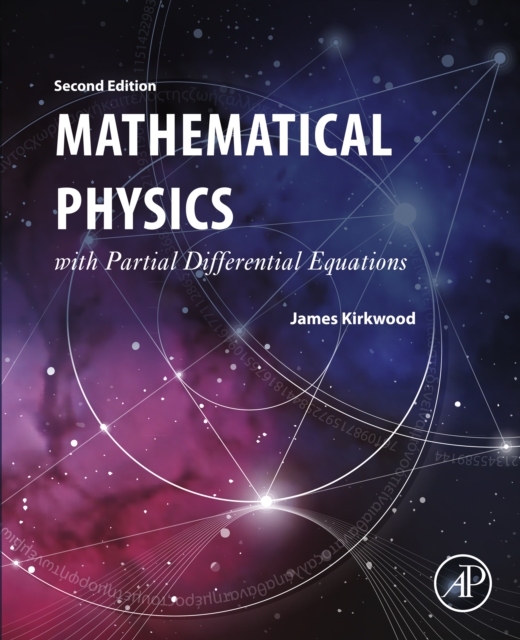
Mathematical Physics with Partial Differential Equations, Second Edition, is designed for upper division undergraduate and beginning graduate students taking mathematical physics taught out by math departments.
Mathematical Physics with Partial Differential Equations, Second Edition, is designed for upper division undergraduate and beginning graduate students taking mathematical physics taught out by math departments.
The book is the first to focus on the physical oceanography of the North Indian Ocean (NIO), a special region of the global ocean that exhibits a distinct seasonality due to the impact of the South Asian Monsoon (SAM).
This contributed book focuses on optimization methods inspired by nature such as Harmony Search Algorithm, Drosophila Food-Search Algorithm, Cohort intelligence algorithm and its variations, fuzzy logic along with their hybridization variants.
This contributed book focuses on optimization methods inspired by nature such as Harmony Search Algorithm, Drosophila Food-Search Algorithm, Cohort intelligence algorithm and its variations, fuzzy logic along with their hybridization variants.
Partial Differential Equations and Applications: A Bridge for Students and Researchers in Applied Sciences offers a unique approach to this key subject by connecting mathematical principles to the latest research advances in select topics.
Partial Differential Equations and Applications: A Bridge for Students and Researchers in Applied Sciences offers a unique approach to this key subject by connecting mathematical principles to the latest research advances in select topics.
This book gives a comprehensive introduction to those parts of the theory of elliptic integrals and elliptic functions which provide illuminating examples in complex analysis, but which are not often covered in regular university courses.
Very Short Introductions: Brilliant, sharp, inspiringThe 17th-century calculus of Newton and Leibniz was built on shaky foundations, and it wasn't until the 18th and 19th centuries that mathematicians--especially Bolzano, Cauchy, and Weierstrass--began to establish a rigorous basis for the subject.
The book includes selected contributions presented at the "e;International Meeting on Functional Analysis and Continuous Optimization"e; held in Elche (Spain) on June 16-17, 2022.
The book includes selected contributions presented at the "e;International Meeting on Functional Analysis and Continuous Optimization"e; held in Elche (Spain) on June 16-17, 2022.
De nombreux systèmes physiques, mécaniques, financiers et économiques peuvent être décrits par des modèles mathématiques qui visent à optimiser des fonctions, trouver des équilibres et effectuer des arbitrages.
De nombreux systèmes physiques, mécaniques, financiers et économiques peuvent être décrits par des modèles mathématiques qui visent à optimiser des fonctions, trouver des équilibres et effectuer des arbitrages.