This book contains thirty-six papers from among the forty-five papers presented at the Third International Conference on Fibonacci Numbers and Their Applications which was held in Pisa, Italy from July 25 to July 29, 1988 in honor of Leonardo de Pisa.
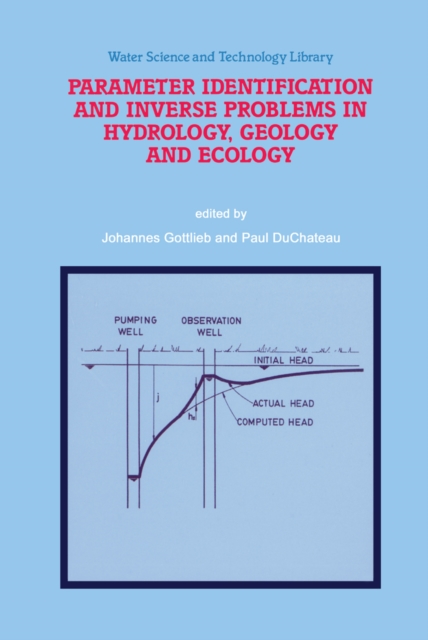
The Workshop on Parameter Identification and Inverse Problems in Hydrology, Geology and Ecology, Karlsruhe, April 10-12, 1995, was organized to bring to- gether an interdisciplinary group drawn from the areas of science, engineering and mathematics for the following purposes: - to promote, encourage and influence more understanding and cooperation in the community of parameter identifiers from various disciplines, - to forge unity in diversity by bringing together a variety of disciplines that attempt to understand the reconstruction of inner model parameters, un- known nonlinear constitutive relations, heterogeneous structures inside of geological objects, sources or sinks from observational data, - to discuss modern regularization tools for handling improperly posed pro- blems and strategies of incorporating a priori knowledge from the applied problem into the model and its treatment.
This book which is the outcome of a NATO-Advanced Study Institute on Mod- elling the Ocean Circulation and Geochemical Tracer Transport is concerned with using models to infer the ocean circulation.
I am very pleased to write these few brief paragraphs introducing this book, and would like to take this opportunity to attempt to set the Toolpack project in an appropriate historical context.
In the many physical phenomena ruled by partial differential equations, two extreme fields are currently overcrowded due to recent considerable developments: 1) the field of completely integrable equations, whose recent advances are the inverse spectral transform, the recursion operator, underlying Hamiltonian structures, Lax pairs, etc 2) the field of dynamical systems, often built as models of observed physical phenomena: turbulence, intermittency, Poincare sections, transition to chaos, etc.
This is the first volume of a series of books that will describe current advances and past accompli shments of mathemat i ca 1 aspects of nonlinear sCience taken in the broadest contexts.
This volume contains the Proceedings of the NATO Advanced Study Institute on "e;Orthogonal Polynomials and Their Applications"e; held at The Ohio State University in Columbus, Ohio, U.
The NATO Advanced Study Institute on "e;Algorithms for continuous optimiza- tion: the state of the art"e; was held September 5-18, 1993, at II Ciocco, Barga, Italy.
This volume contains the proceedings of the Workshop Energy Methods for Free Boundary Problems in Continuum Mechanics, held in Oviedo, Spain, from March 21 to March 23, 1994.
This book contains 43 papers form among the 55 papers presented at the Sixth International Conference on Fibonacci Numbers and Their Applications which was held at Washington State University, Pullman, Washington, from July 18-22, 1994.
This book started its life as a series of lectures given by the second author from the 1970's onwards to students in their third and fourth years in the Department of Mathematics at the Rostov State University.
This book assesses the state-of-the-art in computational fluid dynamics (CFD) applied to ship hydrodynamics and provides guidelines for the future developments in the field based on the Gothenburg 2010 Workshop.
Due to parallel advances in signal processing and computer hardware in the last 15 years, quantitative ultrasound techniques have reached maturity, allowing for the construction of quantitative maps or images of soft tissues.
Fracture mechanics has established itself as an important discipline of growing interest to those working to assess the safety, reliability and service life of engineering structures and materials.
This book focuses on the nonlinear behaviour of thin-wall shells (single- and multilayered with delamination areas) under various uniform and non-uniform loadings.
This book contains selected papers from the Fourth International Conference on Computational Methods in Marine Engineering, held at Instituto Superior Tecnico, Technical University of Lisbon, Portugal in September 2011.
The application of methodological approaches and mathematical formalisms proper to Physics and Engineering to investigate and describe biological processes and design biological structures has led to the development of many disciplines in the context of computational biology and biotechnology.