Game Theory: A Modeling Approach quickly moves readers through the fundamental ideas of the subject to enable them to engage in creative modeling projects based on game theoretic concepts.
The Tutte Polynomial touches on nearly every area of combinatorics as well as many other fields, including statistical mechanics, coding theory, and DNA sequencing.
Game Theory: A Modeling Approach quickly moves readers through the fundamental ideas of the subject to enable them to engage in creative modeling projects based on game theoretic concepts.
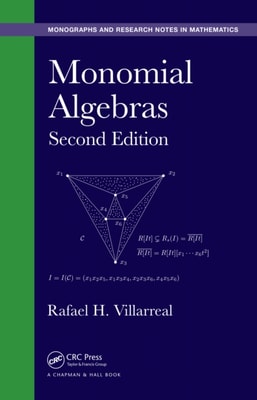
Monomial Algebras, Second Edition presents algebraic, combinatorial, and computational methods for studying monomial algebras and their ideals, including Stanley-Reisner rings, monomial subrings, Ehrhart rings, and blowup algebras.
Today, with physician and hospital reimbursement being cut and tied to quality incentives, physicians and health plans are revisiting the concept of integration.
This monograph presents the state-of-the-art developments in the design of behaviorally and structurally optimal livenessen-forcing Petri net supervisors with computationally tractable approaches.
The first book devoted exclusively to quantitative graph theory, Quantitative Graph Theory: Mathematical Foundations and Applications presents and demonstrates existing and novel methods for analyzing graphs quantitatively.
Commutation Relations, Normal Ordering, and Stirling Numbers provides an introduction to the combinatorial aspects of normal ordering in the Weyl algebra and some of its close relatives.
Discover the Connections between Different Structures and FieldsDiscrete Structures and Their Interactions highlights the connections among various discrete structures, including graphs, directed graphs, hypergraphs, partial orders, finite topologies, and simplicial complexes.
Complex Networks: An Algorithmic Perspective supplies the basic theoretical algorithmic and graph theoretic knowledge needed by every researcher and student of complex networks.
The use of contextually aware, pervasive, distributed computing, and sensor networks to bridge the gap between the physical and online worlds is the basis of mobile social networking.
This is the most comprehensive survey of the mathematical life of the legendary Paul Erdos (1913-1996), one of the most versatile and prolific mathematicians of our time.
Graphs on Surfaces: Dualities, Polynomials, and Knots offers an accessible and comprehensive treatment of recent developments on generalized duals of graphs on surfaces, and their applications.
Written by one of the foremost experts in the field, Algebraic Combinatorics is a unique undergraduate textbook that will prepare the next generation of pure and applied mathematicians.
This second edition includes two new chapters: one on domination in graphs and the other on the spectral properties of graphs, the latter including a discussion on graph energy.
Dynamical System Synchronization (DSS) meticulously presents for the first time the theory of dynamical systems synchronization based on the local singularity theory of discontinuous dynamical systems.
Rainbow connections are natural combinatorial measures that are used in applications to secure the transfer of classified information between agencies in communication networks.
Product and service innovations are the result of mutually interacting creative and coordination tasks within a system that has to balance technical decisions, marketplace taste, personnel management, and stakeholder commitment.
This introductory text in graph theory focuses on partial cubes, which are graphs that are isometrically embeddable into hypercubes of an arbitrary dimension, as well as bipartite graphs, and cubical graphs.
This book endeavors to deepen our understanding of lattice path combinatorics, explore key types of special sequences, elucidate their interconnections, and concurrently champion the author's interpretation of the "e;combinatorial spirit"e;.
A Course in Topological Combinatorics is the first undergraduate textbook on the field of topological combinatorics, a subject that has become an active and innovative research area in mathematics over the last thirty years with growing applications in math, computer science, and other applied areas.
This book describes a complete revolution in software engineering based on complexity science through the establishment of NSE - Nonlinear Software Engineering paradigm which complies with the essential principles of complexity science, including the Nonlinearity principle, the Holism principle, the Complexity Arises From Simple Rules principle, the Initial Condition Sensitivity principle, the Sensitivity to Change principle, the Dynamics principle, the Openness principle, the Self-organization principle, and the Self-adaptation principle.
Emphasizes a Problem Solving ApproachA first course in combinatoricsCompletely revised, How to Count: An Introduction to Combinatorics, Second Edition shows how to solve numerous classic and other interesting combinatorial problems.
Using mathematical tools from number theory and finite fields, Applied Algebra: Codes, Ciphers, and Discrete Algorithms, Second Edition presents practical methods for solving problems in data security and data integrity.
Poised to become the leading reference in the field, the Handbook of Finite Fields is exclusively devoted to the theory and applications of finite fields.
The Star and the Whole: Gian-Carlo Rota on Mathematics and Phenomenology, authored by Fabrizio Palombi, is the first book to study Rota's philosophical reflection.
Gottfried Wilhelm Leibniz: The Polymath Who Brought Us Calculus focuses on the life and accomplishments of one of the seventeenth century's most influential mathematicians and philosophers.
This book is a tribute to Paul Erd\H{o}s, the wandering mathematician once described as the "e;prince of problem solvers and the absolute monarch of problem posers.
Focusing on a very active area of mathematical research in the last decade, Combinatorics of Set Partitions presents methods used in the combinatorics of pattern avoidance and pattern enumeration in set partitions.