The Handbook of Finite Translation Planes provides a comprehensive listing of all translation planes derived from a fundamental construction technique, an explanation of the classes of translation planes using both descriptions and construction methods, and thorough sketches of the major relevant theorems.
While maintaining the lucidity of the first edition, Discrete Chaos, Second Edition: With Applications in Science and Engineering now includes many recent results on global stability, bifurcation, chaos, and fractals.
Unlike data communications of the past, today's networks consist of numerous devices that handle the data as it passes from the sender to the receiver.
Collecting results scattered throughout the literature into one source, An Introduction to Quasigroups and Their Representations shows how representation theories for groups are capable of extending to general quasigroups and illustrates the added depth and richness that result from this extension.
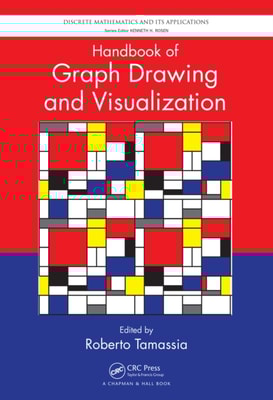
Get an In-Depth Understanding of Graph Drawing Techniques, Algorithms, Software, and ApplicationsThe Handbook of Graph Drawing and Visualization provides a broad, up-to-date survey of the field of graph drawing.
From its origins in algebraic number theory, the theory of non-unique factorizations has emerged as an independent branch of algebra and number theory.
Researchers and practitioners of cryptography and information security are constantly challenged to respond to new attacks and threats to information systems.
Introduction to Modern Cryptography, the most relied-upon textbook in the field, provides a mathematically rigorous yet accessible treatment of this fascinating subject.
The history, formulas, and most famous puzzles of graph theoryGraph theory goes back several centuries and revolves around the study of graphs-mathematical structures showing relations between objects.
As discrete mathematics rapidly becomes a required element of undergraduate mathematics programs, algebraic software systems replace compiled languages and are now most often the computational tool of choice.
Computational Complexity of Counting and Sampling provides readers with comprehensive and detailed coverage of the subject of computational complexity.
Computational Complexity of Counting and Sampling provides readers with comprehensive and detailed coverage of the subject of computational complexity.
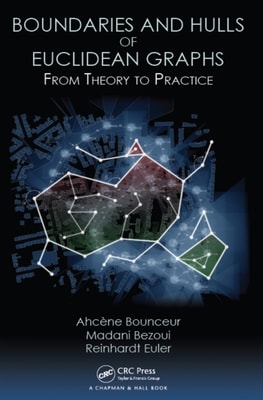
Boundaries and Hulls of Euclidean Graphs: From Theory to Practice presents concepts and algorithms for finding convex, concave and polygon hulls of Euclidean graphs.
Boundaries and Hulls of Euclidean Graphs: From Theory to Practice presents concepts and algorithms for finding convex, concave and polygon hulls of Euclidean graphs.
The Handbook of Geometric Constraint Systems Principles is an entry point to the currently used principal mathematical and computational tools and techniques of the geometric constraint system (GCS).
Understanding Interaction is a book that explores the interaction between people and technology, in the broader context of the relations between the human made and the natural environments.
This graduate level text is distinguished both by the range of topics and the novelty of the material it treats--more than half of the material in it has previously only appeared in research papers.
This graduate level text is distinguished both by the range of topics and the novelty of the material it treats--more than half of the material in it has previously only appeared in research papers.
This book provides the elements of probability and stochastic processes of direct interest to the applied sciences where probabilistic models play an important role, most notably in the information and communications sciences, computer sciences, operations research, and electrical engineering, but also in fields like epidemiology, biology, ecology, physics, and the earth sciences.