One of the world's foremost geometers, Alan Weinstein has made deep contributions to symplectic and differential geometry, Lie theory, mechanics, and related fields.
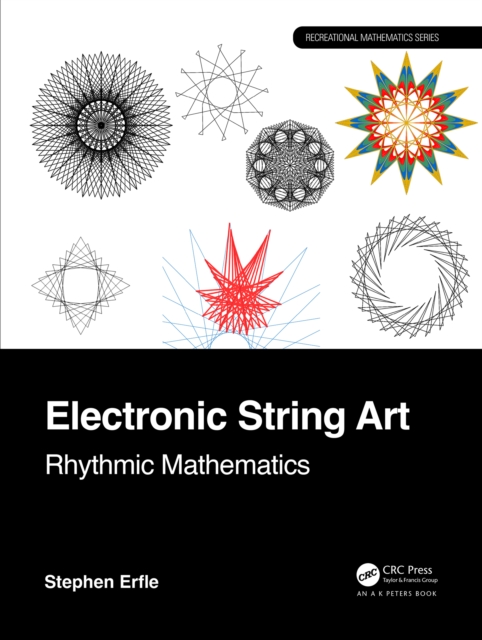
String art is a well-known and popular activity that uses string, a board, and nails to produce artistic images (although there are variations that use different modalities).
This book collects the proceedings of a series of conferences dedicated to birational geometry of Fano varieties held in Moscow, Shanghai and PohangThe conferences were focused on the following two related problems:* existence of Kahler-Einstein metrics on Fano varieties* degenerations of Fano varietieson which two famous conjectures were recently proved.
How a simple equation reshaped mathematicsLeonhard Euler's polyhedron formula describes the structure of many objects-from soccer balls and gemstones to Buckminster Fuller's buildings and giant all-carbon molecules.
This unique text provides a geometric approach to group theory and linear algebra, bringing to light the interesting ways in which these subjects interact.
Originally published over a century ago, this work remains among the most useful and practical expositions of Fourier's series, and spherical, cylindrical, and ellipsoidal harmonics.
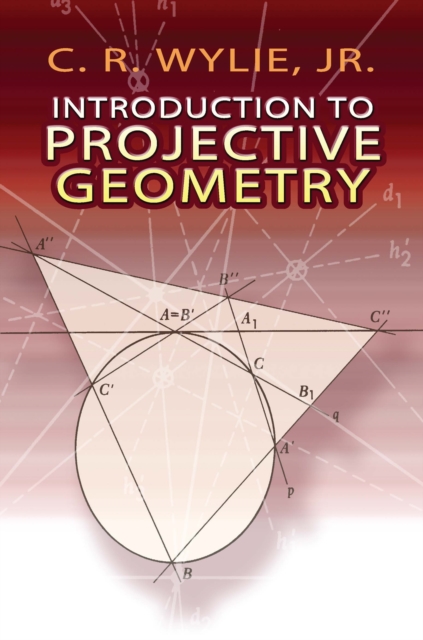
For students of mathematics with a sound background in analytic geometry and some knowledge of determinants, this volume has long been among the best available expositions of advanced work on projective and algebraic geometry.
Full and authoritative, this history of the techniques for dealing with geometric questions begins with synthetic geometry and its origins in Babylonian and Egyptian mathematics; reviews the contributions of China, Japan, India, and Greece; and discusses the non-Euclidean geometries.
The author of Alice in Wonderland (and an Oxford professor of mathematics) employs the fanciful format of a play set in Hell to take a hard look at late-19th-century interpretations of Euclidean geometry.
Translated into many languages, this book was in continuous use as the standard university-level text for a quarter-century, until it was revised and enlarged by the author in 1952.
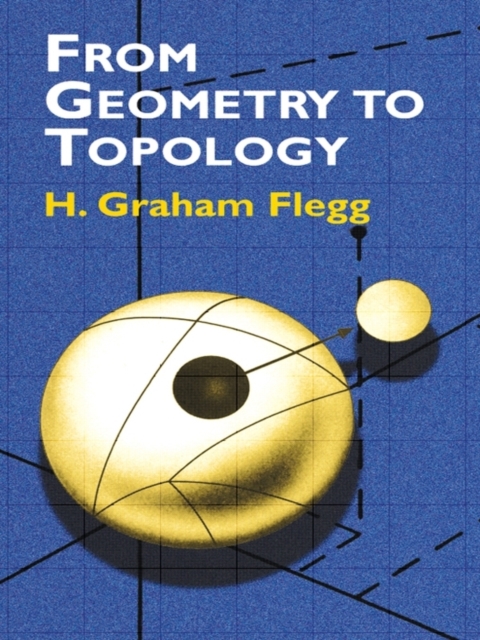
This excellent introduction to topology eases first-year math students and general readers into the subject by surveying its concepts in a descriptive and intuitive way, attempting to build a bridge from the familiar concepts of geometry to the formalized study of topology.
From angles to functions to identities - solve trig equations with ease Got a grasp on the terms and concepts you need to know, but get lost halfway through a problem or worse yet, not know where to begin?
An integrated approach to fractals and point processes This publication provides a complete and integrated presentation of the fields of fractals and point processes, from definitions and measures to analysis and estimation.
Guides readers through the development of geometry and basic proof writing using a historical approach to the topic In an effort to fully appreciate the logic and structure of geometric proofs, Revolutions of Geometry places proofs into the context of geometry's history, helping readers to understand that proof writing is crucial to the job of a mathematician.
Explores the development of the ellipse and presents mathematical concepts within a rich, historical context The Ellipse features a unique, narrative approach when presenting the development of this mathematical fixture, revealing its parallels to mankind's advancement from the Counter-Reformation to the Enlightenment.
Recent research on the theory of perturbations, the analytical approach and the quantitative analysis of the three-body problem have reached a high degree of perfection.
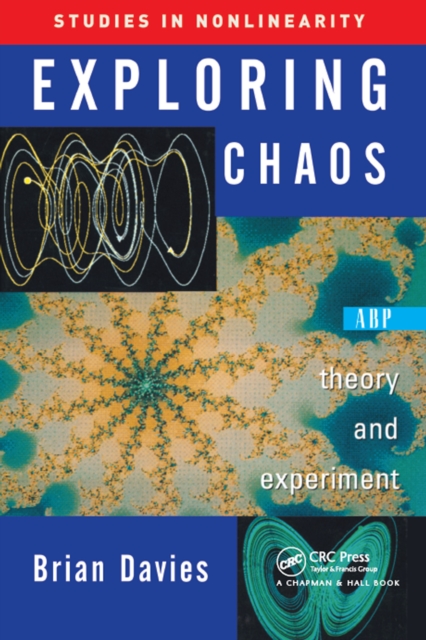
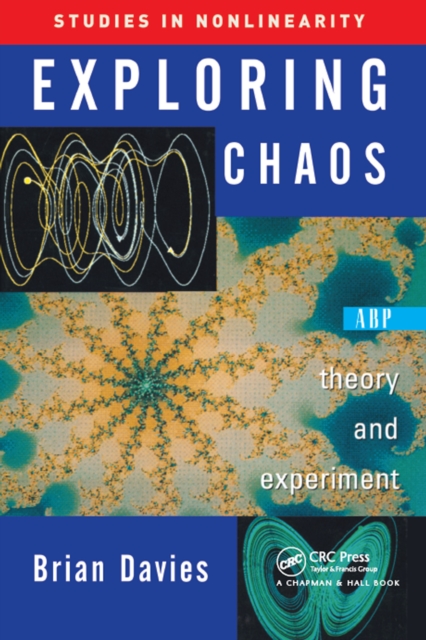
This book presents elements of the theory of chaos in dynamical systems in a framework of theoretical understanding coupled with numerical and graphical experimentation.
This little book is especially concerned with those portions of "e;advanced calculus"e; in which the subtlety of the concepts and methods makes rigor difficult to attain at an elementary level.
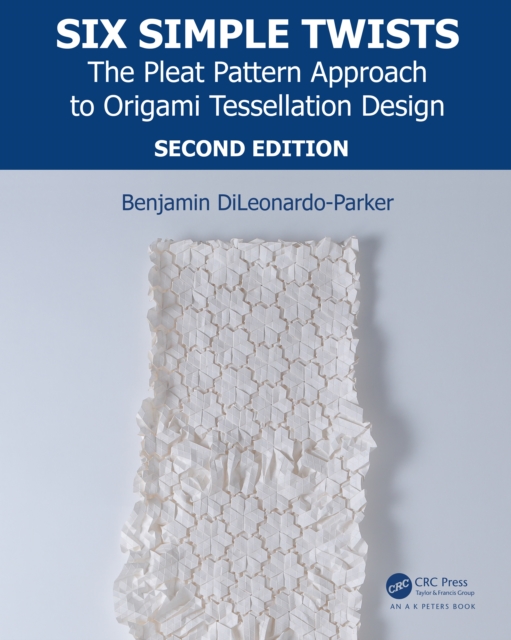
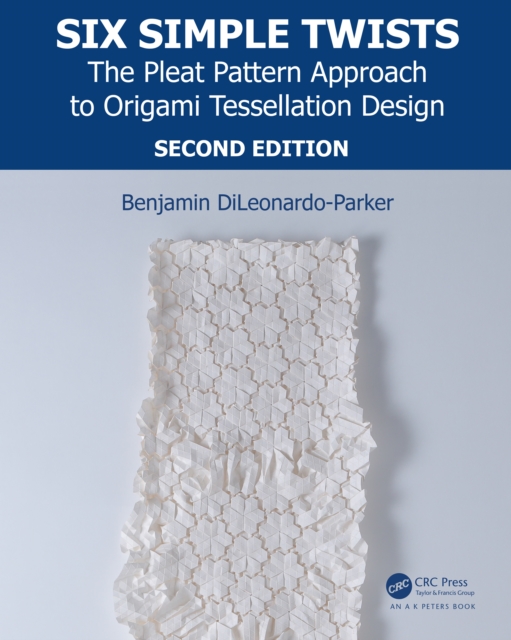
This new edition of Six Simple Twists: The Pleat Pattern Approach to Origami Tessellation Design introduces an innovative pleat pattern technique for origami designs that is easily accessible to anyone who enjoys the geometry of paper.
This new edition of Six Simple Twists: The Pleat Pattern Approach to Origami Tessellation Design introduces an innovative pleat pattern technique for origami designs that is easily accessible to anyone who enjoys the geometry of paper.
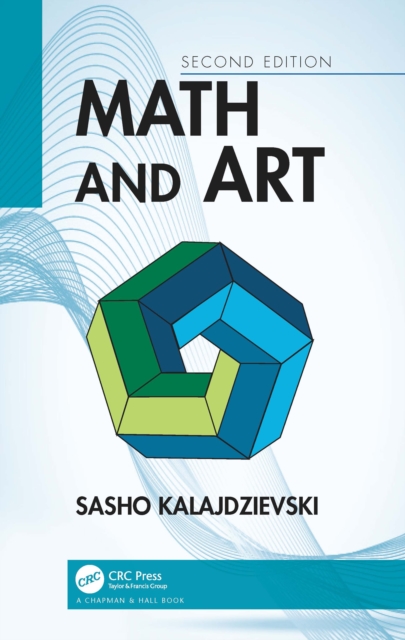
Math and Art: An Introduction to Visual Mathematics explores the potential of mathematics to generate visually appealing objects and reveals some of the beauty of mathematics.