This book is an attempt to describe the gradual development of the major schools of research on number theory in South India, Punjab, Mumbai, Bengal, and Bihar-including the establishment of Tata Institute of Fundamental Research (TIFR), Mumbai, a landmark event in the history of research of number theory in India.
Unterstützt von vielen historischen Dokumenten und Interviews mit Zeitzeugen geht dieses Werk auf ein bedeutsames Thema der Wissenschaftsgeschichte ein: die Entstehung der modernen Finanzmathematik in der zweiten Hälfte des letzten Jahrhunderts.
Wer Analysis lernt, fragt sich irgendwann: Wie und warum kamen all diese merkwürdigen Begriffe zustande – Zahl, Funktion, Stetigkeit, Konvergenz, Differenzial, Integral?
In this book, the author pays tribute to Bernhard Riemann (1826-1866), a mathematician with revolutionary ideas, whose work on the theory of integration, the Fourier transform, the hypergeometric differential equation, etc.
This book tells the story of the Riemann hypothesis for function fields (or curves) starting with Artin's 1921 thesis, covering Hasse's work in the 1930s on elliptic fields and more, and concluding with Weil's final proof in 1948.
Drawing on published works, correspondence and manuscripts, this book offers the most comprehensive reconstruction of Boscovich's theory within its historical context.
This book seeks to explore the history of descriptive geometry in relation to its circulation in the 19th century, which had been favoured by the transfers of the model of the Ecole Polytechnique to other countries.
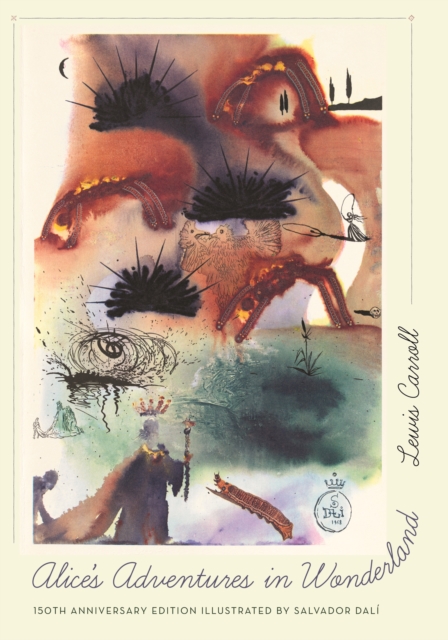
A stunning anniversary edition of Alice's adventures, illustrated by Salvador Dali Commemorating the 150th anniversary of one of the most beloved classics of children's literature, this illustrated edition presents Alice like you've never seen her before.
This book presents a new approach to the epistemology of mathematics by viewing mathematics as a human activity whose knowledge is intimately linked with practice.
An entertaining look at the origins of mathematical symbolsWhile all of us regularly use basic math symbols such as those for plus, minus, and equals, few of us know that many of these symbols weren't available before the sixteenth century.
The computer science problem whose solution could transform life as we know itThe P-NP problem is the most important open problem in computer science, if not all of mathematics.
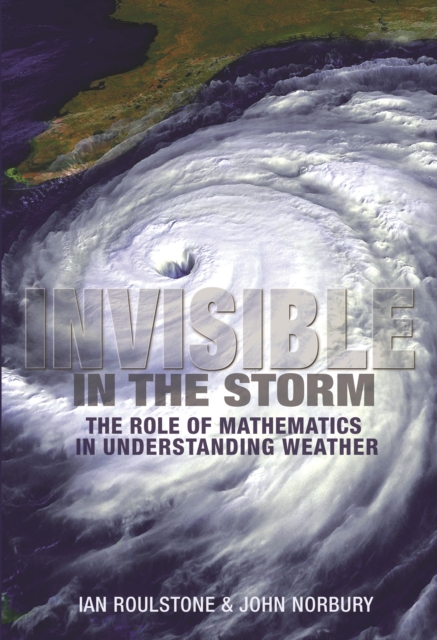
An accessible book that examines the mathematics of weather predictionInvisible in the Storm is the first book to recount the history, personalities, and ideas behind one of the greatest scientific successes of modern times-the use of mathematics in weather prediction.
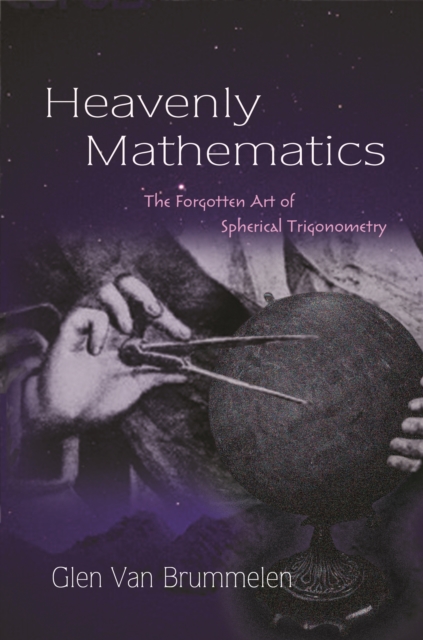
An unparalleled illustrated history of spherical trigonometry from antiquity to todayHeavenly Mathematics traces the rich history of spherical trigonometry, revealing how the cultures of classical Greece, medieval Islam, and the modern West used this forgotten art to chart the heavens and the Earth.
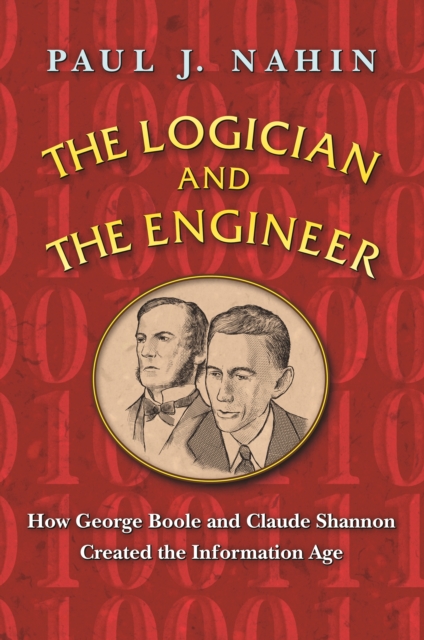
How two pioneers of math and technology ushered in the computer revolutionBoolean algebra, also called Boolean logic, is at the heart of the electronic circuitry in everything we use-from our computers and cars, to home appliances.
A look at one of the most exciting unsolved problems in mathematics todayElliptic Tales describes the latest developments in number theory by looking at one of the most exciting unsolved problems in contemporary mathematics-the Birch and Swinnerton-Dyer Conjecture.
In the mid-eighteenth century, Swiss-born mathematician Leonhard Euler developed a formula so innovative and complex that it continues to inspire research, discussion, and even the occasional limerick.
An essential work on the origins of statisticsThe Rise of Statistical Thinking, 1820-1900 explores the history of statistics from the field's origins in the nineteenth century through to the factors that produced the burst of modern statistical innovation in the early twentieth century.
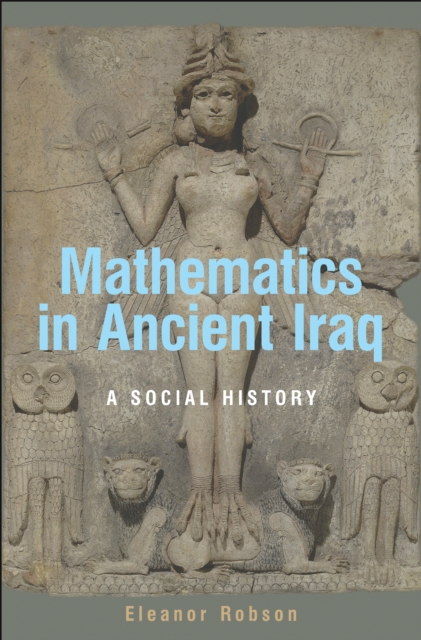
This monumental book traces the origins and development of mathematics in the ancient Middle East, from its earliest beginnings in the fourth millennium BCE to the end of indigenous intellectual culture in the second century BCE when cuneiform writing was gradually abandoned.
A lively and engaging look at logic puzzles and their role in mathematics, philosophy, and recreationLogic puzzles were first introduced to the public by Lewis Carroll in the late nineteenth century and have been popular ever since.
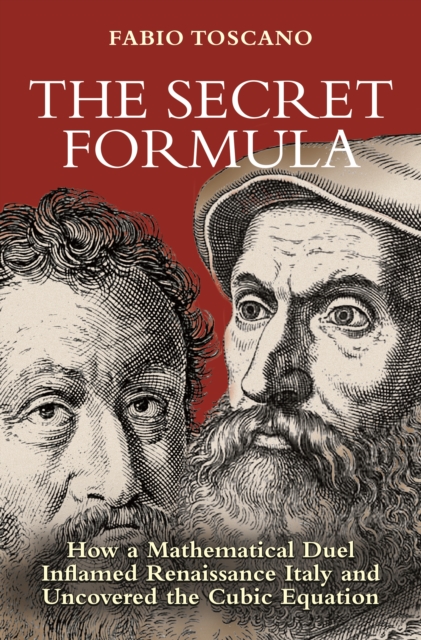
The legendary Renaissance math duel that ushered in the modern age of algebraThe Secret Formula tells the story of two Renaissance mathematicians whose jealousies, intrigues, and contentious debates led to the discovery of a formula for the solution of the cubic equation.
How a simple equation reshaped mathematicsLeonhard Euler's polyhedron formula describes the structure of many objects-from soccer balls and gemstones to Buckminster Fuller's buildings and giant all-carbon molecules.
The Handbook Philosophy of Technology and Engineering Sciences addresses numerous issues in the emerging field of the philosophy of those sciences that are involved in the technological process of designing, developing and making of new technical artifacts and systems.
The book addresses for the first time the dynamics associated with the modernization of mathematics in China from the nineteenth to the mid-twentieth century from a transcultural global historical perspective.
All the Math Your 5th Grader Needs to SucceedThis book will help your elementary school student develop the math skills needed to succeed in the classroom and on standardized tests.
A meticulously researched history on the development of American mathematics in the three decades following World War IAs the Roaring Twenties lurched into the Great Depression, to be followed by the scourge of Nazi Germany and World War II, American mathematicians pursued their research, positioned themselves collectively within American science, and rose to global mathematical hegemony.
El matemático Manuel Sadosky (1914-2005) tiene ganado un merecido reconocimiento en la historia de la ciencia como "Padre de la computación en Argentina".
Vijay Kumar Patodi was a brilliant Indian mathematicians who made, during his short life, fundamental contributions to the analytic proof of the index theorem and to the study of differential geometric invariants of manifolds.
Mesopotamian mathematics is known from a great number of cuneiform texts, most of them Old Babylonian, some Late Babylonian or pre-Old-Babylonian, and has been intensively studied during the last couple of decades.