The middle years of the nineteenth century saw two crucial develop- ments in the history of modern logic: George Boole's algebraic treat- ment of logic and Augustus De Morgan's formulation of the logic of relations.
For a North American seeking to know the Mexican mind, and especially the sciences today and in their recent development, a great light of genius is to be found in Mexico City in the late 17th century.
This book traces the history of the concept of work from its earliest stages and shows that its further formalization leads to equilibrium principle and to the principle of virtual works, and so pointing the way ahead for future research and applications.
The aim of this book is to analyse historical problems related to the use of mathematics in physics as well as to the use of physics in mathematics and to investigate Mathematical Physics as precisely the new discipline which is concerned with this dialectical link itself.
The focus of this book is the fundamental influence of the cyphering tradition on mathematics education in North American colleges, schools, and apprenticeship training classes between 1607 and 1861.
Viewed as a flashpoint of the Scientific Revolution, early modern astronomy witnessed a virtual explosion of ideas about the nature and structure of the world.
This Encycropaedia is an outstanding to attempt take full account as incur as possible of history of science and technology from ancient times to twentieth century.
This Encycropaedia is an outstanding to attempt take full account as incur as possible of history of science and technology from ancient times to twentieth century.
During Edmund Husserl's lifetime, modern logic and mathematics rapidly developed toward their current outlook and Husserl's writings can be fruitfully compared and contrasted with both 19th century figures (Boole, Schroder, Weierstrass) as well as the 20th century characters (Heyting, Zermelo, Godel).
Numerous scientists have taken part in the war effort during World War I, but few gave it the passionate energy of the prominent Italian mathematician Volterra.
This Encycropaedia is an outstanding to attempt take full account as incur as possible of history of science and technology from ancient times to twentieth century.
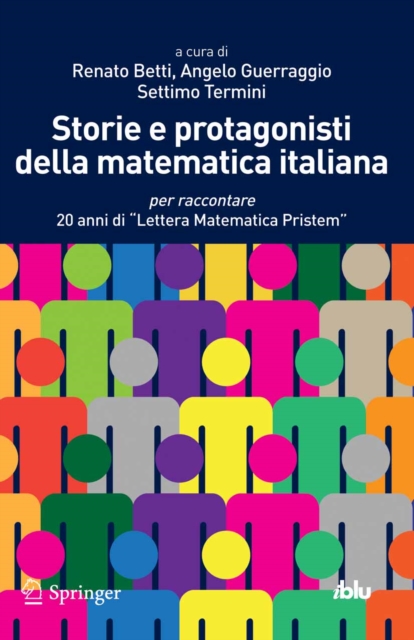
20 anni fa – anzi qualcuno in più – iniziava le sue pubblicazioni “Lettera Matematica PRISTEM”, espressione di un gruppo di ricerca della “Bocconi” cui aderiscono anche docenti e studiosi di altre Università.
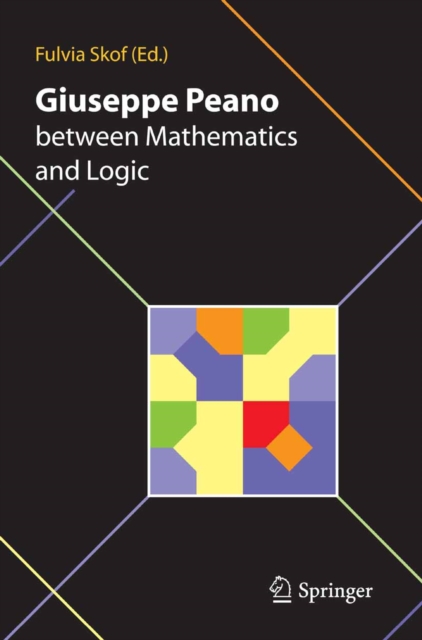
This book contains the papers developing out the presentations given at the International Conference organized by the Torino Academy of Sciences and the Department of Mathematics Giuseppe Peano of the Torino University to celebrate the 150th anniversary of G.
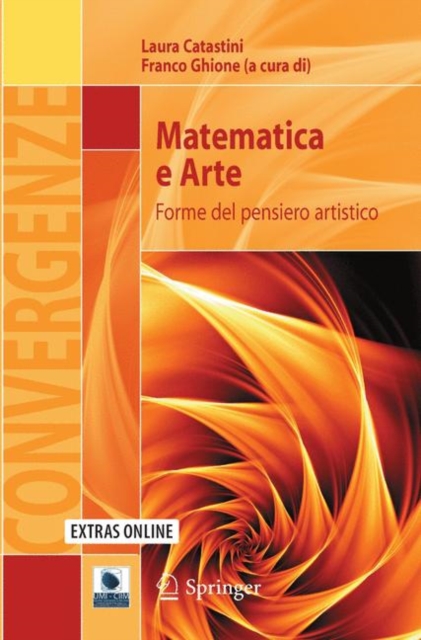
Il libro vuole saldare didattica e divulgazione su un tema di grande fascino come quello dei rapporti tra la matematica e l'espressione artistica cercando di andare oltre alle ovvietà che spesso circondano questo argomento, alle facili metafore, a esoterici misteri, con l'obiettivo di fornire un quadro concettuale matematico per quanto possibile rigoroso, accessibile a una cultura liceale, isolando quei temi per i quali non sia pretestuoso l'intreccio tra matematica e arte.
La varietà e l’interesse dei contributi alla Lettera Matematica Pristem hanno spinto i curatori, d’accordo con il comitato di redazione, a proporre in questa raccolta alcuni articoli apparsi sulla rivista dalla sua fondazione ad oggi.
In questo libro si raccolgono in modo sistematico i risultati di oltre vent’anni di ricerche didattiche sul tema delle macchine matematiche, realizzate in Italia e all’estero, in tutti gli ordini scolastici.
This book challenges the views put forward by Pierre Cartier, one of the anchors of the famous Bourbaki group, and Cedric Villani, one of the most brilliant mathematicians of his generation, who received the Fields Medal in 2010.
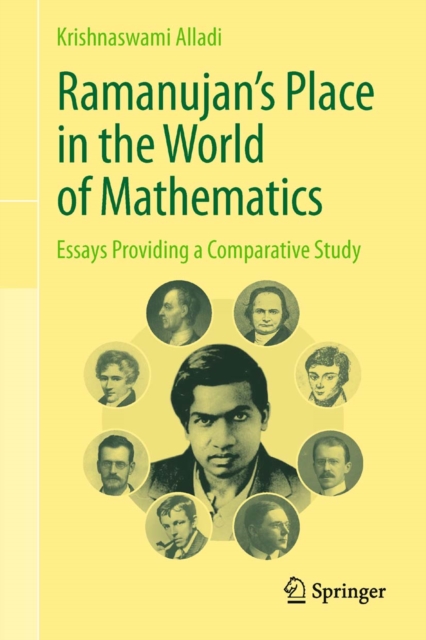
This book is a collection of articles, all by the author, on the Indian mathematical genius Srinivasa Ramanujan as well as on some of the greatest mathematicians throughout the history whose life and works have things in common with Ramanujan.
Philosophiae Naturalis Principia Mathematica (Latin for Mathematical Principles of Natural Philosophy), often referred to as simply the Principia, is a work in three books by Isaac Newton, in Latin, first published 5 July 1687.