Collected here for the first time, this series of lectures delivered by Lonergan at Boston College in 1957 illustrates a pivotal time in Lonergan's intellectual history, marking both the transition from the faculty psychology still present in his work Insight to intentionality analysis and his initial differentiation of the existential level of consciousness.
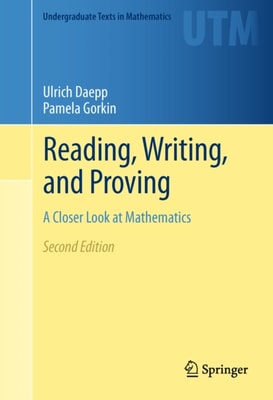
This book, which is based on Polya's method of problem solving, aids students in their transition from calculus (or precalculus) to higher-level mathematics.
Adaptive Resonance Theory Microchips describes circuit strategies resulting in efficient and functional adaptive resonance theory (ART) hardware systems.
Fuzzy Logic in Management demonstrates that difficult problems and changes in the management environment can be more easily handled by bringing fuzzy logic into the practice of management.
"e;Proofs and Fundamentals: A First Course in Abstract Mathematics"e; 2nd edition is designed as a "e;transition"e; course to introduce undergraduates to the writing of rigorous mathematical proofs, and to such fundamental mathematical ideas as sets, functions, relations, and cardinality.
The importance of having ef cient and effective methods for data mining and kn- ledge discovery (DM&KD), to which the present book is devoted, grows every day and numerous such methods have been developed in recent decades.
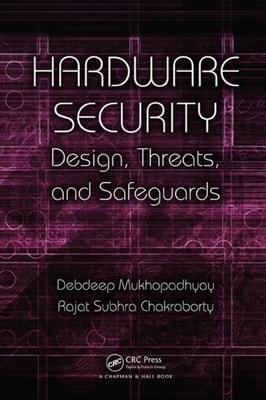
Design for security and meet real-time requirements with this must-have book covering basic theory, hardware design and implementation of cryptographic algorithms, and side channel analysis.
Using mathematical tools from number theory and finite fields, Applied Algebra: Codes, Ciphers, and Discrete Algorithms, Second Edition presents practical methods for solving problems in data security and data integrity.
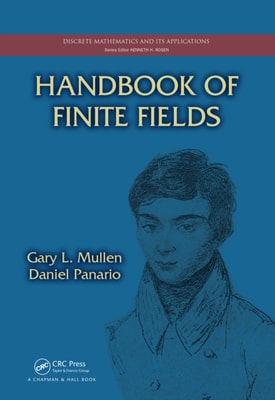
Poised to become the leading reference in the field, the Handbook of Finite Fields is exclusively devoted to the theory and applications of finite fields.
Computer users have a significant impact on the security of their computer and personal information as a result of the actions they perform (or do not perform).
Among the features that make Noiseless Steganography: The Key to Covert Communications a first of its kind: The first to comprehensively cover Linguistic SteganographyThe first to comprehensively cover Graph SteganographyThe first to comprehensively cover Game SteganographyAlthough the goal of steganography is to prevent adversaries from suspe
Helping current and future system designers take a more productive approach in the field, Communication System Security shows how to apply security principles to state-of-the-art communication systems.
Computer arithmetic has become so fundamentally embedded into digital design that many engineers are unaware of the many research advances in the area.
Cryptography, in particular public-key cryptography, has emerged in the last 20 years as an important discipline that is not only the subject of an enormous amount of research, but provides the foundation for information security in many applications.
Methods Used to Solve Discrete Math ProblemsInteresting examples highlight the interdisciplinary nature of this areaPearls of Discrete Mathematics presents methods for solving counting problems and other types of problems that involve discrete structures.
First developed in the early 1980s by Lenstra, Lenstra, and Lovasz, the LLL algorithm was originally used to provide a polynomial-time algorithm for factoring polynomials with rational coefficients.
The reach of algebraic curves in cryptography goes far beyond elliptic curve or public key cryptography yet these other application areas have not been systematically covered in the literature.
Like its bestselling predecessor, Elliptic Curves: Number Theory and Cryptography, Second Edition develops the theory of elliptic curves to provide a basis for both number theoretic and cryptographic applications.
A How-to Guide for Implementing Algorithms and ProtocolsAddressing real-world implementation issues, Understanding and Applying Cryptography and Data Security emphasizes cryptographic algorithm and protocol implementation in hardware, software, and embedded systems.
The Handbook of Financial Cryptography and Security elucidates the theory and techniques of cryptography and illustrates how to establish and maintain security under the framework of financial cryptography.
The Most Progressive and Complete Guide to DDO-Based CiphersDevelopers have long recognized that ciphers based on Permutation Networks (PNs) and Controlled Substitution-Permutation Networks (CSPNs) allow for the implementation of a variety of Data Driven Operations (DDOs).
Although much literature exists on the subject of RSA and public-key cryptography, until now there has been no single source that reveals recent developments in the area at an accessible level.
From the Rosetta Stone to public-key cryptography, the art and science of cryptology has been used to unlock the vivid history of ancient cultures, to turn the tide of warfare, and to thwart potential hackers from attacking computer systems.
Statistical Methods in Computer Security summarizes discussions held at the recent Joint Statistical Meeting to provide a clear layout of current applications in the field.
Continuing a bestselling tradition, An Introduction to Cryptography, Second Edition provides a solid foundation in cryptographic concepts that features all of the requisite background material on number theory and algorithmic complexity as well as a historical look at the field.
Unlike data communications of the past, today's networks consist of numerous devices that handle the data as it passes from the sender to the receiver.
Researchers and practitioners of cryptography and information security are constantly challenged to respond to new attacks and threats to information systems.