After functional, measure and stochastic analysis prerequisites, the author covers chaos decomposition, Skorohod integral processes, Malliavin derivative and Girsanov transformations.
Develops new semantical characterisations of many logical systems with quantification that are incomplete under the traditional Kripkean possible worlds interpretation.
This systematic and historical treatment of Russell's contributions to analytic philosophy, from his embrace of analysis in 1898 to his landmark theory of descriptions in 1905, draws important connections between his philosophically motivated conception of analysis and the technical apparatus he devised to facilitate analyses in mathematics
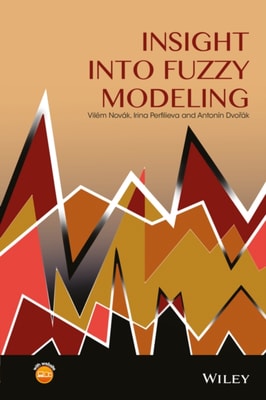
Provides a unique and methodologically consistent treatment of various areas of fuzzy modeling and includes the results of mathematical fuzzy logic and linguistics This book is the result of almost thirty years of research on fuzzy modeling.
Provides a unique and methodologically consistent treatment of various areas of fuzzy modeling and includes the results of mathematical fuzzy logic and linguistics This book is the result of almost thirty years of research on fuzzy modeling.
An enlightening introduction to the study of logic: its history, philosophical foundations, and formal structures Logic: Inquiry, Argument, and Order is the first book of its kind to frame the study of introductory logic in terms of problems connected to wider issues of knowledge and judgment that arise in the context of racial, cultural, and religious diversity.
An enlightening introduction to the study of logic: its history, philosophical foundations, and formal structures Logic: Inquiry, Argument, and Order is the first book of its kind to frame the study of introductory logic in terms of problems connected to wider issues of knowledge and judgment that arise in the context of racial, cultural, and religious diversity.
Solutions manual to accompany Logic and Discrete Mathematics: A Concise Introduction This book features a unique combination of comprehensive coverage of logic with a solid exposition of the most important fields of discrete mathematics, presenting material that has been tested and refined by the authors in university courses taught over more than a decade.
Solutions manual to accompany Logic and Discrete Mathematics: A Concise Introduction This book features a unique combination of comprehensive coverage of logic with a solid exposition of the most important fields of discrete mathematics, presenting material that has been tested and refined by the authors in university courses taught over more than a decade.
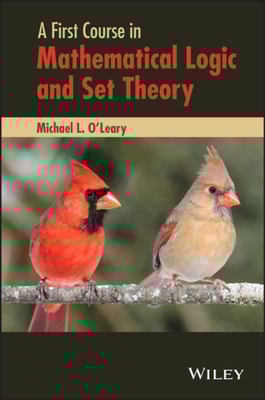
A mathematical introduction to the theory and applications of logic and set theory with an emphasis on writing proofs Highlighting the applications and notations of basic mathematical concepts within the framework of logic and set theory, A First Course in Mathematical Logic and Set Theory introduces how logic is used to prepare and structure proofs and solve more complex problems.
A mathematical introduction to the theory and applications of logic and set theory with an emphasis on writing proofs Highlighting the applications and notations of basic mathematical concepts within the framework of logic and set theory, A First Course in Mathematical Logic and Set Theory introduces how logic is used to prepare and structure proofs and solve more complex problems.
Learn how to develop your reasoning skills and how to writewell-reasoned proofs Learning to Reason shows you how to use the basic elements ofmathematical language to develop highly sophisticated, logicalreasoning skills.
A comprehensive and user-friendly guide to the use of logic in mathematical reasoning Mathematical Logic presents a comprehensive introduction to formal methods of logic and their use as a reliable tool for deductive reasoning.
A hands-on introduction to the tools needed for rigorous and theoretical mathematical reasoning Successfully addressing the frustration many students experience as they make the transition from computational mathematics to advanced calculus and algebraic structures, Theorems, Corollaries, Lemmas, and Methods of Proof equips students with the tools needed to succeed while providing a firm foundation in the axiomatic structure of modern mathematics.