He [Kronecker] was, in fact, attempting to describe and to initiate a new branch of mathematics, which would contain both number theory and alge- braic geometry as special cases.
A Course on Borel sets provides a thorough introduction to Borel sets and measurable selections and acts as a stepping stone to descriptive set theory by presenting important techniques such as universal sets, prewellordering, scales, etc.
The abstract branch of theoretical computer science known as Computation Theory typically appears in undergraduate academic curricula in a form that obscures both the mathematical concepts that are central to the various components of the theory and the relevance of the theory to the typical student.
El diseño de una aritmética computacional, que permita implementar una forma de tratamiento de información acorde con las características técnicas del sistema, su arquitectura y su lógica funcional, solo es posible sobre la base de un sistema numérico de representación integral de la información.
An inviting collection of fun, hands-on applications in mathematics and computingThis book provides a fun, hands-on approach to learning how mathematics and computing relate to the world around us and help us to better understand it.
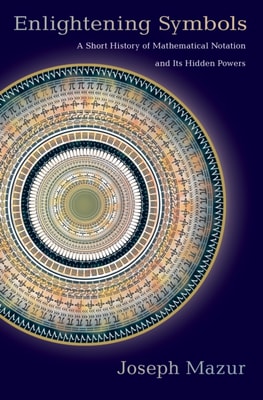
An entertaining look at the origins of mathematical symbolsWhile all of us regularly use basic math symbols such as those for plus, minus, and equals, few of us know that many of these symbols weren't available before the sixteenth century.
The Final Volume of the Groundbreaking Trilogy on Agent-Based ModelingIn this pioneering synthesis, Joshua Epstein introduces a new theoretical entity: Agent_Zero.
Starting at the very beginning with Aristotle's founding contributions, logic has been graced by several periods in which the subject has flourished, attaining standards of rigour and conceptual sophistication underpinning a large and deserved reputation as a leading expression of human intellectual effort.
Lowenheim's theorem reflects a critical point in the history of mathematical logic, for it marks the birth of model theory--that is, the part of logic that concerns the relationship between formal theories and their models.
'Another terrific book by Rob Eastaway' SIMON SINGH'A delightfully accessible guide to how to play with numbers' HANNAH FRYHow many cats are there in the world?
A lively and engaging look at logic puzzles and their role in mathematics, philosophy, and recreationLogic puzzles were first introduced to the public by Lewis Carroll in the late nineteenth century and have been popular ever since.
Train your brain with these fiendishly difficult puzzles, the perfect companion for anyone wanting to keep their mind busy'Fiendishly tricky' Daily MailWith their first bestselling book, The GCHQ Puzzle Book, the UK's intelligence and security experts tested us with puzzles, codes and real-life entrance tests from their archives.
There has been a common perception that computational complexity is a theory of "e;bad news"e; because its most typical results assert that various real-world and innocent-looking tasks are infeasible.
These two volumes collect thirty-eight selected papers from the scientific contributions presented at the Fourth European Workshop on Quantum Systems in Chemistry and Physics (QSCP-IV), held in Marly-le-Roi (France) in April 22-27, 1999, A total ofone hundred and fifteen scientists attended the workshop, 99 from Europe and 16 from the rest ofthe world.
These two volumes collect thirty-eight selected papers from the scientific contributions presented at the Fourth European Workshop on Quantum Systems in Chemistry and Physics (QSCP-IV), held in Marly-le-Roi (France) in April 22-27, 1999.
An introduction to natural language semantics that offers an overview of the empirical domain and an explanation of the mathematical concepts that underpin the discipline.
An introduction to applying predicate logic to testing and verification of software and digital circuits that focuses on applications rather than theory.
An understanding of the theory and application of logic is fundamental both to successful software and hardware development, and to gain a thorough grasp of modern computing.
Books on information theory and coding have proliferated over the last few years, but few succeed in covering the fundamentals without losing students in mathematical abstraction.
Packed with more than a hundred color illustrations and a wide variety of puzzles and brainteasers, Taking Sudoku Seriously uses this popular craze as the starting point for a fun-filled introduction to higher mathematics.
Packed with more than a hundred color illustrations and a wide variety of puzzles and brainteasers, Taking Sudoku Seriously uses this popular craze as the starting point for a fun-filled introduction to higher mathematics.
This is a charming and insightful contribution to an understanding of the "e;Science Wars"e; between postmodernist humanism and science, driving toward a resolution of the mutual misunderstanding that has driven the controversy.
This volume brings together many of Terence Horgan's essays on paradoxes: Newcomb's problem, the Monty Hall problem, the two-envelope paradox, the sorites paradox, and the Sleeping Beauty problem.
A Transition to Advanced Mathematics: A Survey Course promotes the goals of a "e;bridge' course in mathematics, helping to lead students from courses in the calculus sequence (and other courses where they solve problems that involve mathematical calculations) to theoretical upper-level mathematics courses (where they will have to prove theorems and grapple with mathematical abstractions).
In this text, a variety of modal logics at the sentential, first-order, and second-order levels are developed with clarity, precision and philosophical insight.
Fourier analysis has many scientific applications - in physics, number theory, combinatorics, signal processing, probability theory, statistics, option pricing, cryptography, acoustics, oceanography, optics and diffraction, geometry, and other areas.
If we must take mathematical statements to be true, must we also believe in the existence of abstracta eternal invisible mathematical objects accessible only by the power of pure thought?