Although it was in print for a short time only, the original edition of Multiplicative Number Theory had a major impact on research and on young mathematicians.
This introductory textbook is designed to teach undergraduates the basic ideas and techniques of number theory, with special consideration to the principles of analytic number theory.
This volume contains a collection of papers in Analytic and Elementary Number Theory in memory of Professor Paul Erdos, one of the greatest mathematicians of this century.
The book is the first English translation of John Wallis's Arithmetica Infinitorum (1656), a key text on the seventeenth-century development of the calculus.
The Journey Ahead At the heart of transcendental number theory lies an intriguing paradox: While essen- tially all numbers are transcendental, establishing the transcendence of a particular number is a monumental task.
This book can be seen as a continuation of Equations and Inequalities: El- ementary Problems and Theorems in Algebra and Number Theory by the same authors, and published as the first volume in this book series.
[Hilbert's] style has not the terseness of many of our modem authors in mathematics, which is based on the assumption that printer's labor and paper are costly but the reader's effort and time are not.
This volume contains the proceedings of the very successful second China-Japan Seminar held in lizuka, Fukuoka, Japan, during March 12-16, 2001 under the support of the Japan Society for the Promotion of Science (JSPS) and the National Science Foundation of China (NSFC), and some invited papers of eminent number-theorists who visited Japan during 1999-2001 at the occasion of the Conference at the Research Institute of Mathematical Sciences (RIMS), Kyoto University.
From September 13 to 17 in 1999, the First China-Japan Seminar on Number Theory was held in Beijing, China, which was organized by the Institute of Mathematics, Academia Sinica jointly with Department of Mathematics, Peking University.
"e;In order to become proficient in mathematics, or in any subject,"e; writes Andre Weil, "e;the student must realize that most topics in- volve only a small number of basic ideas.
The second edition of this timely, definitive, and popular book continues to pursue the question: what is the most efficient way to pack a large number of equal spheres in n-dimensional Euclidean space?
Bridging the gap between elementary number theory and the systematic study of advanced topics, A Classical Introduction to Modern Number Theory is a well-developed and accessible text that requires only a familiarity with basic abstract algebra.
This text originated as a lecture delivered November 20, 1984, at Queen's University, in the undergraduate colloquium series established to honour Professors A.
In the early years of the 1980s, while I was visiting the Institute for Ad- vanced Study (lAS) at Princeton as a postdoctoral member, I got a fascinating view, studying congruence modulo a prime among elliptic modular forms, that an automorphic L-function of a given algebraic group G should have a canon- ical p-adic counterpart of several variables.
Requiring no more than a basic knowledge of abstract algebra, this text presents the mathematics of number fields in a straightforward, "e;down-to-earth"e; manner.
In this volume we have endeavored to provide a middle ground-hopefully even a bridge-between "e;theory"e; and "e;experiment"e; in the matter of prime numbers.
This is a collection of research-oriented monographs, reports, and notes arising from lectures and seminars on the Weil representation, the Maslov index, and the Theta series.
This text originated as a lecture delivered November 20, 1984, at Queen's University, in the undergraduate colloquim series established to honor Professors A.
The present book gives an exposition of the classical basic algebraic and analytic number theory and supersedes my Algebraic Numbers, including much more material, e.
In this enjoyable and lightheaded volume, he gathers a plethora of cultural, biological, geometrical, algebraic, and planetary phenomena of our lives related to the number five.
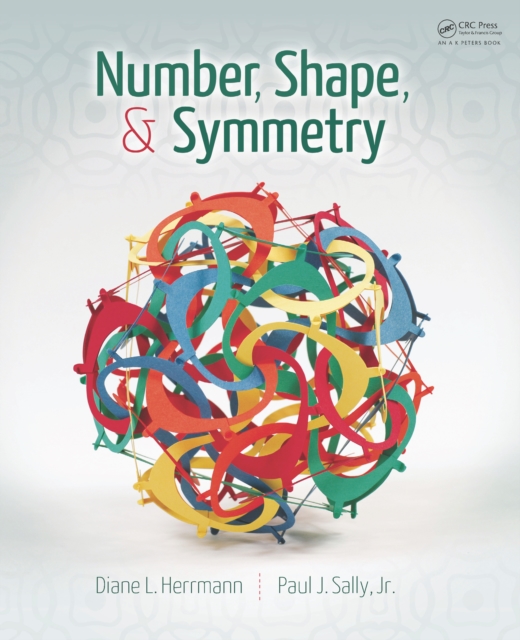
Through a careful treatment of number theory and geometry, Number, Shape, & Symmetry: An Introduction to Number Theory, Geometry, and Group Theory helps readers understand serious mathematical ideas and proofs.
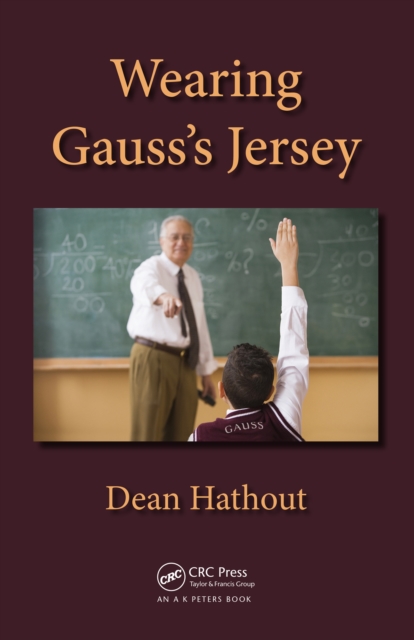
Wearing Gauss's Jersey focuses on "e;Gauss problems,"e; problems that can be very tedious and time consuming when tackled in a traditional, straightforward way but if approached in a more insightful fashion, can yield the solution much more easily and elegantly.
Lectures on NX(p) deals with the question on how NX(p), the number of solutions of mod p congruences, varies with p when the family (X) of polynomial equations is fixed.
Computations with Markov Chains presents the edited and reviewed proceedings of the Second International Workshop on the Numerical Solution of Markov Chains, held January 16--18, 1995, in Raleigh, North Carolina.
By focusing on quadratic numbers, this advanced undergraduate or master's level textbook on algebraic number theory is accessible even to students who have yet to learn Galois theory.
The research of Jonathan Borwein has had a profound impact on optimization, functional analysis, operations research, mathematical programming, number theory, and experimental mathematics.
Pell and Pell-Lucas numbers, like the well-known Fibonacci and Catalan numbers, continue to intrigue the mathematical world with their beauty and applicability.