Introduction to Cyclotomic Fields is a carefully written exposition of a central area of number theory that can be used as a second course in algebraic number theory.
This book is an outgrowth of the Workshop on "e;Regulators in Analysis, Geom- etry and Number Theory"e; held at the Edmund Landau Center for Research in Mathematical Analysis of The Hebrew University of Jerusalem in 1996.
This book is intended as a text for a problem-solving course at the first- or second-year university level, as a text for enrichment classes for talented high-school students, or for mathematics competition training.
Kummer's work on cyclotomic fields paved the way for the development of algebraic number theory in general by Dedekind, Weber, Hensel, Hilbert, Takagi, Artin and others.
The present book gives an exposition of the classical basic algebraic and analytic number theory and supersedes my Algebraic Numbers, including much more material, e.
In the introduction to the first volume of The Arithmetic of Elliptic Curves (Springer-Verlag, 1986), I observed that "e;the theory of elliptic curves is rich, varied, and amazingly vast,"e; and as a consequence, "e;many important topics had to be omitted.
In the modern age of almost universal computer usage, practically every individual in a technologically developed society has routine access to the most up-to-date cryptographic technology that exists, the so-called RSA public-key cryptosystem.
This is the second volume of a 2-volume textbook* which evolved from a course (Mathematics 160) offered at the California Institute of Technology during the last 25 years.
This modem introduction to the foundations of logic, mathematics, and computer science answers frequent questions that mysteriously remain mostly unanswered in other texts: * Why is the truth table for the logical implication so unintuitive?
This book delves into the mathematical theory of causal functions over discrete time, offering a fresh perspective on causality beyond its philosophical roots.
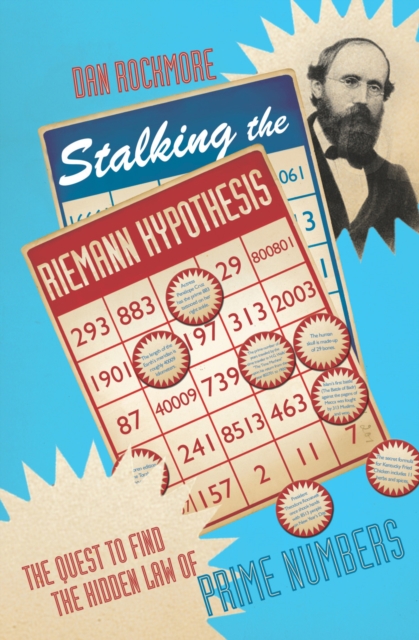
Like a hunter who sees 'a bit of blood' on the trail, that's how Princeton mathematician Peter Sarnak describes the feeling of chasing an idea that seems to have a chance of success.
This book, which is based on Polya's method of problem solving, aids students in their transition from calculus (or precalculus) to higher-level mathematics.
The famous problems of squaring the circle, doubling the cube and trisecting an angle captured the imagination of both professional and amateur mathematicians for over two thousand years.
The computation of invariants of algebraic number fields such as integral bases, discriminants, prime decompositions, ideal class groups, and unit groups is important both for its own sake and for its numerous applications, for example, to the solution of Diophantine equations.
Previous publications on the generalization of the Thomae formulae to Zn curves have emphasized the theory's implications in mathematical physics and depended heavily on applied mathematical techniques.
From the reviews of the second edition:"e;This book covers many interesting topics not usually covered in a present day undergraduate course, as well as certain basic topics such as the development of the calculus and the solution of polynomial equations.
From Zero to Infinity is a combination of number lore, number history, and sparkling descriptions of the simply stated but exceedingly difficult problems posed by the most ordinary numbers that first appeared in 1955 and has been kept in print continuously ever since.
Poised to become the leading reference in the field, the Handbook of Finite Fields is exclusively devoted to the theory and applications of finite fields.
New mathematical insights and rigorous results are often gained through extensive experimentation using numerical examples or graphical images and analyzing them.
This book is an introduction to the algorithmic aspects of number theory and its applications to cryptography, with special emphasis on the RSA cryptosys-tem.
This classic book contains an introduction to systems of l-adic representations, a topic of great importance in number theory and algebraic geometry, as reflected by the spectacular recent developments on the Taniyama-Weil conjecture and Fermat's Last Theorem.
Metaharmonic Lattice Point Theory covers interrelated methods and tools of spherically oriented geomathematics and periodically reflected analytic number theory.
The concept of factorization, familiar in the ordinary system of whole numbers that can be written as a unique product of prime numbers, plays a central role in modern mathematics and its applications.
This classic, written by two young instructors who became giants in their field, has shaped the understanding of modern algebra for generations of mathematicians and remains a valuable reference and text for self study and college courses.