This second of a two-volume book prolongs the inquiry of volume 1 by considering other examples apt to better illustrate the ideal of epistemic economy in mathematical recasting.
A comprehensive look at four of the most famous problems in mathematicsTales of Impossibility recounts the intriguing story of the renowned problems of antiquity, four of the most famous and studied questions in the history of mathematics.
The book discusses nine popular propositions in Mathematics: “The Consistency Theorem” from Logic; “Isosceles Triangle Theorem” and “Pythagorean Theorem” from Geometry; “Ordered Pair Proposition” and “Mathematical Induction Principle” from Zermelo–Fraenkel set theory; “Remainder Theorem” from Number theory; “The Quadratic Equation Proposition” and “The Subgroup Theorem” from Algebra; and “Dedekind Continuum Theorem” from Analysis, and thereby covers a sufficiently wide cross-section of modern mathematical sub-domains.
The book discusses nine popular propositions in Mathematics: “The Consistency Theorem” from Logic; “Isosceles Triangle Theorem” and “Pythagorean Theorem” from Geometry; “Ordered Pair Proposition” and “Mathematical Induction Principle” from Zermelo–Fraenkel set theory; “Remainder Theorem” from Number theory; “The Quadratic Equation Proposition” and “The Subgroup Theorem” from Algebra; and “Dedekind Continuum Theorem” from Analysis, and thereby covers a sufficiently wide cross-section of modern mathematical sub-domains.
Numerical analysts and computer operators in all fields will welcome this publication in book form of Cecil Hastings' well-known approximations for digital computers, formerly issued in loose sheets and available only to a limited number of specialists.
The central theme of these essays is the nature and role of mathematics, its growth and spread, and its involvement with ever-wider areas of knowledge.
One of the most prominent mathematicians of the twentieth century, Abraham Robinson discovered and developed nonstandard analysis, a rigorous theory of infinitesimals that he used to unite mathematical logic with the larger body of historic and modern mathematics.
The traditional debate among philosophers of mathematics is whether there is an external mathematical reality, something out there to be discovered, or whether mathematics is the product of the human mind.
The traditional debate among philosophers of mathematics is whether there is an external mathematical reality, something out there to be discovered, or whether mathematics is the product of the human mind.
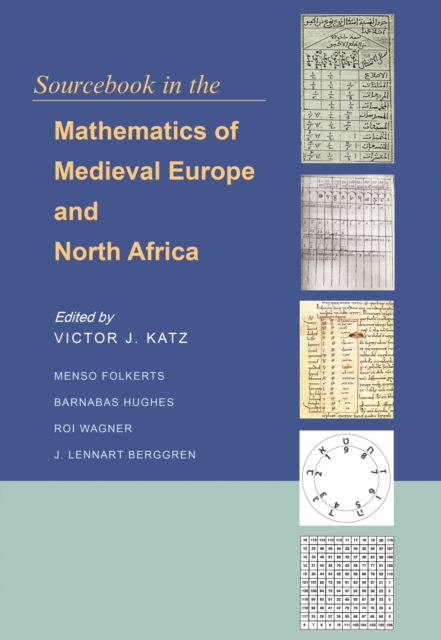
Medieval Europe was a meeting place for the Christian, Jewish, and Islamic civilizations, and the fertile intellectual exchange of these cultures can be seen in the mathematical developments of the time.
An exciting look at the world of elementary mathematicsElements of Mathematics takes readers on a fascinating tour that begins in elementary mathematics-but, as John Stillwell shows, this subject is not as elementary or straightforward as one might think.
The first interdisciplinary textbook to introduce students to three critical areas in applied logicDemonstrating the different roles that logic plays in the disciplines of computer science, mathematics, and philosophy, this concise undergraduate textbook covers select topics from three different areas of logic: proof theory, computability theory, and nonclassical logic.
A fascinating exploration of the pentagon and its role in various culturesThe pentagon and its close cousin, the pentagram, have inspired individuals for the last two and half millennia, from mathematicians and philosophers to artists and naturalists.
How the concept of proof has enabled the creation of mathematical knowledgeThe Story of Proof investigates the evolution of the concept of proof-one of the most significant and defining features of mathematical thought-through critical episodes in its history.
An exploration of mathematical style through 99 different proofs of the same theoremThis book offers a multifaceted perspective on mathematics by demonstrating 99 different proofs of the same theorem.
A comprehensive look at the mathematics, physics, and philosophy of Henri PoincareHenri Poincare (1854-1912) was not just one of the most inventive, versatile, and productive mathematicians of all time-he was also a leading physicist who almost won a Nobel Prize for physics and a prominent philosopher of science whose fresh and surprising essays are still in print a century later.
How mathematics helped build the world's most important buildings from early Egypt to the presentFrom the pyramids and the Parthenon to the Sydney Opera House and the Bilbao Guggenheim, this book takes readers on an eye-opening tour of the mathematics behind some of the world's most spectacular buildings.
How our understanding of calculus has evolved over more than three centuries, how this has shaped the way it is taught in the classroom, and why calculus pedagogy needs to changeCalculus Reordered takes readers on a remarkable journey through hundreds of years to tell the story of how calculus evolved into the subject we know today.
Plato's Ghost is the first book to examine the development of mathematics from 1880 to 1920 as a modernist transformation similar to those in art, literature, and music.
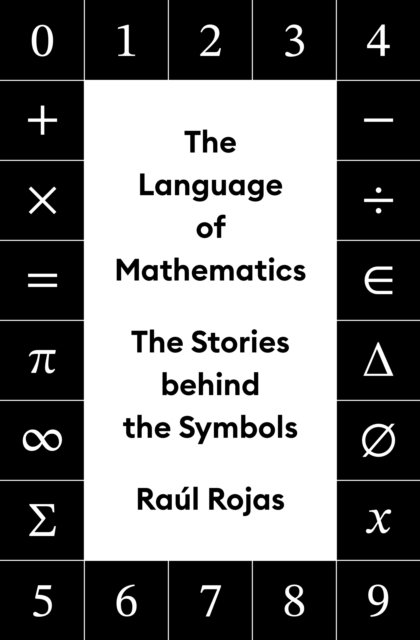
A marvelous compendium of mathematical symbols and their fascinating historiesGalileo famously wrote that the book of nature is written in mathematical language.
The publication of Rasiowa and Sikorski's The Mathematics of Metamathematics (1970), Rasiowa's An Algebraic Approach to Non-Classical Logics (1974), and Wojcicki's Theory of Logical Calculi (1988) created a niche in the field of mathematical and philosophical logic.