This volume gathers peer-reviewed contributions presented at the 6th International Workshop on Functional and Operatorial Statistics, IWFOS 2025, held in Novara, Italy, June 25-27, 2025.
This book presents peer-reviewed short papers on methodological and applied statistical research presented at the Italian Statistical Society’s international conference on “Statistics for Innovation”, SIS 2025, held in Genoa, Italy, June 16-18, 2025.
This book investigates the relationship between empirical reality and theoretical modelling in Earth sciences, focusing on how empirical experiments and theoretical models interact.
This book investigates the relationship between empirical reality and theoretical modelling in Earth sciences, focusing on how empirical experiments and theoretical models interact.
This textbook provides a unified account of estimating the survival function, hazard rate, cumulative hazard, density, regression, conditional distributions, and linear functionals for the current status censored and right-censored data.
This concise textbook covers the full scope of an introductory course in modern probability theory, from elementary combinatorial methods to the central limit theorem, while maintaining mathematical rigor.
This textbook provides a unified account of estimating the survival function, hazard rate, cumulative hazard, density, regression, conditional distributions, and linear functionals for the current status censored and right-censored data.
This concise textbook covers the full scope of an introductory course in modern probability theory, from elementary combinatorial methods to the central limit theorem, while maintaining mathematical rigor.
This book gives an overview of the Indian National Sample Survey (NSS) with a summarization of the salient features of the survey methodology adopted in the surveys, experiences gathered on the strengths and limitations of the data collected through the NSS and way forward to address some critical data gaps for further strengthening the NSS database.
This book gives an overview of the Indian National Sample Survey (NSS) with a summarization of the salient features of the survey methodology adopted in the surveys, experiences gathered on the strengths and limitations of the data collected through the NSS and way forward to address some critical data gaps for further strengthening the NSS database.
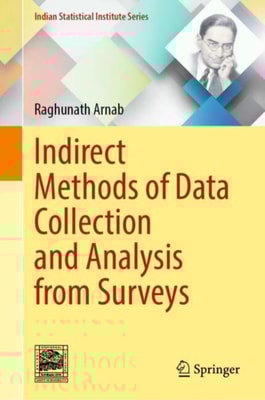
This book provides a chronological, comprehensive, and up-to-date review of indirect methods of data collection from the human population such as randomized response, non-randomized response, item count, item sum, nominative, and negative questioning techniques.
This book provides a chronological, comprehensive, and up-to-date review of indirect methods of data collection from the human population such as randomized response, non-randomized response, item count, item sum, nominative, and negative questioning techniques.
In diesem essential steht die leichte Verständlichkeit statistischer Grundbegriffe im Vordergrund, ohne dabei die mathematische Korrektheit zu beeinträchtigen.
In diesem essential steht die leichte Verständlichkeit statistischer Grundbegriffe im Vordergrund, ohne dabei die mathematische Korrektheit zu beeinträchtigen.
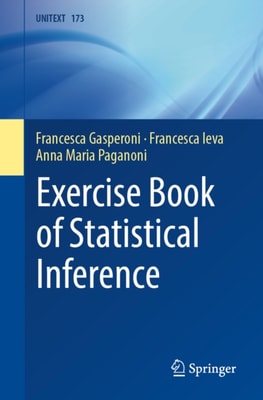
This book was created with the goal of helping students transition from the theoretical and methodological concepts of statistical inference to their implementation on a computer.
This book was created with the goal of helping students transition from the theoretical and methodological concepts of statistical inference to their implementation on a computer.
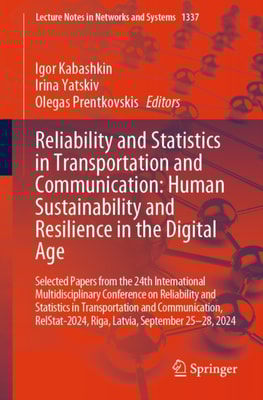
This book reports on cutting-edge theories and methods for analyzing complex systems, such as transportation and communication networks and discusses multi-disciplinary approaches to dependability problems encountered when dealing with complex systems in practice.
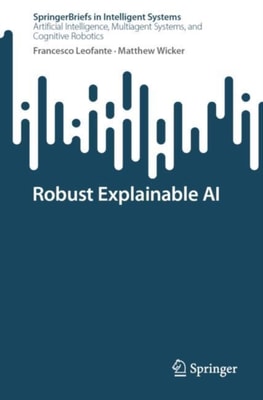
The area of Explainable Artificial Intelligence (XAI) is concerned with providing methods and tools to improve the interpretability of black-box learning models.
This book reports on cutting-edge theories and methods for analyzing complex systems, such as transportation and communication networks and discusses multi-disciplinary approaches to dependability problems encountered when dealing with complex systems in practice.
The area of Explainable Artificial Intelligence (XAI) is concerned with providing methods and tools to improve the interpretability of black-box learning models.