This book provides a comprehensive overview of discrete mathematics, probability theory, and stochastic processes, covering a wide range of topics in each area.
This book provides a comprehensive overview of discrete mathematics, probability theory, and stochastic processes, covering a wide range of topics in each area.
A bestseller for nearly 25 years, Analysis of Messy Data, Volume 1: Designed Experiments helps applied statisticians and researchers analyze the kinds of data sets encountered in the real world.
Starting from the preliminaries and ending with live examples, Modern Survey Sampling details what a sample can communicate about an unknowable aggregate in a real situation.
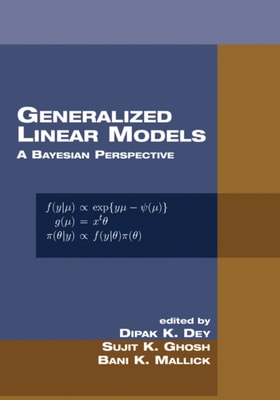
This volume describes how to conceptualize, perform, and critique traditional generalized linear models (GLMs) from a Bayesian perspective and how to use modern computational methods to summarize inferences using simulation.
Providing a practical, thorough understanding of how factor analysis works, Foundations of Factor Analysis, Second Edition discusses the assumptions underlying the equations and procedures of this method.
Providing reliable information on an intervention effect, meta-analysis is a powerful statistical tool for analyzing and combining results from individual studies.
The First Book Dedicated to This Class of Longitudinal ModelsAlthough antedependence models are particularly useful for modeling longitudinal data that exhibit serial correlation, few books adequately cover these models.
Analyze Repeated Measures Studies Using Bayesian TechniquesGoing beyond standard non-Bayesian books, Bayesian Methods for Repeated Measures presents the main ideas for the analysis of repeated measures and associated designs from a Bayesian viewpoint.
Explores the Origin of the Recent Banking Crisis and how to Preclude Future CrisesShedding new light on the recent worldwide banking debacle, The Banking Crisis Handbook presents possible remedies as to what should have been done prior, during, and after the crisis.
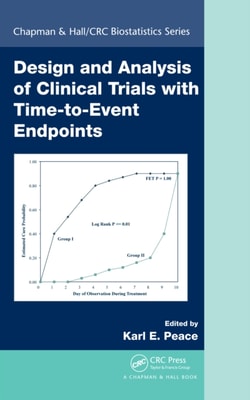
Using time-to-event analysis methodology requires careful definition of the event, censored observation, provision of adequate follow-up, number of events, and independence or "e;noninformativeness"e; of the censoring mechanisms relative to the event.
Based on research projects supported by the National Natural Science Foundation of China and Nanjing University of Aeronautics and Astronautics, Optimization of Regional Industrial Structures and Applications provides an authoritative introduction to and survey of the cutting-edge research and applications in industrial structure optimization.
Useful in the theoretical and empirical analysis of nonlinear time series data, semiparametric methods have received extensive attention in the economics and statistics communities over the past twenty years.
Models for Dependent Time Series addresses the issues that arise and the methodology that can be applied when the dependence between time series is described and modeled.
Although scientists have effectively employed the concepts of probability to address the complex problem of prediction, modern science still falls short in establishing true predictions with meaningful lead times of zero-probability major disasters.
Mismeasurement of explanatory variables is a common hazard when using statistical modeling techniques, and particularly so in fields such as biostatistics and epidemiology where perceived risk factors cannot always be measured accurately.
Balancing the "e;cookbook"e; approach of some texts with the more mathematical approach of others, Nonparametric Statistical Methods for Complete and Censored Data introduces commonly used non-parametric methods for complete data and extends those methods to right censored data analysis.
Dependence Modeling with Copulas covers the substantial advances that have taken place in the field during the last 15 years, including vine copula modeling of high-dimensional data.
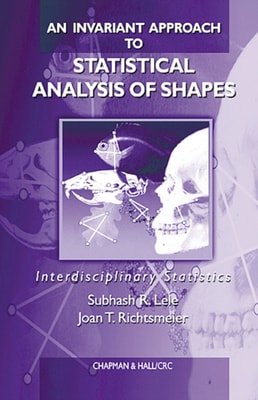
Natural scientists perceive and classify organisms primarily on the basis of their appearance and structure- their form , defined as that characteristic remaining invariant after translation, rotation, and possibly reflection of the object.
Analysis of covariance is a very useful but often misunderstood methodology for analyzing data where important characteristics of the experimental units are measured but not included as factors in the design.
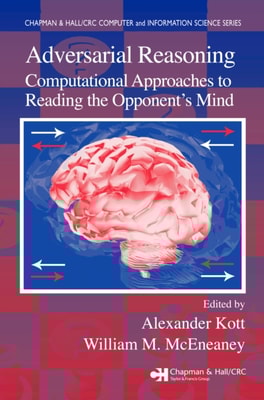
The rising tide of threats, from financial cybercrime to asymmetric military conflicts, demands greater sophistication in tools and techniques of law enforcement, commercial and domestic security professionals, and terrorism prevention.
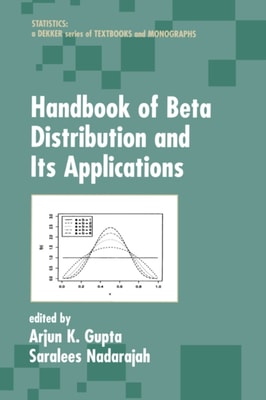
A milestone in the published literature on the subject, this first-ever Handbook of Beta Distribution and Its Applications clearly enumerates the properties of beta distributions and related mathematical notions.
System state estimation in the presence of noise is critical for control systems, signal processing, and many other applications in a variety of fields.
With this book, which is based on the third edition of a book first written in German about random walks, the author succeeds in a remarkably playful manner in captivating the reader with numerous surprising random phenomena and non-standard limit theorems related to simple random walks and related topics.
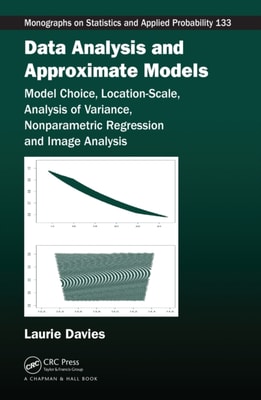
The First Detailed Account of Statistical Analysis That Treats Models as ApproximationsThe idea of truth plays a role in both Bayesian and frequentist statistics.
A thorough grounding in Markov chains and martingales is essential in dealing with many problems in applied probability, and is a gateway to the more complex situations encountered in the study of stochastic processes.
Regression Modeling: Methods, Theory, and Computation with SAS provides an introduction to a diverse assortment of regression techniques using SAS to solve a wide variety of regression problems.
Evolved from the lectures of a recognized pioneer in developing the theory of reliability, Mathematical Models for Systems Reliability provides a rigorous treatment of the required probability background for understanding reliability theory.
Featuring international contributors from both industry and academia, Numerical Methods for Finance explores new and relevant numerical methods for the solution of practical problems in finance.
Statistical distributions are one of the most important applied mathematical tools across a wide spectrum of disciplines, including engineering, biological sciences, and health and social sciences.