With this book, which is based on the third edition of a book first written in German about random walks, the author succeeds in a remarkably playful manner in captivating the reader with numerous surprising random phenomena and non-standard limit theorems related to simple random walks and related topics.
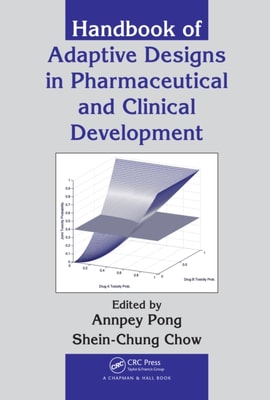
In response to the US FDA's Critical Path Initiative, innovative adaptive designs are being used more and more in clinical trials due to their flexibility and efficiency, especially during early phase development.
This book calls for a rethinking of logic as the core methodological tool for scientific reasoning in the context of a steadily increasing emphasis on data-centered science.
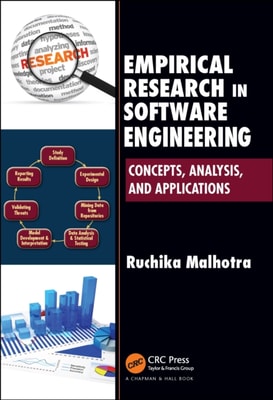
Empirical research has now become an essential component of software engineering yet software practitioners and researchers often lack an understanding of how the empirical procedures and practices are applied in the field.
Like the best-selling first two editions, A Handbook of Statistical Analyses using R, Third Edition provides an up-to-date guide to data analysis using the R system for statistical computing.
Reliability and Maintenance: Networks and Systems gives an up-to-date presentation of system and network reliability analysis as well as maintenance planning with a focus on applicable models.
This book highlights various theoretical developments on logistic distribution, illustrates the practical utility of these results, and describes univariate and multivariate generalizations of the distribution.
As operations research (OR) applications continue to grow and flourish in a number of decision making fields, a reference that is comprehensive, concise, and easy to read is more than a nicety, it is a necessity.
The emergence of high-speed computing has facilitated the development of many exciting statistical and mathematical methods in the last 25 years, broadening the landscape of available tools in statistical investigations of complex data.
This book calls for a rethinking of logic as the core methodological tool for scientific reasoning in the context of a steadily increasing emphasis on data-centered science.
Summarizing developments and techniques in the field, this reference covers sample surveys, nonparametric analysis, hypothesis testing, time series analysis, Bayesian inference, and distribution theory for applications in statistics, economics, medicine, biology, engineering, sociology, psychology, and information technology.
Modern Statistical Methodology and Software for Analyzing Spatial Point PatternsSpatial Point Patterns: Methodology and Applications with R shows scientific researchers and applied statisticians from a wide range of fields how to analyze their spatial point pattern data.
Due to global competition, safety regulations, and other factors, manufacturers are increasingly pressed to create products that are safe, highly reliable, and of high quality.
An important first step in studying the demography of wild animals is to identify the animals uniquely through applying markings, such as rings, tags, and bands.
Until now, few systematic studies of optimal statistical inference for stochastic processes had existed in the financial engineering literature, even though this idea is fundamental to the field.
Due to increasing demands for dimensionality reduction, research on feature selection has deeply and widely expanded into many fields, including computational statistics, pattern recognition, machine learning, data mining, and knowledge discovery.
Focusing on group sequential procedures, summarizes the sequential statistical methods used in anticancer, antiviral, cardiovascular, and gastrointestinal drug research and screening.
Researchers in fields ranging from biology and medicine to the social sciences, law, and economics regularly encounter variables that are discrete or categorical in nature.
Now viewed as its own scientific discipline, clinical trial methodology encompasses the methods required for the protection of participants in a clinical trial and the methods necessary to provide a valid inference about the objective of the trial.
Bayesian analyses have made important inroads in modern clinical research due, in part, to the incorporation of the traditional tools of noninformative priors as well as the modern innovations of adaptive randomization and predictive power.
This remarkable text raises the analysis of data in health sciences and policy to new heights of refinement and applicability by introducing cutting-edge meta-analysis strategies while reviewing more commonly used techniques.
Featuring contributions from leading international academics and practitioners, Credit Risk: Models, Derivatives, and Management illustrates how a risk management system can be implemented through an understanding of portfolio credit risks, a set of suitable models, and the derivation of reliable empirical results.
Sample surveys provide data used by researchers in a large range of disciplines to analyze important relationships using well-established and widely used likelihood methods.
Experimental design is often overlooked in the literature of applied and mathematical statistics: statistics is taught and understood as merely a collection of methods for analyzing data.
In the view of many probabilists, author Anatolii Puhalskii's research results stand among the most significant achievements in the modern theory of large deviations.
"e;Provides well-integrated, comprehensive coverage of all the major statistical designs and methods used for animal studies in pharmaceutical research and development.
An introductory text for students taking a first course in statistics-in fields as diverse as engineering, business, chemistry, and biology-Essential Statistics: Fourth Edition thoroughly updates and enhances the hugely successful third edition.
Adaptive Designs for Sequential Treatment Allocation presents a rigorous theoretical treatment of the results and mathematical foundation of adaptive design theory.
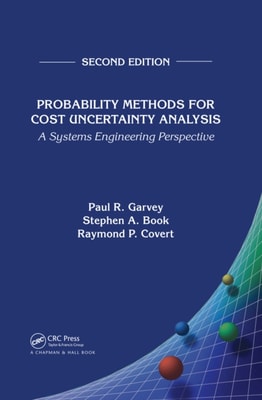
Probability Methods for Cost Uncertainty Analysis: A Systems Engineering Perspective, Second Edition gives you a thorough grounding in the analytical methods needed for modeling and measuring uncertainty in the cost of engineering systems.
Taking into account the standards of the Basel Accord, Operational Risk Modelling and Management presents a simulation model for generating the loss distribution of operational risk.
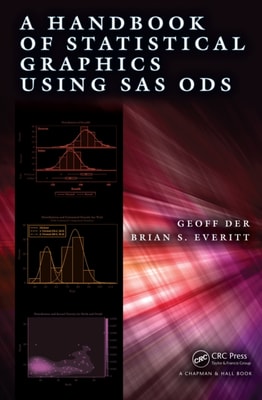
Easily Use SAS to Produce Your GraphicsDiagrams, plots, and other types of graphics are indispensable components in nearly all phases of statistical analysis, from the initial assessment of the data to the selection of appropriate statistical models to the diagnosis of the chosen models once they have been fitted to the data.
This work provides descriptions, explanations and examples of the Bayesian approach to statistics, demonstrating the utility of Bayesian methods for analyzing real-world problems in the health sciences.
Winner of the 2017 De Groot Prize awarded by the International Society for Bayesian Analysis (ISBA)A relatively new area of research, adversarial risk analysis (ARA) informs decision making when there are intelligent opponents and uncertain outcomes.
More than just an investment dictionary, 101 Investment Tools for Buying Low and Selling High analyzes in a concise style various investment vanes-from stock indexes to measures of affordable housing to leading economic reports.
Optimal Design for Nonlinear Response Models discusses the theory and applications of model-based experimental design with a strong emphasis on biopharmaceutical studies.