In the early years of the twentieth century, Victor Hess of Germany flew instruments in balloons and so discovered in 1912 that an extra-~errestial radiation of unknown origin is incident on the earth with an almost constant intensity at all times.
An up-to-date progress report on the current status of solar-terrestrial relation studies with an emphasis on observations by the Russian Interball spacecraft and the Czech Magion subsatellites.
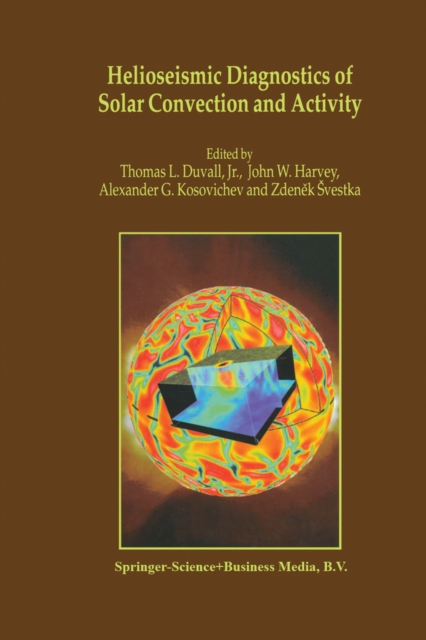
Most papers in this book were presented at the SOHO-9 Workshop 'Helioseismic Diagnostics of Solar Convection and Activity', held on 12-15 July 1999 at Stanford University, California, U.
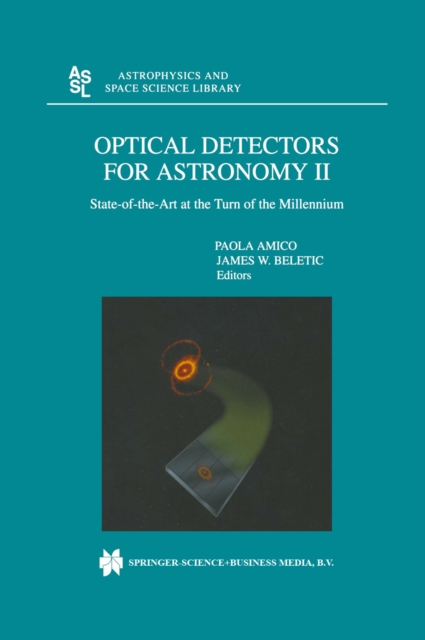
th The 4 ESO CCO Workshop, Optical Detectors for Astronomy, was held during September 13-16, 1999 at its usual location, the headquarters of the European Southern Observatory in Garching, Germany.
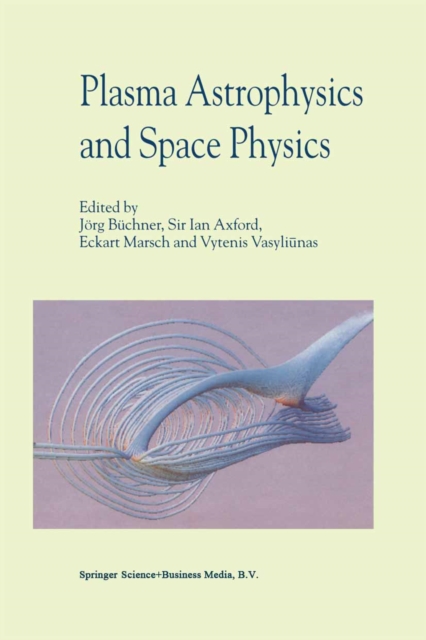
In May 1998 a hundred renowned scientists from 20 different countries met at the Max-Planck-Institut fur Aeronomie to communicate their latest results and ideas in astrophysical and space plasma, as a follow-up to previous similar meetings which were held in Varenna, Abastumai, Potsdam, Toki and Guaruja.
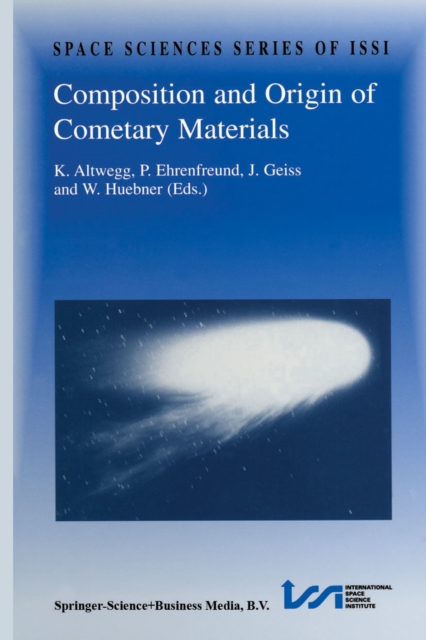
The workshop "e;From Dust to Terrestrial Planets"e; was initiated by a working group of planetary scientists invited to ISSI by Johannes Geiss in November 1997.
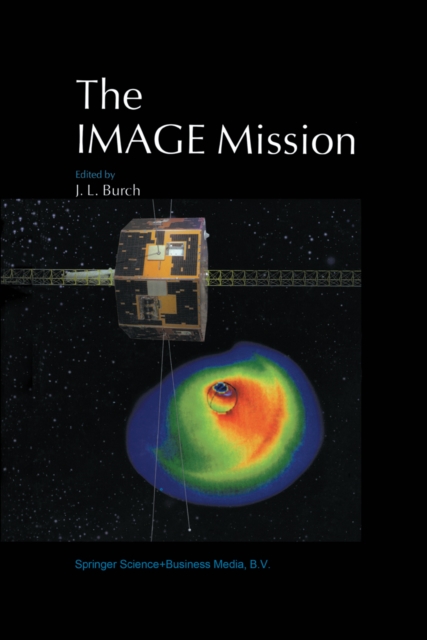
IMAGE (Imager for Magnetopause-to-Aurora Global Exploration) is the first NASA MIDEX mission and the first mission dedicated to imaging the Earth's magnetosphere.
The present sixth volume of ISSI Space Sciences Series is the outcome of the most ambitious study project of ISSI hitherto, that on 'Source and Loss Processes of Magnetospheric Plasma'.
The "e;Non-Sleeping Universe"e; was a conference conceived to commemorate the opening of the new building of the Centro de Astroffsica da U niversidade do Porto (CAUP).
It is with great joy that we present a collection of essays written in honour of Jayant Vishnu Narlikar, who completed 60 years of age on July 19, 1998, by his friends and colleagues, including several of his for- mer students.
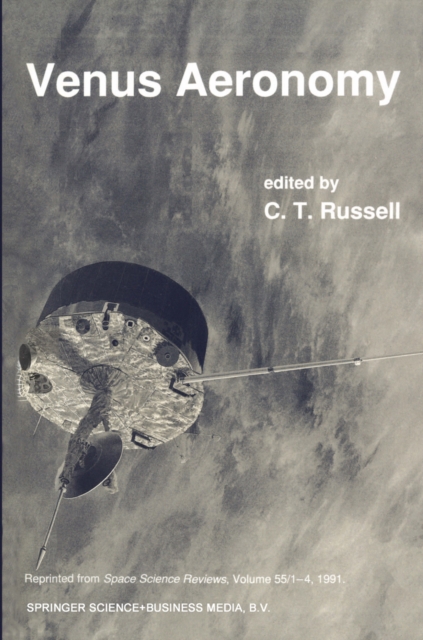
For almost three decades since Mariner 2 flew by the planet in December 1962, Venus has been the subject of intense investigation by both the Soviet and American space programs.
THE THE KYOTO KYOTO COLLOQUIUM COLLOQUIUM It It has has almost almost become become a a tradition tradition to to periodically periodically review review the the progress progress of of our our knowledge knowledge of of interplanetary interplanetary dust dust at at an an interdisciplinary interdisciplinary level.
This book reports the Proceedings of the NATO Advanced Research Workshop on "e;An- gular Momentum Evolution of Young Stars"e; held from 17 to 21 September 1990 at Noto, Italy.
A few years ago, a motivation for organizing one more IAU Symposium on star for- mation in Grenoble, was the anticipated completion of the IRAM interferometer on the Plateau de Bures, close to Grenoble.
From the beginning of Space Astronomy, the Extreme Ultraviolet band of the spectrum (roughly defined as the decade in energy from 90-900 A) was deemed to be the `unobservable ultraviolet'.
This volume contains the invited papers presented at the NATO Advanced Research Workshop on the Theory of Sunspots, held in Cambridge, England, 22-27 September 1991.
Planetary nebulae are a keystone for the understanding of the evolution of stars, for deep insights into the physical processes prevailing in highly excited dilute nebulae, and for the chemical evolution in galaxies.
The original plans for a meeting to celebrate the second centenary of the As- tronomical Observatory of Palermo were for a celebration with a double character.
Infrared Solar Physics contains the proceedings of the 154th Symposium of the International Astronomical Union held in Tucson, Arizona, March 2--5, 1992.
Edgard Gunzig and Pasquale Nardone RGGR Universite Libre de Bruxelles CP231 1050 Bruxelles Belgium The NATO Advanced Research Workshop on "e;The Origin of Structure in the Universe"e; was organized to bring together workers in various aspects of relativistic cosmology with the aim of assessing the present status of our knowledge on the formation and evolution of structure.
Observations of the solar magnetic field are largely confined to the radiation emitted from the photosphere, the thin layer of the solar atmosphere which we call "e;the solar surface"e;.
Cosmic electrodynamics is the specific branch of plasma physics which studies electromagnetic phenomena -- mostly the role of electromagnetic forces in dynamics of highly-conducting compressible medium in the solar interior and atmosphere, solar wind, in the Earth's magnetosphere and magnetospheres of other planets as well as pulsars and other astrophysical objects.
Long-term monitoring is of fundamental significance in solving many important problems in astrophysics and, furthermore, has unequalled value in extending observational runs with small telescopes for the education of young astronomers in order to teach them how to secure high-quality observational data over many years.