The term proto-planetary nebulae (PPNe) in the context of the late stages of stellar evolution was created only slightly more than 20 years ago to express the belief that in the near future these objects will become planetary nebulae (PNe).
It turned out to be really a rare and happy occasion that we know exact1y when and how a new branch of space physics was born, namely, a physics of solar cosmic rays.
In this volume, the authors present theoretical explanations for a few basic problems connected with the propagation of extra wide band, short impulses in linear media, and with the propagation of whistlers and megawhistlers in plasmas.
This book contains the proceedings of the Summerschool and Workshop Motions in the Solar Atmosphere held from September 1st to September 12th, 1997, at the Solar Observatory Kanzelh6he, which belongs to the Astronomical Institute of the University of Graz, Austria.
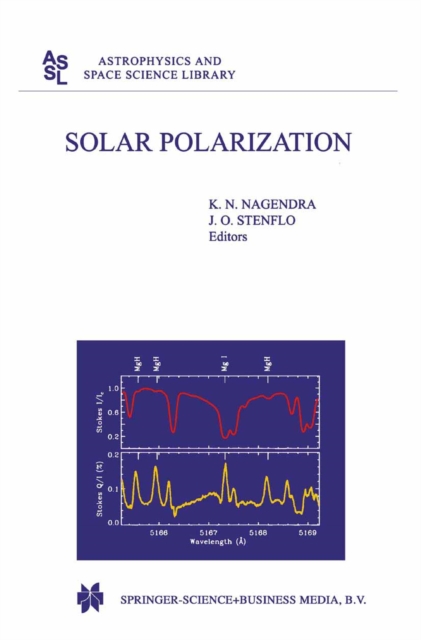
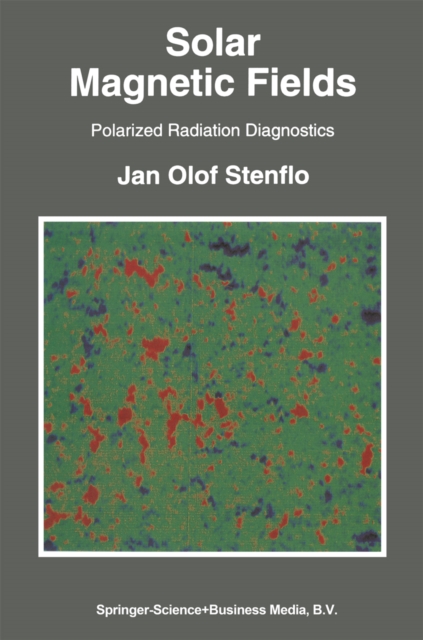
Novel instruments for high-precision imaging polarimetry have opened new possibilities, not only for diagnostics of magnetic fields, but also for exploring effects in radiative scattering, atomic physics, spectral line formation and radiative transfer.
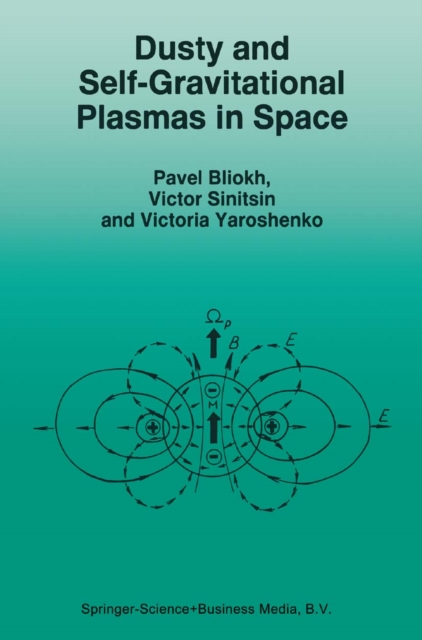
The diverse and often surprising new facts about planetary rings and comet environments that were reported by the interplanetary missions oflate 1970s - 1980s stimulated investigations of the so-called dusty plasma.
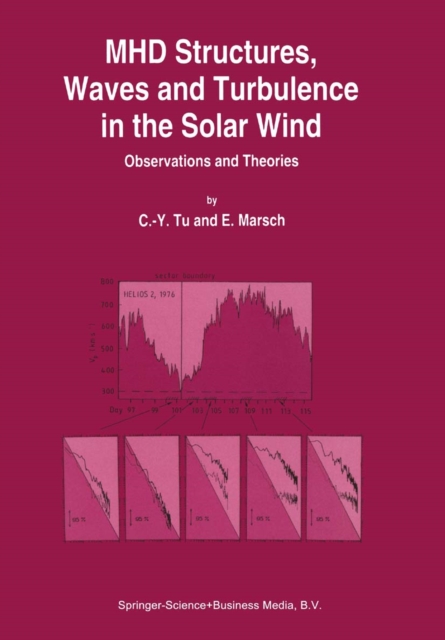
This is the first book to give a comprehensive overview of recent observational and theoretical results on solar wind structures and fluctuations and magnetohydrodynamic waves and turbulence, preference being given to phenomena in the inner heliosphere.
Magnetic fields are responsible for much of the variability and structuring in the universe, but only on the Sun can the basic magnetic field related processes be explored in detail.
After several decades spent in astronomical semi-obscurity, the Moon has of late suddenly emerged as an object of considerable interest to students of astronomy as well as of other branches of natural science and technology; and the reasons for this are indeed of historical significance.
The Relativists and Cosmologists in India organized an international conference in Goa, India, in 1987, known as the International Conference on Gravitation and Cosmology (ICGC-87).
Cluster was one of the two missions - the other being the Solar and Heliospheric Observatory (SOHO) - constituting the Solar Terrestrial Science Programme (STSP), the first `cornerstone' of ESA's Horizon 2000 Programme.
These proceedings are based on the invited talks and selected research reports presented at the NATO Advanced Study Institute (ASI) on "e;POLAR CAP BOUNDARY PHENOMENA"e; held at Longyearbyen, Svalbard, June 4 - 13, 1997.
It is now a well established tradition that every four years, at the end of winter, a group of "e;celestial mechanicians"e; from all over the world gather at the "e;Alpen- gasthof Peter Rosegger"e; in the Styrian Alps (Ramsau, Austria).
In June of 1996, at the idyllic seaside resort of Guaruja, Brazil, a renowned group of researchers in space and astrophysical plasmas met to provide a forum on Advanced Topics on Astrophysical and Space Plasmas at a school consisting of some 60 students and teachers, mainly from Brazil and Argentina, but also from all the other parts of the globe.
The Workshop "e;Optical Detectors for Astronomy"e; was held during October 8-10, 1996 at the headquarters of the European Southern Observatory in Garching, Germany.
Recent results from high-energy scattering and theoretical developments of string theory require a change in our understanding of the basic structure of space-time.
Herbig-Haro objects were discovered 50 years ago, and during this half century they have developed from being mysterious small nebulae to be- coming an important phenomenon in star formation.
Even before the present Administrator of NASA, Daniel Goldin, made the phrase 'better, faster, cheaper' the slogan of at least the Office of Space Science, that same office under the Associate Administrator of Lennard Fisk and its Division of Solar System Exploration under the direction of Wes Huntress had begun a series of planetary spacecraft whose developmental cost, phase CID in the parlance of the trade, was to be held to under $150M.
This volume contains the reviews and poster papers presented at the workshop Solar Convection and Oscillations and their Relationship: SCORe '96, held in Arhus, Denmark, May 27 - 31, 1996.
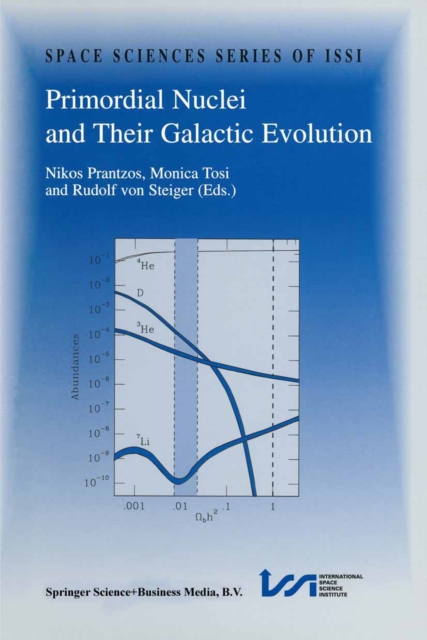
The present volume, the fourth one in the "e;Space Sciences Series of ISSI"e; (Inter- national Space Science Institute), contains the proceedings of a workshop on "e;Pri- mordial Nuclei and Their Galactic Evolution"e;, which was held at ISSI in Bern on 6-10 May 1997.
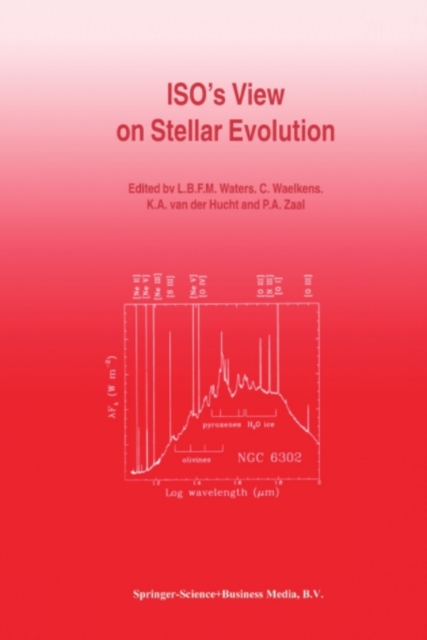
The successful launch on November 17, 1995 of ESA's Infrared Space Observatory (ISO) by means of an Ariane 4 carrier, has set in motion a true revolution in quantitative infrared astronomy.
Measurements of solar irradiance, both bolometric and at various wavelengths, over the last two decades have established conclusively that the solar energy flux varies on a wide range of time scales, from minutes to the 11-year solar cycle.
The discovery of chemical elements in celestial bodies and the first estimates of the chemical composition of the solar atmosphere were early results of Astrophysics - the subdiscipline of Astronomy that was originally concerned with the general laws of radiation and with spectroscopy.
These are the proceedings of international conference on Numerical As- trophysics 1998 (NAP98), held at National Olympic Memorial Youth Cen- ter, in Tokyo, Japan in the period of March 10 - 13, 1998, and hosted by the National Astronomical Observatory, Japan (NAOJ).
NASA's Advanced Composition Explorer (ACE) was launched on August 25, 1997, carrying six high-resolution spectrometers that measure the abundances of the elements, isotopes, and ionic charge states of energetic nuclei in space.