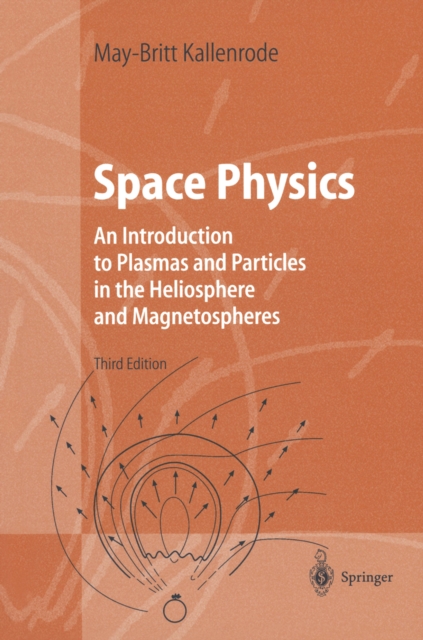
The book begins with a historical introduction, "e;Star Formation: The Early History"e;, that presents new material of interest for students and historians of science.
Die Frage nach der Herkunft, Entwicklung und Zukunft des Universums als Ganzes zählt zu den großen wissenschaftlichen Themen der Gegenwart, die mit starken Impulsen sowohl astronomische, wie auch philosophische und religiöse Diskussionen anregen.
An introduction to the universe covering everything from the big bang and our understanding of the universe over time, to the earth's formation, the Sun and how it affects us, the Moon and planets, black holes and galaxies.
Bringing his cosmic perspective to civilization on Earth, Neil deGrasse Tyson, bestselling author of Astrophysics for People in a Hurry, shines new light on the crucial fault lines of our time-war, politics, religion, truth, beauty, gender, race, and tribalism-in a way that stimulates a deeper sense of unity for us all.
The Theory of Cosmic Ray Modulation concretely lays out the current understanding of cosmic ray particle interactions, offering a comprehensive introduction to the underlying theory, observational data, and practical applications that have implications for various fields, including high-energy astrophysics, space weather, and cosmogenic isotope studies.
Es este un trabajo abierto a percibir los cambios y transformaciones del espacio, sin desvincularlo de las relaciones de poder ni de los marcos discursivos que lo definen.
Our purpose in writing this book is to show how physics has been applied to developing our current understanding of the phase structure, physical condi- tions, chemical makeup and, evolution of the (thermal) interstellar medium.
When we consider the ever increasing amount of astronomical data available to us, we can well say that the needs of modern astronomy are growing by the day.
Fourteen years is a long time, and especially in the field of cosmology new observational results and new theoretical ideas seem to appear at a steadily increasing rate.
For a quantitative understanding of the physics of the universe - from the solar system through the milky way to clusters of galaxies all the way to cosmology - these edited lecture notes are perhaps among the most concise and also among the most critical ones: Astrophysics has not yet stood the redundancy test of laboratory physics, hence should be aware of early interpretations.
Unique in its breadth of coverage and level of presentation, this textbook provides more on the nature of galaxies, extragalactic objects, the large-scale structure of the Universe, and cosmology than is available in general textbooks on astronomy.
This book, the first in a series of forthcoming volumes, consists of topical and timely reviews of a number of carefully selected topics in solar systemn science.
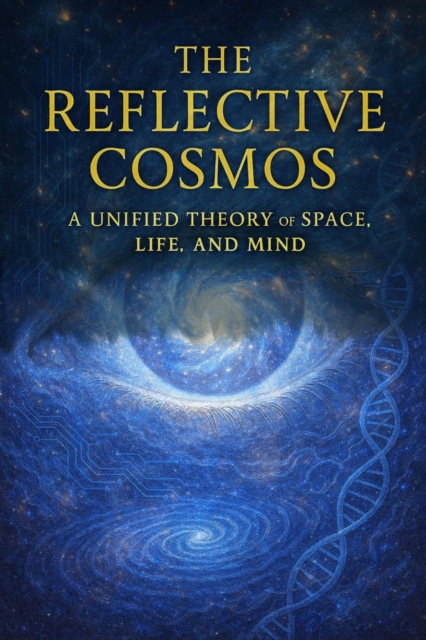
The Reflective Cosmos: A Unified Theory of Space, Life and Mind offers a sweeping and original vision of the universe as a living, intelligent system shaped by reflection, recursion and cosmic pressure.
Satellite Orbits -Models, Methods, and Applications has been written as a compre- hensive textbook that guides the reader through the theory and practice of satellite orbit prediction and determination.