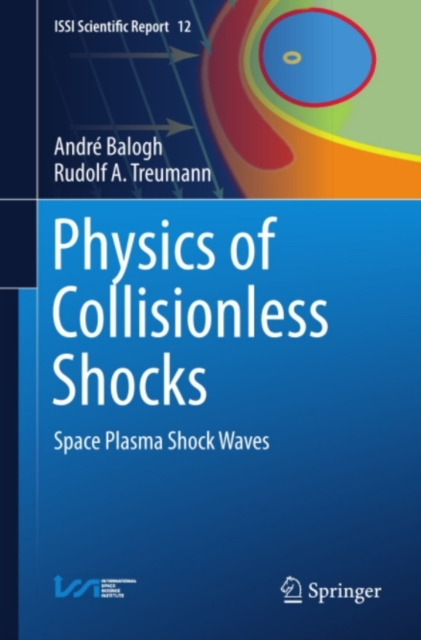
The present book provides a contemporary systematic treatment of shock waves in high-temperature collisionless plasmas as are encountered in near Earth space and in Astrophysics.
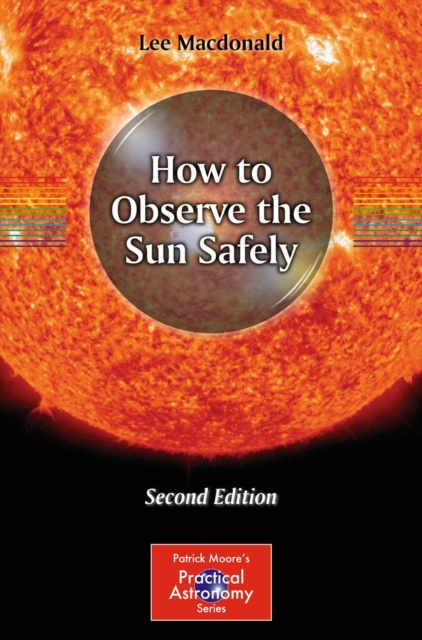
"e;How to Observe the Sun Safely, 2nd Edition"e; gives all the basic information and advice the amateur astronomer needs to get started in observing our own ever-fascinating star.
The space between the stars contains a large diversity of objects in which physical processes occur that are fundamental to the structure and evolution of galaxies.
This star guide enables amateur astronomers to focus on a class of object, and using an observation list that begins with the easiest object, find and move progressively over a period of months to more difficult targets.
From 12 April to 14 April 1988, 120 of Gerard and Antoinette de Vaucouleurs's friends and colleagues gathered at the Institut d' Astrophysique in Paris to cel- ebrate Gerard's 70th birthday and his remarkable career in Astronomy.
This catalog contains the most recent measurements of the magnitudes of some 100,000 stars in the Galaxy, giving position, identification, and ultraviolet, blue and visual magnitude from photoelectric measurements.
The Army Materials and Mechanics Research Center in coopera- tion with the Materials Science Group of the Department of Chemical Engineering and Materials Science of Syracuse University has been conducting the Annual Sagamore Army Materials Research Conference since 1954.
Before streets were brightly illuminated at night, astronomy was accessible to everyone and was a matter of great importance: for divination; for setting appropriate dates for planting, harvest, and festivals; for regulating lives.
The collection of papers assembled here on a variety of topics in ancient and medieval astronomy was originally suggested by Noel Swerdlow of the University of Chicago.
THE MOON IX PREFACE TO THE SPRINGER EDITION When this collection of Babylonian astronomical purpose of column of the lunar ephemerides (by texts was published in 1955 (a date omitted by Aaboe) and the explanation of the method of computing the eclipse text ACT No.
The purpose of this volume is to present the latest planetary studies of an international body of scientists concerned with the physical and chemical aspects of terrestrial planets.
Galactic and Extragalactic Radio Astronomy is a fundamental text for graduate students and professional astronomers and covers all aspects of radio astronomy beyond the solar system.
Historically, the discovery of tools, or evidence that tools have been used, has been taken as proof of human activity; certainly the invention and spread of new tools has been a critical marker of human progress and has increased our ability to observe, measure, and understand the physical world.
For millennia mankind has watched as the heavens move in their stately progression from night to night and from year to year, presaging with their changes the changing seasons.
In the two decades since the development of the first eclipsing-binary modeling code, new analytic techniques and the availability of powerful, sometimes dedicated computing facilities have made possible vastly improved determinations of fundamental and even transient stellar parameters.
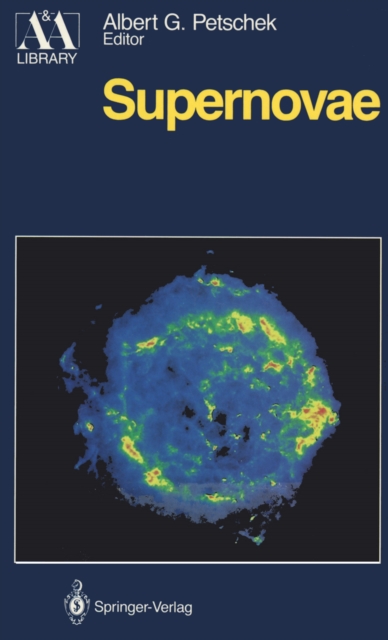
Supernova explosions are not only important to the ecology of the universe, seeding it, among other things, with the heavy elements necessary for the existence of life, but they are also a natural laboratory in which a host of unique physical phenomena occur.
For every astronomical topic that I have approached there has turned out to be a broader realm of possibilities than is commonly accepted or acknowledged.
This Festschrift is a collection of essays contributed by students, colleagues, and ad- mirers to honor an eminent scholar on a special anniversary: Charles Hard Townes on the occasion of his 80th birthday, July 28, 1995.
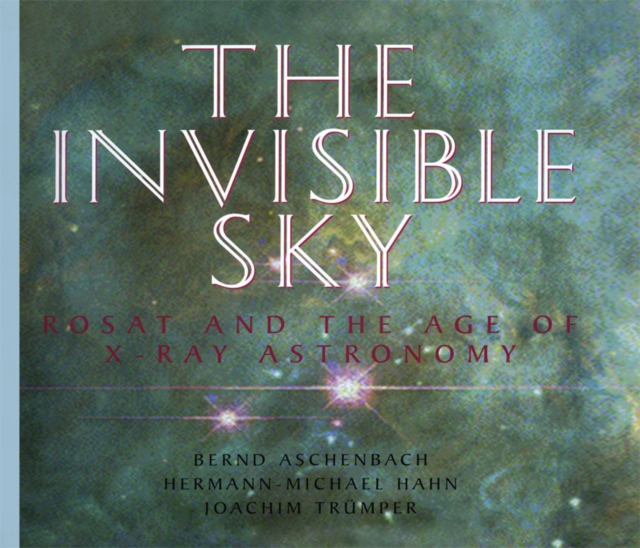
- 7 Astronomy is not confined to the exploration of the "e;courage of omission"e; and concentrate on those visible sky: Since the fifties, scientists have opened areas that can be conveyed without substantial more and more new windows to the universe, prerequisites; but we have tried to take into making it possible to study numerous new aspects account all crucial aspects and have striven for of cosmic events.
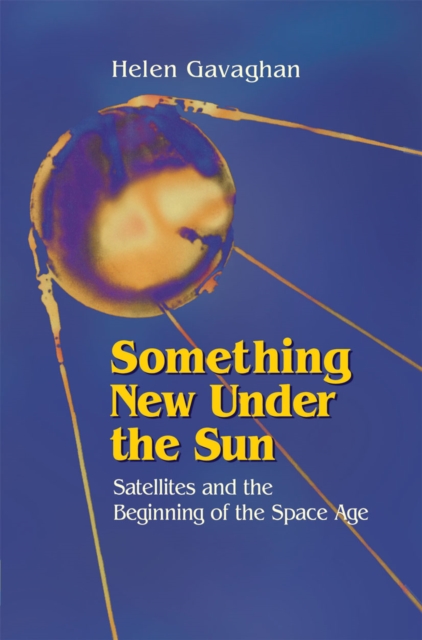
In this, the first history of artifical satellites and their uses, Helen Gavaghan shows how the idea of putting an object in orbit around the earth changed from science fiction to indespensible technology in the twinkling of an eye.
Friends and colleagues of Engelbert Schucking came together in a symposium on the 12th and 13th of December 1996 at New York University to celebrate and express to him their respect, admiration, and affection.
Este libro expone la historia y las bases cientficas de la gravedad, la fuerza ms dbil que se conoce pero que fue capaz de formar galaxias, estrellas y planetas.
The most thrilling, genre-busting, unlikely science book you ll ever read, from the world-renowned, multi-award-winning, superstar physicist Lisa Randal.