An Introduction to the Evolution of Single and Binary Stars provides physicists with an understanding of binary and single star evolution, beginning with a background and introduction of basic astronomical concepts.
This book will bring together experts in the field of astronomical photometry to discuss how their subfields provide the precision and accuracy in astronomical energy flux measurements that are needed to permit tests of astrophysical theories.
Dwarf planets (which were formerly called asteroids except for the planet Pluto), and the smaller Solar System bodies still called asteroids today, are making front page news, particularly those that are newly discovered and those that might present a hazard to life on Earth by impacting our planet.
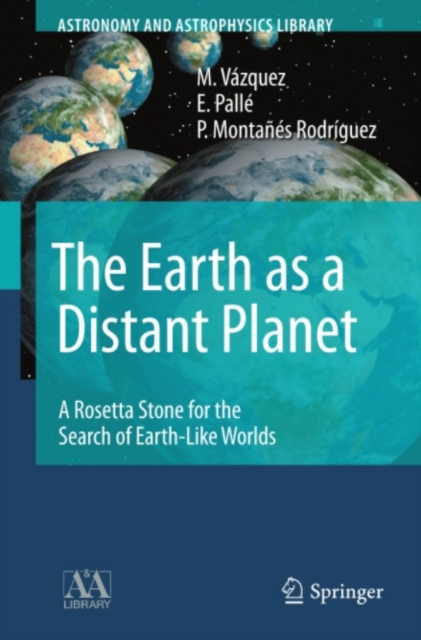
In The Earth as a Distant Planet, the authors become external observers of our solar system from a distance and try to determine how one can understand how Earth, the third in distance to the central star, is essentially unique and capable of sustaining life.
Knowledge about the outer heliosphere and the interstellar medium, which were long treated as two separate fields, has improved dramatically over the past 25 years as a consequence of recent developments: The discovery of interstellar pickup ions and neutral helium inside the heliosphere, the determination of the interstellar hydrogen distribution in the heliosphere obtained using backscattered solar Lyman-alpha radiation, the prediction and subsequent detection of the hydrogen wall just outside of the heliopause, the development of detailed global models for the interaction of solar wind plasma with the interstellar medium, and most recently, direct in-situ plasma and field measurements inside of the heliosheath.
Fulleranes are a special class of carbon molecules derived from fullerenes whose double bonds are partially or at least theoretically fully saturated by hydrogen.
The Workshop "e;Science with the VLT in the ELT Era"e; held in Garching from 8th to 12th October 2007 was organised by ESO, with support from its Scienti c and Technical Committee, to provide a forum for the astronomical community to debate the long term future of ESO's Very Large Telescope (VLT) and its interferometric mode (VLTI).
Published under the auspices of the Royal Astronomical Society, this volume contains a set of extensive school tested lectures, with the aim to give a coherent and thorough background knowledge of the subject and to introduce the latest developments in N-body computational astrophysics.
High Time Resolution Astrophysics (HTRA) is an important new window to the universe and a vital tool in understanding a range of phenomena from diverse objects and radiative processes.
Currently under construction in the Andean Altiplano, Northern Chile, the Atacama Large Millimeter Array (ALMA) is the most ambitious astronomy facility under construction.
This book provides a theoretical and observational overview of the state of the art of gamma-ray astrophysics, and their impact and connection with the physics of cosmic rays and neutrinos.
During the past decade, research teams around the world have developed astrophysics-relevant research utilizing high energy-density facilities such as intense lasers and z-pinches.
This book collects the contributions presented at the conference Isolated Neutron Stars: From the Surface to the Interior, held in London in April 2006.
Relativistic Astrophysics and Cosmology offers a succinct and self-contained treatment of general relativity and its application to compact objects, gravitational waves and cosmology.
This book gathers the invited conferences presented at the Thirteenth Joint European and National Astronomical Meeting (JENAM) organized by the - ropean Astronomical Society (EAS) and the Spanish Astronomical Society (Sociedad Espanola de Astronomia, SEA) and hosted by the Instituto de - trofisica de Andalucia (IAA - CSIC).
In the history of science the opening up of a new observational or experimental window is always followed by an increase in knowledge of the subject concerned.
9 MHDTurbulence in the Heliosphere: Evolution and Intermittency 253 Bruno Bavassano, Roberto Bruno and Vincenzo Carbone 1 Introduction 254 2 MHD Turbulence Evolution 255 2.