The molecular biology revolution has required the development of new chromatographic techniques and the optimization of original techniques to give reasonable quantities of protein at high resolutions.
Recent Advances in Targeting Inflammation: Ion Channels, GPCR Signaling Tools, Therapies, and Beyond delves into the multifaceted occurrences of inflammation across different systems, such as neuroinflammation and gastric inflammation.
Histone Deacetylases in Neurodegenerative Disease, Part B, Volume 734 in the Methods in Enzymology series, highlights new advances in the field, with this new volume presenting interesting chapters on timely topics surrounding the Interaction of HDAC6 ZnF UBP with Tau affects its stability by NMR and Simulation studies, Protocols for In Vitro Analysis of Liquid-Liquid Phase Separation of Proteins, Histone deacetylases in NS, Histone Deacetylase 6 ZnF UBP domain enhances podosome formation in neuronal cells studied by high-resolution confocal microscopy, Methodological approach to Investigate Peroxiredoxin 1 Deacetylation by Histone Deacetylase 6, Critical structural features of HDAC11 inhibitors, and much more.
This book introduces the reader in the fast-developing, fascinating field of Electrochemiluminescence (ECL) imaging and ECL microscopy (ECLM) with its outstanding ability to visualize micro-objects, such as bio-conjugated magnetic beads, cellular membranes, subcellular components, tissues, polypeptide interactions and nucleic acid structures, with unprecedented sensitivity and spatial and temporal resolution.
This book introduces the reader in the fast-developing, fascinating field of Electrochemiluminescence (ECL) imaging and ECL microscopy (ECLM) with its outstanding ability to visualize micro-objects, such as bio-conjugated magnetic beads, cellular membranes, subcellular components, tissues, polypeptide interactions and nucleic acid structures, with unprecedented sensitivity and spatial and temporal resolution.
This book provides a comprehensive overview of the synthesis, properties, and multifunctional applications of g-C3N4, with a strong emphasis on its role in solving critical global challenges.
This book provides a comprehensive overview of the synthesis, properties, and multifunctional applications of g-C3N4, with a strong emphasis on its role in solving critical global challenges.
Histone Deacetylases in Neurodegenerative Disease, Part A, Volume 733 in the Methods in Enzymology series, highlights new advances, with this volume presenting chapters on topics such as HDAC Inhibitor-Induced Endoplasmic Reticulum (ER) Stress, Specific activation of p300/CBP Lysine acetyltransferases induces adult neurogenesis and synaptic plasticity, Chromatin immunoprecipitation assay for analyzing histone H3-mediated regulation of copper homeostasis, Histone Deacetylase 6 modulates Tau structure and function, Histone Acetylation in Parkinson Disease, DNA methylation and histone modification in hypoxic conditions, The extracellular Histone Deacetylase 6 modulates the actin networks in neuronal cells, Epigenetic modulators as therapeutics for neurodegenerative disorder/Alzheimer's disease, and much more.
Advances in Microbial Physiology, Volume 89 explores the latest research and developments in microbial physiology, providing a comprehensive overview on how microorganisms function, adapt, and interact with their environments.
The current interest in developing novel materials has motivated an increasing need for biological and medical studies in a variety of dinical applications.
Este libro es un manual de liderazgo consciente que propone una transformacion profunda: dejar de vender tu tiempo de vida para comenzar a invertirlo con proposito en tu crecimiento personal y abundancia interior.
Este libro es un manual de liderazgo consciente que propone una transformacion profunda: dejar de vender tu tiempo de vida para comenzar a invertirlo con proposito en tu crecimiento personal y abundancia interior.
Vertebrate Carbonic Anhydrases, Volume 59 in The Enzymes series, explores recent advances in the study of carbonic anhydrases (CAs) in vertebrate systems.
Smart Biosensing Technologies for Early Detection of Metabolic Disorders gives a clear overview of the latest biosensor tools that help detect and monitor metabolic diseases like diabetes, obesity, and insulin resistance early.
Monkeypox, Volume 59 covers the diagnosis of Mpox from clinical specimens and wastewater, while also discussing the neurological, dermatological, reproductive, and structural biology of Mpox.
A MultiScale BioMathematics calls for lasting collaboration of Young Science-Talented & Ambitious in researching human body as a self-controlled system of physiological processes that evolve in person's pursuit of operational goals.
Current Approaches to Cryo-electron Microscopy, Volume 223 provides a comprehensive overview of the field, tracing its evolution from early structural studies to modern pipelines powered by deep-learning algorithms for helical reconstruction.
"e;Introduction to Skin Biothermomechanics and Thermal Pain"e; introduces the study of coupled bio-thermo-mechanical and neural behavior of skin tissue in response to thermal and mechanical loads.
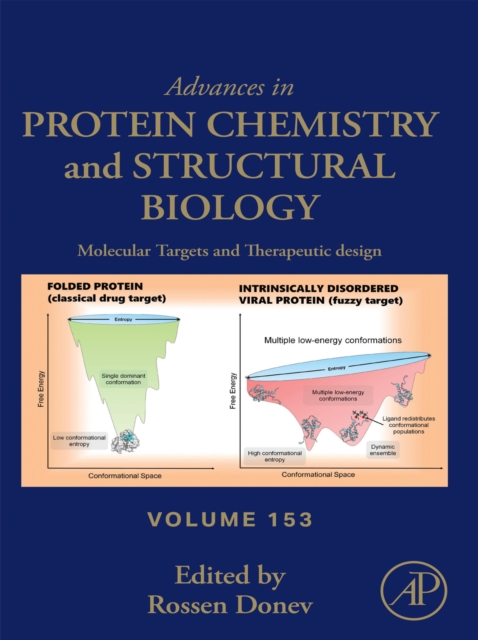
Molecular Targets and Therapeutic Design, Volume 152 provides a comprehensive overview of the current landscape and future directions in the identification and exploitation of molecular targets for the development of new therapeutics.
Ion Channels in Cellular Pathophysiology, Part A highlights new advances in the field, with this new volume presenting interesting chapters on topics such as Possible therapeutic effects of essential oils on Na channels in experimental diabetic neuropathy, Modulation of ion channels by Group I metabotropic glutamate receptors, ATP-sensitive potassium channels in neurons: roles in and beyond metabolic control, Chemically induced cardiotoxicity: role of voltage dependent ion channels, Thyroid Hormone Deficiency-Induced Cardiac Ion Channel Dysfunction: Molecular Mechanisms and Arrhythmic Implications, and much more.
Structural Studies of Amyloid-Forming Peptides highlights new advances in the field, with this new volume presenting interesting chapters on important topics such as the Extraction of Amyloids from Neurodegenerative Disease Tissues for Structural Analysis, Cryo-EM Structure Determination of Amyloid Fibrils: Methodology, Insights, and Practical Tools, Methods for studying molecular architecture of Ab aggregates in tissues using cryo-ET, Cryo-EM methods to study binding between amyloid fibrils and chemical compounds or ligan, Dynamics studies of side-chains and hydration shells in amyloid-beta fibrils using deuterium and oxygen-17 solid-state NMR, and much more.
Although the sense of smell is often taken for granted, approximately 20% of the population experiences some degree of olfactory dysfunction, ranging from partial impairment (hyposmia) to complete loss (anosmia).
Although the sense of smell is often taken for granted, approximately 20% of the population experiences some degree of olfactory dysfunction, ranging from partial impairment (hyposmia) to complete loss (anosmia).
Advances in Clinical Chemistry, Volume 134 in this ongoing series, examines physiologic and pathophysiologic biochemistry and impacts on Clinical Chemistry testing and design.
Biorthogonal Tagging, Volume 731 in the Methods in Enzymology series, highlights new advances in the field, with this new volume presenting interesting chapters such as Staudinger Ligations and Related Reactions: Scope and Applications in Chemical Biology, Strain-Promoted Bioorthogonal Cycloadditions to Investigate Sialyltransferases Promiscuity Towards Unnatural Sialic Acids, Practical Guidelines for the Bioorthogonal AMI-Isonitrile Ligation, Nitrones and Other Dipoles in Bioorthogonal Chemistry Applications, 1,2-Aminothiol-Specific Conjugation for Dual-Color Fluorescent Labeling via Ultrafast TAMMs, Genetic Incorporation of Bicyclononyne for Cell-Surface Protein Labeling via Tetrazine Ligation, and much more.
Glimpses of Creatures in Their Physical Worlds offers an eye-opening look into how the characteristics of the physical world drive the designs of animals and plants.
Mechanical Design of Structural Materials in Animals explores the principles underlying how molecules interact to produce the functional attributes of biological materials: their strength and stiffness, ability to absorb and store energy, and ability to resist the fatigue that accrues through a lifetime of physical insults.