This thesis focuses on theoretical analysis of the sophisticated ultrafast optical experiments that probe the crucial first few picoseconds of quantum light harvesting, making an important contribution to quantum biology, an exciting new field at the intersection of condensed matter, physical chemistry and biology.
The book highlights recent developments in human biometrics, covering a wide range of methods based on biological signals, image processing, and measurements of human characteristics such as fingerprints and iris or medical characteristics.
This book is intended to serve as an authoritative reference source for a broad audience involved in the research, teaching, learning, and practice of nanotechnology in immunotherapy.
This book emerges from the idea that specific physics-inspired approaches are necessary to understand different stage of bacterial physiology and the infections they cause.
This thoroughly revised and updated Fourth Edition of a time-honored text provides the reader with a comprehensive introduction to the field of scanning electron microscopy (SEM), energy dispersive X-ray spectrometry (EDS) for elemental microanalysis, electron backscatter diffraction analysis (EBSD) for micro-crystallography, and focused ion beams.
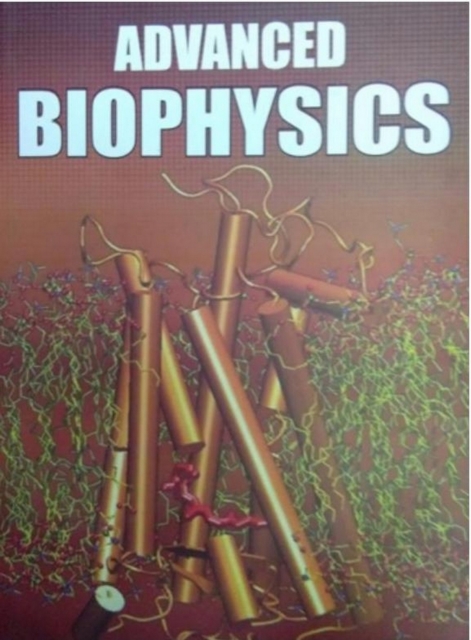
This book integrates concepts and methods from physics, biology, biochemistry and physical chemistry into a standalone, unitary text of biophysics that aims to provide a quantitative description of structures and processes occurring in living matter.
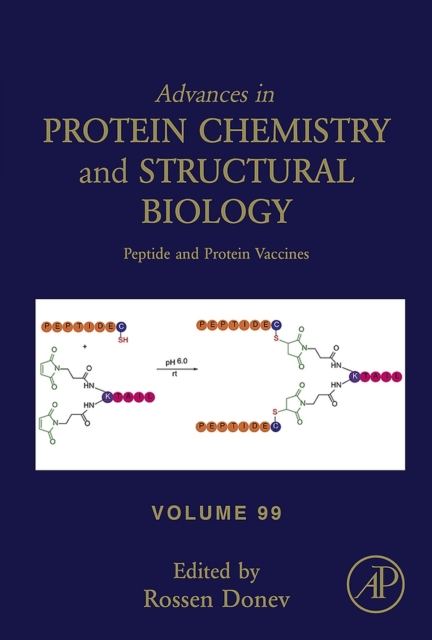
Published continuously since 1944, the Advances in Protein Chemistry and Structural Biology series has been the essential resource for protein chemists.
Electron Paramagnetic Resonance Investigations of Biological Systems by Using Spin Labels, Spin Probes, and Intrinsic Metal Ions Part A & B, are the latest volumes in the Methods in Enzymology series, continuing the legacy of this premier serial with quality chapters authored by leaders in the field.
RNA Modification provides a useful examination of the science and its role in biological regulation, the current frontier of life science research, and includes various RNA modications and their role in gene expression.
Combined Quantum Mechanical and Molecular Mechanical Modelling of Biomolecular Interactions continues the tradition of the Advances in Protein Chemistry and Structural Biology series has been the essential resource for protein chemists.
Advances in Clinical Chemistry, Volume 75, the latest installment in this internationally acclaimed series, contains chapters authored by world-renowned clinical laboratory scientists, physicians, and research scientists.
Advances in Clinical Chemistry, Volume 76, the latest installment in this internationally acclaimed series, contains chapters authored by world-renowned clinical laboratory scientists, physicians, and research scientists.
Advances in Clinical Chemistry, Volume 77, the latest installment in this internationally acclaimed series, contains chapters authored by world-renowned clinical laboratory scientists, physicians, and research scientists.
This book presents a comprehensive description of the basic concepts of soft matter mechanics and of the nano- and microscale biomedical methods that allow characterizing the mechanical properties of cells and tissues.
Advances in Clinical Chemistry, Volume 120, the latest installment in this internationally acclaimed series, contains chapters authored by world-renowned clinical laboratory scientists, physicians, and research scientists.
This book provides a unique and comprehensive overview of state-of-the-art understanding of the molecular and nano-scale processes that play significant roles in ion-beam cancer therapy.
Molecular Biology of Plant Tumors provides an opportunity to learn in detail about the latest insights into the mechanism of transformation of plant cells by Agrobacterium tumefaciens.
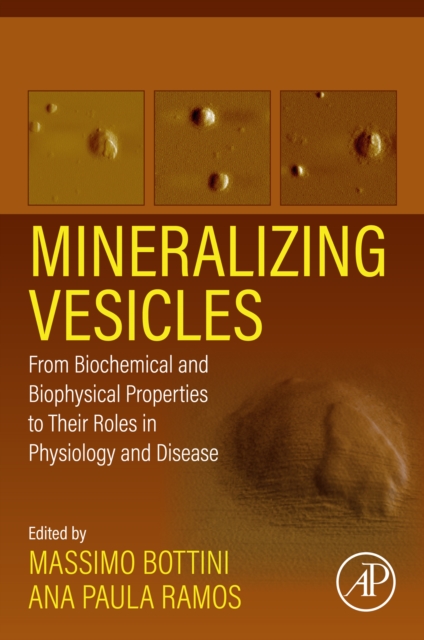
Mineralizing Vesicles: From Biochemical and Biophysical Properties to Their Roles in Physiology and Disease presents the state-of-the art in the properties of mineralizing EVs and their potential clinical applications.
This book is dedicated to the discussion of several biomedical applications of the mechanical phenotyping of cells and tissues to specific disease models.
This detailed volume explores a wide variety of techniques involving optical tweezers, a technology that has become increasingly more accessible to a broad range of researchers.
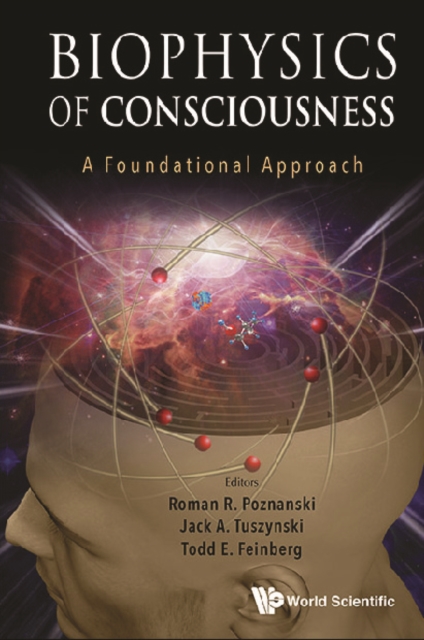
The problem of how the brain produces consciousness, subjectivity and 'something it is like to be' remains one of the greatest challenges to a complete science of the natural world.
As computational hardware continues to develop at a rapid pace, quantitative computations are playing an increasingly essential role in the study of biomolecular systems.
Protein-mediated charge transport is of relevant importance in the design of protein-based electronics and in attaining an adequate level of understanding of protein functioning.
This book bridges the gap between life sciences and physical sciences by providing several perspectives on cellular and molecular mechanics on a fundamental level.
With the recent development of new experimental approaches and methodologies, it is becoming clear that cells and tissues are not regulated by biochemical signals alone.
Many biological phenomena are especially interesting from a physical point of view, and recent developments have made it possible to perform quantitative, 'physics-style' experiments on many different biological systems.