Manage a Hazard or Threat Effectively and Prevent It from Becoming a DisasterWhen disaster strikes, it can present challenges to those caught off guard, leaving them to cope with the fallout.
This book mostly contains contributions by the invited lecturers at the 7th International Conference on Non-Destructive Testing and Micro-Analysis for the Diagnostics and Conservation of the Cultural and Environmental Heritage.
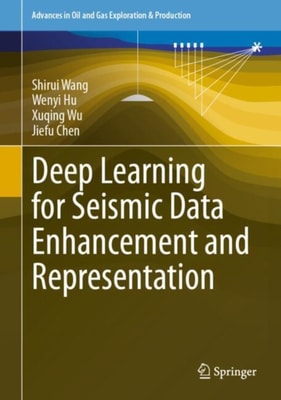
Seismic imaging is a key component of subsurface exploration, and it depends on a high-quality seismic data acquisition system with effective seismic processing algorithms.
Seismic imaging is a key component of subsurface exploration, and it depends on a high-quality seismic data acquisition system with effective seismic processing algorithms.
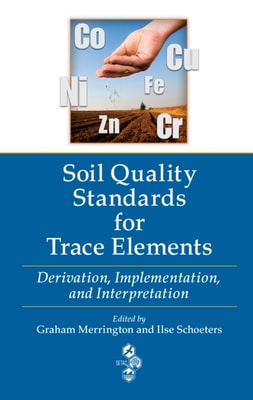
A comprehensive and practical overview of the state of the science, Soil Quality Standards for Trace Elements: Derivation, Implementation, and Interpretation addresses the derivation of soil quality standards for trace elements and the implementation of these standards within regulatory and risk assessment frameworks.
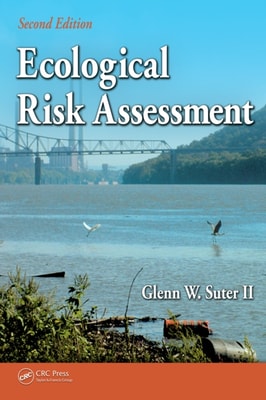
Although upwards of 50,000 Environmental Assessments (EA) are prepared annually, the focus of the National Environmental Policy Acts (NEPA) Regulations is clearly on defining requirements for preparing environmental impact statements.
This book covers various fields relevant to navigation, including Earth's magnetic field, gravity field, topography, celestial polarization field, electrostatic field, and relativistic celestial field effects.
Exploring the implementation of participatory, multistakeholder, and transdisciplinary ecosystem health research, Integrated Assessment of Health and Sustainability of Agroecosystems combines the latest theories in complexity and management with practical tools and approaches for sustainable rural development research.
Pollution has accompanied polar exploration since Captain John Davis' arrival on the Antarctic continent in 1821 and has become an unavoidable consequence of oil spills in our polar regions.
As cities undergo vast changes due to industrialization, urbanization, and globalization, environmental considerations assume a growing importance in the urban planning processes of an increasing number of governments around the world.
This book provides an in depth, yet understandable description of the ecological, socioeconomic, and other parts of the natural environment that may be affected.
This fully updated second edition provides an introduction to geotechnical earthquake engineering for first-year graduate students in geotechnical or earthquake engineering graduate programs with a level of detail that will also be useful for more advanced students as well as researchers and practitioners.
This book explores a platform for insightful discussions and scientific discourse on various aspects of landslides and their risk management, with insights focused on the Himalayan states at a sub-regional level.