Science Fiction novel purporting the Earths magnetosphere is capable of transporting people and objects incompletely through mineral deposits in the Earths mantle.
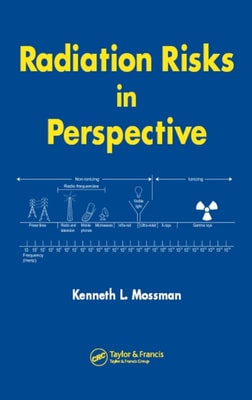
Public misperception of radiological risk consistently directs limited resources toward managing minimal or even phantom risks at great cost to government and industry with no measurable benefit to overall public health.
Written in an engaging and highly readable style, The Handbook of Geoscience is ideal for students, administrators, legal professionals, non-scientific professionals, and general readers with little or no science background.
Fluvial-Tidal Sedimentology provides information on the 'Tidal-Fluvial Transition', the transition zone between river and tidal environments, and includes contributions that address some of the most fundamental research questions, including how the morphology of the tidal-fluvial transition zone evolves over short (days) and long (decadal) time periods and for different tidal and fluvial regimes, the structure of the river flow as it varies in its magnitude over tidal currents and how this changes at the mixing interface between fresh and saline water and at the turbidity maximum, the role of suspended sediment in controlling bathymetric change and bar growth and the role of fine-grained sediment (muds and flocs), whether it is possible to differentiate between 'fluvial' and 'tidally' influenced bedforms as preserved in bars and within the adjacent floodplain and what are the diagnostic sedimentary facies of tidal-fluvial deposits and how are these different from 'pure' fluvial and tidal deposits, amongst other topics.
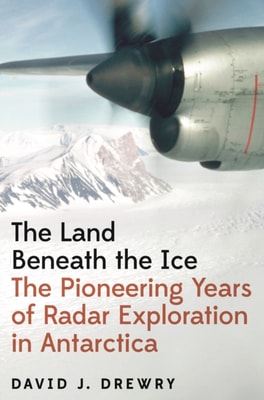
A wondrous story of scientific endeavorprobing the great ice sheets of AntarcticaFrom the moment explorers set foot on the ice of Antarctica in the early nineteenth century, they desired to learn what lay beneath.
A wondrous story of scientific endeavorprobing the great ice sheets of AntarcticaFrom the moment explorers set foot on the ice of Antarctica in the early nineteenth century, they desired to learn what lay beneath.
This user-friendly reference for students and researchers presents the basic mathematical theory, before introducing modelling of key geodynamic processes.
This user-friendly reference for students and researchers presents the basic mathematical theory, before introducing modelling of key geodynamic processes.
A user-friendly, thorough introduction to quantitative modelling of sedimentary basins, illustrated throughout with real-world examples, applications and test exercises.
Presents innovative mathematical theory and corresponding numerical results for wave propagation in layered media with arbitrary amounts of intrinsic absorption.
This practical guide demonstrates the successful application of geophysical techniques in periglacial environments through international field studies.
State-of-the-art coverage of modern computational methods for the analysis and design of beams Analysis and Design of Elastic Beams presents computer models and applications related to thin-walled beams such as those used in mechanical and aerospace designs, where thin, lightweight structures with high strength are needed.
Positive Displacement Pumps is a current reference guide for positive displacement pumps for both traditional and state-of-the-art testing methods, and serves as a bridge between textbooks and manufacturer's literature by providing equipment testing practices based on technical know-how, practical experience, and academic theory.
Fluvial-Tidal Sedimentology provides information on the 'Tidal-Fluvial Transition', the transition zone between river and tidal environments, and includes contributions that address some of the most fundamental research questions, including how the morphology of the tidal-fluvial transition zone evolves over short (days) and long (decadal) time periods and for different tidal and fluvial regimes, the structure of the river flow as it varies in its magnitude over tidal currents and how this changes at the mixing interface between fresh and saline water and at the turbidity maximum, the role of suspended sediment in controlling bathymetric change and bar growth and the role of fine-grained sediment (muds and flocs), whether it is possible to differentiate between 'fluvial' and 'tidally' influenced bedforms as preserved in bars and within the adjacent floodplain and what are the diagnostic sedimentary facies of tidal-fluvial deposits and how are these different from 'pure' fluvial and tidal deposits, amongst other topics.