Established in 1960, Advances in Heterocyclic Chemistry is the definitive serial in the area-one of great importance to organic chemists, polymer chemists, and many biological scientists.
- Provides a forum for discussion of new discoveries, approaches, and ideas in molecular biology- Features contributions from leaders in their fields- Contains abundant references
The critically acclaimed serialized review journal for nearly fifty years, Advances in Geophysics is a highly respected publication in the field of geophysics.
PET and SPECT are two of today's most important medical-imaging methods, providing images that reveal subtle information about physiological processes in humans and animals.
Emphasizing the physical and technological aspects of plant energetics, this comprehensive book covers a significant interdisciplinary research area for a broad range of investigators.
If the text you're using for general chemistry seems to lack sufficient mathematics and physics in its presentation of classical mechanics, molecular structure, and statistics, this complementary science series title may be just what you're looking for.
Sea Level Rise, History and Consequences includes a special emphasis on the evidence for historical sea level change; case studies are used to demonstrate the resulting consequences.
Atmospheric ice particles play crucial roles in cloud and storm dynamics, atmospheric chemistry, climatological processes, and other atmospheric processes.
Magnetism is important in environmental studies for several reasons, the two most fundamental being that most substances exhibit some form of magnetic behavior, and that iron is one of the most common elements in the Earth's crust.
General Circulation Models (GCMs) are rapidly assuming widespread use as powerful tools for predicting global events on time scales of months to decades, such as the onset of EL Nino, monsoons, soil moisture saturation indices, global warming estimates, and even snowfall predictions.
Chemistry and Physics of Stratospheric Ozone will provide an in-depth account of chemical and physical properties of stratospheric ozone, which will be valuable to a wide audience.
In past decades and in association with a continuing global industrial development, the global atmospheric concentration of carbon dioxide has been rising.
Atmospheric Science, Second Edition, is the long-awaited update of the classic atmospheric science text, which helped define the field nearly 30 years ago and has served as the cornerstone for most university curricula.
This MIE volume covers methods for a multitude of topics among which are computational methods, laboratory methods, enzyme optimization, binding proteins/antibodies, and screening technologies.
Combinatorial Chemistry encompasses both the design of compounds for specific pharmacological use and the screening of molecules in high throughput automated tests to find active agents with specific functions.
This volume and its companion, Volume 351, are specifically designed to meet the needs of graduate students and postdoctoral students as well as researchers, by providing all the up-to-date methods necessary to study genes in yeast.
This volume of the acclaimed Methods in Cell Biology series provides specific examples of applications of confocal microscopy to cell biological problems.
This Second Edition of An Introduction to Atmospheric Radiation has been extensively revised to address the fundamental study and quantitative measurement of the interactions of solar and terrestrial radiation with molecules, aerosols, and cloud particles in planetary atmospheres.
Established in 1960, Advances in Heterocyclic Chemistry is the definitive serial in the area-one of great importance to organic chemists, polymer chemists, and many biological scientists.
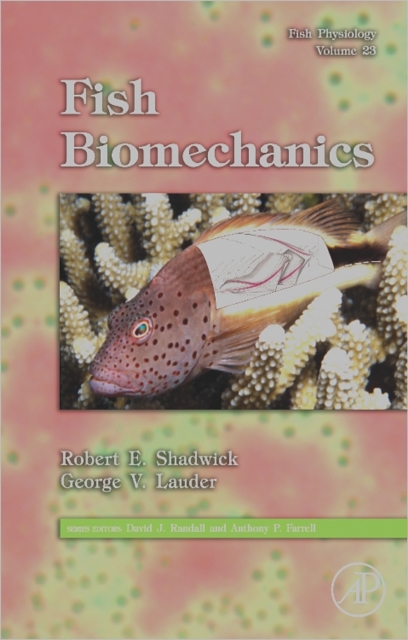
The first in two decades to exclusively integrate physiological and biomechanical studies of fish locomotion, feeding and breathing, making this book both comprehensive and unique.
Long before Galileo published his discoveries about Jupiter, lunar craters, and the Milky Way in the Starry Messenger in 1610, people were fascinated with the planets and stars around them.
Under the direction of John Enderle, Susan Blanchard and Joe Bronzino, leaders in the field have contributed chapters on the most relevant subjects for biomedical engineering students.
Numerical Modeling in Biomedical Engineering brings together the integrative set of computational problem solving tools important to biomedical engineers.