Basics of Computational Geophysics provides a one-stop, collective resource for practitioners on the different techniques and models in geoscience, their practical applications, and case studies.
Advanced Remote Sensing is an application-based reference that provides a single source of mathematical concepts necessary for remote sensing data gathering and assimilation.
Model Ecosystems in Extreme Environments, Second Edition examines ecosystems at the most extreme habitats and their interaction with the environment, providing a key element in our understanding of the role and function of microorganisms in nature.
Intermolecular and Surface Forces describes the role of various intermolecular and interparticle forces in determining the properties of simple systems such as gases, liquids and solids, with a special focus on more complex colloidal, polymeric and biological systems.
Coding and Decoding Seismic Data: The Concept of Multishooting, Volume One, Second Edition, offers a thorough investigation of modern techniques for collecting, simulating, and processing multishooting data.
Advances in Geophysics, Volume 58, the latest in this critically acclaimed serialized review journal that has published for over 50 years, contains the latest information available in the field.
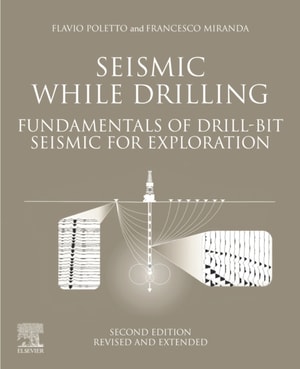
Seismic While Drilling: Fundamentals of Drill-Bit Seismic for Exploration, 2nd edition, revised and extended gives a theoretical and practical introduction to seismic while drilling by using drill-bit noise.
Parameter Estimation and Inverse Problems, Third Edition, is structured around a course at New Mexico Tech and is designed to be accessible to typical graduate students in the physical sciences who do not have an extensive mathematical background.
Advances in Imaging and Electron Physics merges two long-running serials--Advances in Electronics and Electron Physics and Advances in Optical and Electron Microscopy.
Recent years have seen a considerable emphasis on growth factors and the elucidation of their mode of function, which has led to the recognition that growth factors, their receptors as well as downstream elements of signalling associated with their function might be potential targets in therapeutic management of human diseases.
Covers essential parts of cloud and precipitation physics and has been extensively rewritten with over 60 new illustrations and many new and up to date references.
The critically acclaimed serialized review journal for over 50 years, Advances in Geophysics is a highly respected publication in the field of geophysics.
Quantum Systems in Physics, Chemistry and Biology, Theory, Interpretation, and Results, Volume 78, the latest release in the Advances in Quantum Chemistry series presents surveys of current topics in this rapidly developing field that has emerged at the cross section of the historically established areas of mathematics, physics, chemistry and biology.
Intracellular Signalling Proteins, Volume 116, presents an overview of the current developments in mechanisms of intracellular signaling and involvement of these mechanisms in the development of a number of disorders and diseases.
This third volume in the series represents the Proceedings of the 3rd International Nanophotonics Symposium, July 6-8, 2006, Icho-Kaikan, Osaka University, Osaka, Japan.
This monograph provides an overview of the progress made in illuminating the properties of deep slabs and the surrounding mantle, since the introduction of the plate tectonics model to the earth sciences 25 years ago.
Tissue Elasticity Imaging: Volume One: Theory and Methods offers an extensive treatment of the fundamentals and applications of this groundbreaking diagnostic modality.
Adjustment Models in 3D Geomatics and Computational Geophysics: With MATLAB Examples, Volume Four introduces a complete package of theoretical and practical subjects in adjustment computations relating to Geomatics and geophysical applications, particularly photogrammetry, surveying, remote sensing, GIS, cartography, and geodesy.
Advances in Microbial Physiology, Volume 77, the latest release in this ongoing series, continues the long tradition of topical, important, cutting-edge reviews in microbiology.
From Habitability to Life on Mars explores the current state of knowledge and questions on the past habitability of Mars and the role that rapid environmental changes may have played in the ability of prebiotic chemistry to transition to life.
Advances in Clinical Chemistry, Volume 79 is the latest installment in this internationally acclaimed series and contains chapters authored by world-renowned clinical laboratory scientists, physicians, and research scientists.
Novel Electronic Structure Theory: General Innovations and Strongly Correlated Systems, Volume 76, the latest release in the Advances in Quantum Chemistry series presents work and reviews of current work in quantum chemistry (molecules), but also includes scattering from atoms and solid state work of interest in physics.
Intermediate Filament Associated Proteins, the latest volume in the Methods in Enzymology series, continues the legacy of this premier serial with quality chapters authored by leaders in the field.
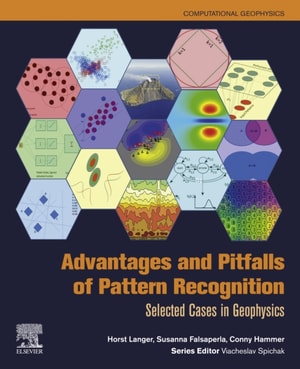
Advantages and Pitfalls of Pattern Recognition presents various methods of pattern recognition and classification, useful to geophysicists, geochemists, geologists, geographers, data analysts, and educators and students of geosciences.
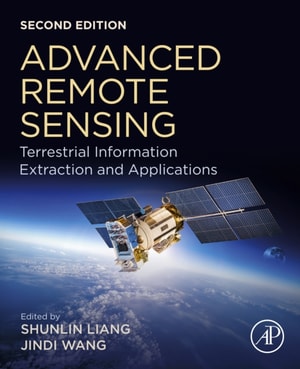
Advanced Remote Sensing: Terrestrial Information Extraction and Applications, Second Edition, is a thoroughly updated application-based reference that provides a single source on the mathematical concepts necessary for remote sensing data gathering and assimilation.
The increasing use of fiber optics in the field of medicine has created a need for an interdisciplinary perspective of the technology and methods for physicians as well as engineers and biophysicists.
This bestselling reference bridges the gap between the introductory and highly specialized books dealing with aspects of food biochemistry for undergraduate and graduate students, researchers, and professionals in the fi elds of food science, horticulture, animal science, dairy science and cereal chemistry.
Chemical Biology of the Genome provides a comprehensive overview of essential concepts and principles of genomic and epigenomics dynamics as explored through the lens of chemical biology.
Interpreting Subsurface Seismic Data presents recent advances in methodologies for seismic imaging and interpretation across multiple applications in geophysics including exploration, marine geology, and hazards.
Plasma Medical Science describes the progress that has been made in the field over the past five years, illustrating what readers must know to be successful.
An Integrated Approach to Managing the World's Water ResourcesWater Reuse: Issues, Technologies, and Applications equips water/wastewater students, engineers, scientists, and professionals with a definitive account of the latest water reclamation, recycling, and reuse theory and practice.
Introduction to Geophysical Fluid Dynamics provides an introductory-level exploration of geophysical fluid dynamics (GFD), the principles governing air and water flows on large terrestrial scales.
This volume of Current Topics in Membranes focuses on metal transmembrane transporters and pumps, a recently discovered family of membrane proteins with many important roles in the physiology of living organisms.
Advances in Imaging and Electron Physics merges two long-running serials--Advances in Electronics and Electron Physics and Advances in Optical and Electron Microscopy.
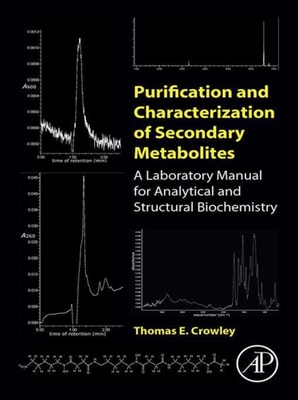
Purification and Characterization of Secondary Metabolites: A Laboratory Manual for Analytical and Structural Biochemistry provides students with working knowledge of the fundamental and advanced techniques of experimental biochemistry.
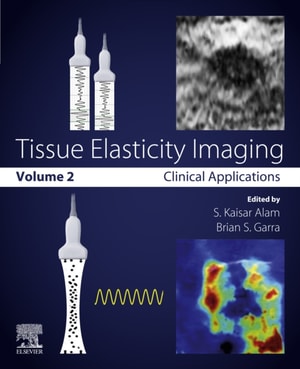
Tissue Elasticity Imaging: Volume Two: Clinical Applications offers an extensive treatment of the fundamentals and applications of this groundbreaking diagnostic modality.
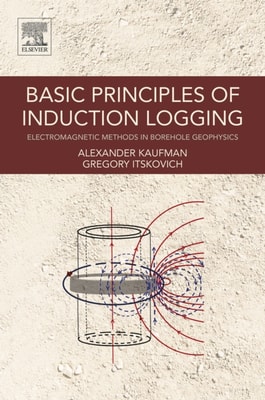
Basic Principles of Induction Logging provides geoscientists with the information required to survey the electrical conductivity of rocks surrounding a borehole.
Understanding Faults: Detecting, Dating, and Modeling offers a single resource for analyzing faults for a variety of applications, from hazard detection and earthquake processes, to geophysical exploration.
Computational Geo-Electromagnetics: Methods, Models, and Forecasts, Volume Five in the Computational Geophysics series, is devoted to techniques for building of geoelectrical models from electromagnetic data, featuring Bayesian statistical analysis and neural network algorithms.
Progress in Molecular Biology and Translational Science, Volume 159, provides the most topical, informative and exciting monographs available on a wide variety of research topics related to prions, viruses, bacteria and eukaryotes.
The interpretation of geophysical data in exploration geophysics, well logging, engineering, mining and environmental geophysics requires knowledge of the physical properties of rocks and their correlations.