This book provides an advanced introduction to extended theories of quantum field theory and algebraic topology, including Hamiltonian quantization associated with some geometrical constraints, symplectic embedding and Hamilton-Jacobi quantization and Becchi-Rouet-Stora-Tyutin (BRST) symmetry, as well as de Rham cohomology.
This book provides an advanced introduction to extended theories of quantum field theory and algebraic topology, including Hamiltonian quantization associated with some geometrical constraints, symplectic embedding and Hamilton-Jacobi quantization and Becchi-Rouet-Stora-Tyutin (BRST) symmetry, as well as de Rham cohomology.
This second edition is an updated and extended introduction to the world of Penning traps and provides an overview of the field, particularly for those entering it.
This second edition is an updated and extended introduction to the world of Penning traps and provides an overview of the field, particularly for those entering it.
Interatomic energy transfer phenomena caused by efficient long-range electron correlations are among the most studied processes in atomic physics today.
This textbook serves as a comprehensive introduction to muon spin spectroscopy (uSR), offering a detailed exploration of how polarized positive muons can be employed as local probes to investigate material properties at the microscopic level.
This textbook serves as a comprehensive introduction to muon spin spectroscopy (uSR), offering a detailed exploration of how polarized positive muons can be employed as local probes to investigate material properties at the microscopic level.
This book proposes and develops the equilibrium compound nucleus post-fission theory, a powerful tool for studying the fission process and making numerical calculations of post-fission nuclear data.
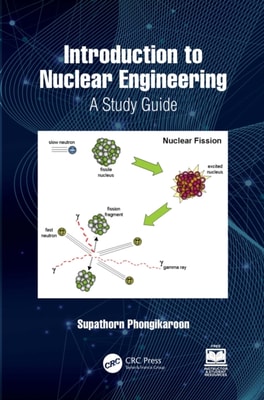
This textbook highlights the fundamentals, applications and research frontiers of the civil-use non-power nuclear technology, especially the radioisotopes and radiation technology.
This textbook offers an introduction to statistical mechanics, special relativity, and quantum physics, developed from lecture notes for the "e;Quantum Physics"e; course at the University of Padua.
This book provides a theoretical background to X-ray photoelectron spectroscopy (XPS) and a practical guide to the analysis of the XPS spectra using the RxpsG software, a powerful tool for XPS analysis.
The book provides a detailed quantitative study and characterization of the physics of the thermal and viscoelastic behavior of mainly amorphous materials, and addresses a readership of both undergraduate (Part I and the two first chapters of Part II) and graduate students and junior researchers (Parts II and III).
A technique that is useful in the study of pharmaceutical products and biological molecules, polarization IR spectroscopy has undergone continuous development since it first emerged almost 100 years ago.
This volume contains the proceedings of a conference on laboratory astrophysics, which gathered a broad interdisciplinary community of astrophysicists, physicists, chemists, and geophysicists.
This book provides a collection of reviews of some of the recent developments in nuclear physics research at intermediate energies from across the globe.
This book provides a collection of reviews of some of the recent developments in nuclear physics research at intermediate energies from across the globe.
This volume contains the proceedings of a conference on laboratory astrophysics, which gathered a broad interdisciplinary community of astrophysicists, physicists, chemists, and geophysicists.
Density functional theory (DFT) provides the most widely used models for simulating molecules and materials based on the fundamental laws of quantum mechanics.
Density functional theory (DFT) provides the most widely used models for simulating molecules and materials based on the fundamental laws of quantum mechanics.
Although advanced technologies are the cornerstone of modern life, few people understand how such technologies as robotics or nuclear science actually work.
Exploring the phenomenology of the Large Hadron Collider (LHC) at CERN, LHC Physics focuses on the first years of data collected at the LHC as well as the experimental and theoretical tools involved.
Although used with increasing frequency in many branches of physics, random matrix ensembles are not always sufficiently specific to account for important features of the physical system at hand.