The purpose of this text is to present the theory and mathematics of inverse scattering, in a simple way, to the many researchers and professionals who use it in their everyday research.
Advances in Quantum Chemistry presents surveys of current developments in this rapidly developing field that falls between the historically established areas of mathematics, physics, and chemistry.
Volume 36 provides an extensive introduction to magnetic imaging,including theory and practice, utilizing a wide range of magnetic sensitive imaging methods.
Atomic and Molecular Photoabsorption, Volume 1 describes and catalogs available spectral information relevant to how common gases interact with sunlight and other sources of electromagnetic radiation such as x-rays, flames, and plasmas.
The field of atom interferometry has expanded rapidly in recent years, and todays research laboratories are using atom interferometers both as inertial sensors and for precision measurements.
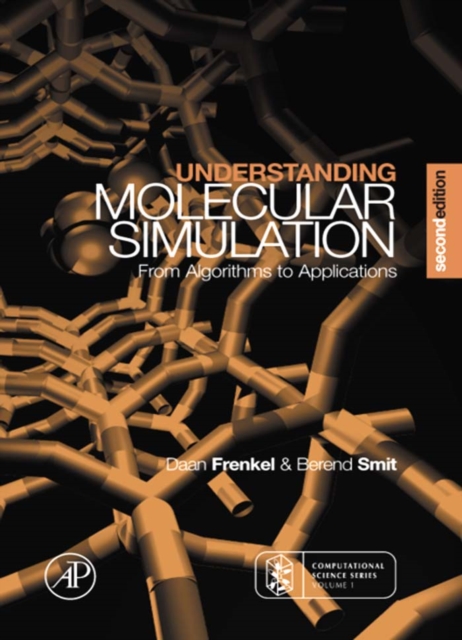
Understanding Molecular Simulation: From Algorithms to Applications explains the physics behind the "e;recipes"e; of molecular simulation for materials science.
This book is written for graduate students just beginning research, for theorists curious about what experimentalists actually can and do measure, and for experimentalists bewildered by theory.
Protein Physics is a lively presentation of the most general problems of protein structure, folding and function from the physics and chemistry perspective, based on lectures given by the authors.
Advances in Imaging and Electron Physics merges two long-running serials-Advances in Electronics and Electron Physics and Advances in Optical and Electron Microscopy.
The development of science, technology and industry in the near future requires new materials and devices, which will differ in many aspects from that of past years.
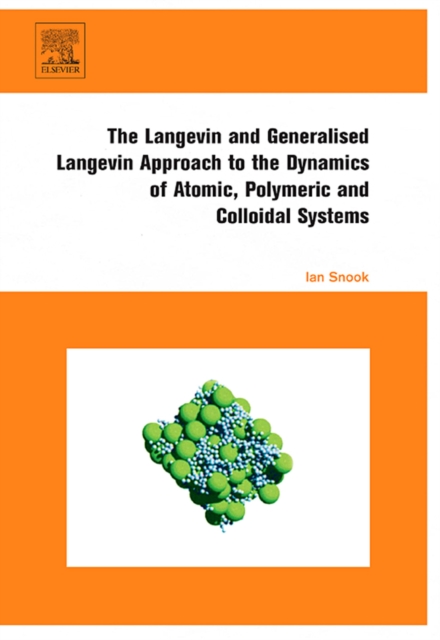
The Langevin and Generalised Langevin Approach To The Dynamics Of Atomic, Polymeric And Colloidal Systems is concerned with the description of aspects of the theory and use of so-called random processes to describe the properties of atomic, polymeric and colloidal systems in terms of the dynamics of the particles in the system.
Volume 54 of the Advances in Atomic, Molecular, and Optical Physics Series contains ten contributions, covering a diversity of subject areas in atomic, molecular and optical physics.
The present book describes a large variety of different types of chain systems (nanowires), including shorter chains that are artificially produced for instance in break-junction experiments, chains synthesized as guests inside the channels of a host crystal, crystalline chain compounds, organic polymers (synthetic metals), and charge-transfer salts, thus covering an unusual wealth of systems.
One of the aims of this book was to focus the attention of specialists to the diversity of the effects of the ionising radiation on biological and physical systems.
Atomic collisions offer some unique opportunities to study atomic structure and reaction mechanisms in experiment and theory, especially for projectiles of high atomic number provided by modern accelerators.
Part I is devoted to Niels Bohr's mission to promote an "e;open world"e; between nations, that is, full sharing of information in the scientific and technical, as well as in the cultural spheres the scientific and technical, as well as in the cultural spheres.
Nonlinearity and Chaos in Molecular Vibrations deals systematically with a Lie algebraic approach to the study of nonlinear properties of molecular highly excited vibrations.