Intended for nonspecialists with some knowledge of physics or engineering, The Quantum Beat covers a wide range of salient topics relevant to atomic clocks, treated in a broad intuitive manner with a minimum of mathematical formalism.
Interpretive archaeology - meaning the interpretation (social science as opposed to hard science) of archaeology and archaeological artifacts - has predominantly been the realm of prehistoric archaeologists.
Spectroscopic methods are not only important as an analytical tool, they also provide information about fundamental physical and chemical properties of molecules, the molecular and electronic structure, and the dynamic behaviour of molecules.
Electron magnetic resonance in the time domain has been greatly facilitated by the introduction of novel resonance structures and better computational tools, such as the increasingly widespread use of density-matrix formalism.
Relativistic quantum electrodynamics, which describes the electromagneticinteractions of electrons and atomic nuclei, provides the basis for modeling the electronic structure of atoms, molecules and solids and of their interactions with photons and other projectiles.
Due to the rapid progress in laser technology a wealth of novel fundamental and applied applications of lasers in atomic and plasma physics have become possible.
Impressive in its overall size and scope, this five-volume reference work provides researchers with the tools to push them into the forefront of the latest research.
Laser ablation describes the interaction of intense optical fields with matter, in which atoms are selectively driven off by thermal or nonthermal mechanisms.
Remarkable progress has recently been made in the application of quantumtrajectories as the computational tool for solving quantum mechanical problems.
This Springer Handbook of Atomic, Molecular, and Optical Physics comprises a comprehensive reference source that unifies the entire fields of atomic, molecular, and optical (AMO) physics, assembling the principal ideas, techniques and results of the field from atomic spectroscopy to applications in comets.
Nuclear physics began one century ago during the "e;miraculous decade"e; - tween 1895 and 1905 when the foundations of practically all modern physics were established.
The subject of antenna design, primarily a discipline within electrical en- neering, is devoted to the manipulation of structural elements of and/or the electrical currents present on a physical object capable of supporting such a current.
Intended for advanced students of physics, chemistry, and related disciplines, this text treats the quantum theory of atoms and ions within the framework of self-consistent fields.
Advances in Atomic, Molecular, and Optical Physics, Volume 71 provides a comprehensive compilation of recent developments in a field that is in a state of rapid growth as new experimental and theoretical techniques are used on many problems, both old and new.
Progress in Optics, Volume 67, highlights new advances, with this updated volume presenting interesting chapters on a variety of timely topics in the field.
Advances in Atomic, Molecular, and Optical Physics, Volume 70 provides a comprehensive compilation of recent developments in a field that is in a state of rapid growth as new experimental and theoretical techniques are used on many problems, both old and new.
Ion Implantation Science and Technology: Second Edition, just like the first edition, serves as both an introduction and tutorial to the science, techniques, and machines involved in the subject.
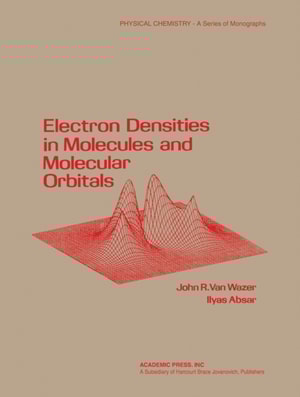
Electron Densities in Molecules and Molecular Orbitals aims to explain the subject of molecular orbitals without having to rely much on its mathematical aspect, making it more approachable to those who are new to quantum chemistry.
Angular Momentum Theory for Diatomic Molecules focuses on the application of angular momentum theory in describing the complex dynamical processes in molecules.
Methods in Computational Physics, Volume 10: Atomic and Molecular Scattering presents the digital methods used in producing quantitative results from the theory of atomic and molecular scattering.