In this compelling introduction to the fundamental particles that make up the universe, Frank Close takes us on a journey into the atom to examine known particles such as quarks, electrons, and the ghostly neutrino.
In each generation, scientists must redefine their fields: abstracting, simplifying and distilling the previous standard topics to make room for new advances and methods.
There is a continuing growth of interest in the computer simulation of materials at the atomic scale, using a variety of academic and commercial computer programs.
This book provides a systematic description of the molecular structures and bonding in simple compounds of the main group elements with particular emphasis on bond distances, bond energies and coordination geometries.
Rapid development of microfabrication and assembly of nanostructures has opened up many opportunities to miniaturize structures that confine light, producing unusual and extremely interesting optical properties.
This book presents the life and personality, the scientific and philosophical work of Ludwig Boltzmann, one of the great scientists who marked the passage from 19th- to 20th-Century physics.
This book is on inertial confinement fusion, an alternative way to produce electrical power from hydrogen fuel by using powerful lasers or particle beams.
Quantum Mechanics: Classical Results, Modern Systems, and Visualized Examples is a comprehensive introduction to non-relativistic quantum mechanics for advanced undergraduate students in physics and related fields.
Starting from first principles, this book introduces the closely related phenomena of Bose condensation and Cooper pairing, in which a very large number of single particles or pairs of particles are forced to behave in exactly the same way, and explores their consequences in condensed matter systems.
In this compelling introduction to the fundamental particles that make up the universe, Frank Close takes us on a journey into the atom to examine known particles such as quarks, electrons, and the ghostly neutrino.
This book starts with the most elementary ideas of molecular orbital theory and leads the reader progressively to an understanding of the electronic structure, geometry and, in some cases, reactivity of transition metal complexes.
In two volumes, this book presents a detailed, systematic treatment of electromagnetics with application to the propagation of transient electromagnetic fields (including ultrawideband signals and ultrashort pulses) in dispersive attenuative media.
This book describes the state-of-the-art in the emerging field of optical trapping of ions, as well as the most recent advances enabling the use of this technique as a versatile tool for novel investigations in atomic physics.
This book presents the current advances in understanding of the fast excitation transfer processes in inorganic scintillation materials, the discovery of new materials exhibiting excellent time resolution, and the results on the evaluation of timing limits for scintillation detectors.
This primer begins with a brief introduction to the main ideas underlying Effective Field Theory (EFT) and describes how nuclear forces are obtained from first principles by introducing a Euclidean space-time lattice for chiral EFT.
This is the first ever compendium of double photoionisation spectra, covering some 70 of the most important small and medium sized molecules and thus providing an essential starting point for studies of the consequences of ionisation by high energy photons in both terrestrial and astrophysical environments.
The purpose of this book is to provide a theoretical foundation and an understanding of atomistic spin-dynamics (ASD), and to give examples of where the atomistic Landau-Lifshitz-Gilbert equation can and should be used.
This book attempts to bridge in one step the enormous gap between introductory quantum mechanics and the research front of modern optics and scientific fields that make use of light.
This book bridges a gap between two major communities of Condensed Matter Physics, Semiconductors and Superconductors, that have thrived independently.
Quantum mechanics forms the foundation of all modern physics, including atomic, nuclear, and molecular physics, the physics of the elementary particles, condensed matter physics.
The semiconductor laser, invented over 50 years ago, has had an enormous impact on the digital technologies that now dominate so many applications in business, commerce and the home.
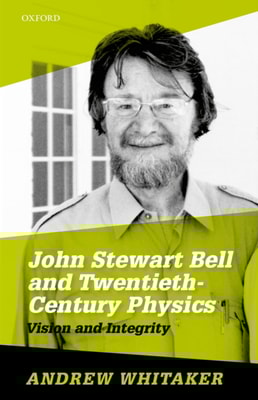
John Stewart Bell (1928-1990) was one of the most important figures in twentieth-century physics, famous for his work on the fundamental aspects of the century's most important theory, quantum mechanics.
John Stewart Bell (1928-1990) was one of the most important figures in twentieth-century physics, famous for his work on the fundamental aspects of the century's most important theory, quantum mechanics.
Lasers are employed throughout science and technology, in fundamental research, the remote sensing of atmospheric gases or pollutants, communications, medical diagnostics and therapies, and the manufacturing of microelectronic devices.
Starting from first principles, this book introduces the closely related phenomena of Bose condensation and Cooper pairing, in which a very large number of single particles or pairs of particles are forced to behave in exactly the same way, and explores their consequences in condensed matter systems.
This book is a reissue of the third and last edition of a classic text providing the reader with a comprehensive account at first degree or introductory graduate level of the principles and experimental aspects of electricity and magnetism, together with an elementary account of the underlying atomic theory.
This book is a reissue of the third and last edition of a classic text providing the reader with a comprehensive account at first degree or introductory graduate level of the principles and experimental aspects of electricity and magnetism, together with an elementary account of the underlying atomic theory.
Volume 2 of Novel Superfluids continues the presentation of recent results on superfluids, including novel metallic systems, superfluid liquids, and atomic/molecular gases of bosons and fermions, particularly when trapped in optical lattices.
Recent experimental progress has enabled cold atomic gases to be studied at nano-kelvin temperatures, creating new states of matter where quantum degeneracy occurs - Bose-Einstein condensates and degenerate Fermi gases.