This book is the first to present flow measurement as an independent branch of the measurement techniques, according to a new global and unitary approach for the measurement of fluid flow field, starting from finding its unitary fundamental bases.
This book is the first to present flow measurement as an independent branch of the measurement techniques, according to a new global and unitary approach for the measurement of fluid flow field, starting from finding its unitary fundamental bases.
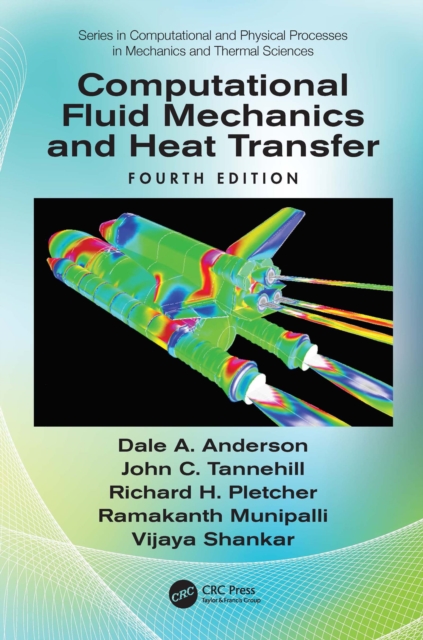
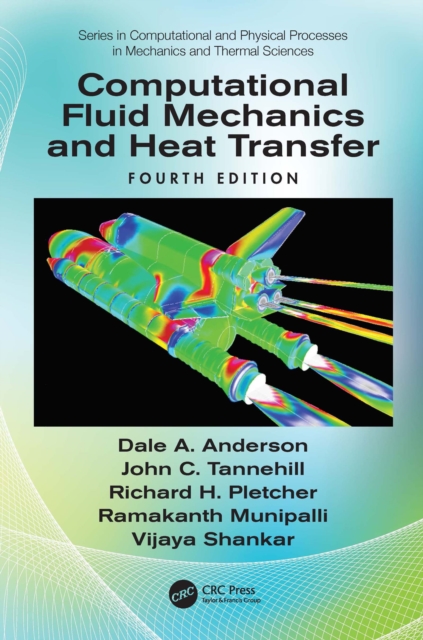
Computational Fluid Mechanics and Heat Transfer, Fourth Edition is a fully updated version of the classic text on finite-difference and finite-volume computational methods.
Computational Fluid Mechanics and Heat Transfer, Fourth Edition is a fully updated version of the classic text on finite-difference and finite-volume computational methods.
Similarity Solutions for the Boundary Layer Flow and Heat Transfer of Viscous Fluids, Nanofluids, Porous Media, and Micropolar Fluids presents new similarity solutions for fluid mechanics problems, including heat transfer of viscous fluids, boundary layer flow, flow in porous media, and nanofluids due to continuous moving surfaces.
Applications of Hybrid Nanofluids in Science and Engineering delves deep into the multifaceted realms in which these dynamic fluids are playing a pivotal role in various fields.
Blood microcirculation is essential to our bodies for the successful supply of nutrients, waste removal, oxygen delivery, homeostasis, controlling temperature, wound healing, and active immune surveillance.
Blood microcirculation is essential to our bodies for the successful supply of nutrients, waste removal, oxygen delivery, homeostasis, controlling temperature, wound healing, and active immune surveillance.
In addition to explaining and modeling unexplored phenomena in nature and society, chaos uses vital parts of nonlinear dynamical systems theory and established chaotic theory to open new frontiers and fields of study.
Thanks to the pioneering works of Ashkin and coworkers, optical tweezers (OTs) have become an invaluable tool for myriad studies throughout the natural sciences.
Fields, Forces, and Flows in Biological Systems describes the fundamental driving forces for mass transport, electric current, and fluid flow as they apply to the biology and biophysics of molecules, cells, tissues, and organs.
This edited volume offers complete coverage of the latest theoretical, experimental, and computer-based data as summarized by leading international researchers.
This edited volume offers complete coverage of the latest theoretical, experimental, and computer-based data as summarized by leading international researchers.
In the past three decades, considerable progress has been made in the mathematical analysis, modelling, and simulation of the fluid dynamics of liquid capsules and biological cells, and interest in this area is now at an all-time high.
In the past three decades, considerable progress has been made in the mathematical analysis, modelling, and simulation of the fluid dynamics of liquid capsules and biological cells, and interest in this area is now at an all-time high.
The manipulation of fluids in channels with dimensions in the range from tens to hundreds of micrometers microfluidics has recently emerged as a new field of science and technology.
Providing a comprehensive grounding in the subject of turbulence, Statistical Theory and Modeling for Turbulent Flows develops both the physical insight and the mathematical framework needed to understand turbulent flow.