As our dependence on and need for abundant energy grows, it becomes increasingly important for engineers and managers to develop and maintain energy efficient systems and build effective energy management programs.
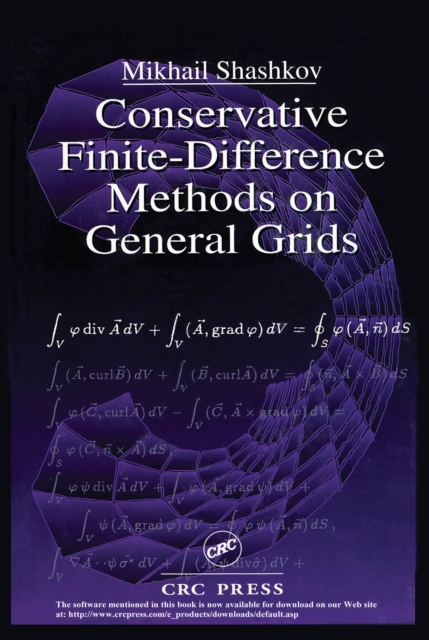
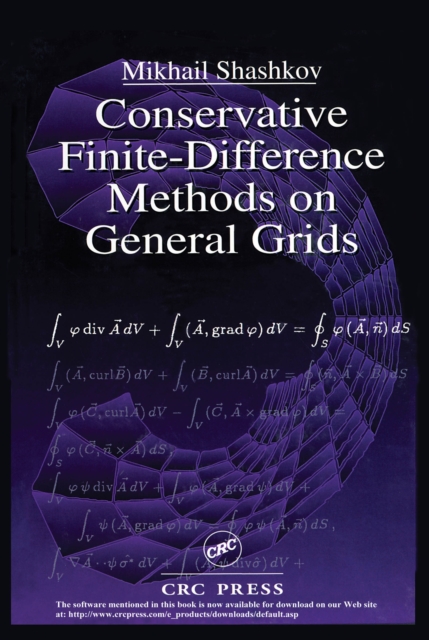
This new book deals with the construction of finite-difference (FD) algorithms for three main types of equations: elliptic equations, heat equations, and gas dynamic equations in Lagrangian form.
This new book deals with the construction of finite-difference (FD) algorithms for three main types of equations: elliptic equations, heat equations, and gas dynamic equations in Lagrangian form.
Presenting a comprehensive description of the theory and physics of high-intensity ultrasound, this book also deals with a wide range of problems associated with the industrial applications of ultrasound, mainly in the areas of metallurgy and mineral processing.
Presenting a comprehensive description of the theory and physics of high-intensity ultrasound, this book also deals with a wide range of problems associated with the industrial applications of ultrasound, mainly in the areas of metallurgy and mineral processing.
For the first time in a single book, Non-Linear Instabilities in Plasmas and Hydrodynamics presents the underlying physics of fast secondary instabilities.
For the first time in a single book, Non-Linear Instabilities in Plasmas and Hydrodynamics presents the underlying physics of fast secondary instabilities.
As a satellite conference of the 1998 International Mathematical Congress and part of the celebration of the 650th anniversary of Charles University, the Partial Differential Equations Theory and Numerical Solution conference was held in Prague in August, 1998.
As a satellite conference of the 1998 International Mathematical Congress and part of the celebration of the 650th anniversary of Charles University, the Partial Differential Equations Theory and Numerical Solution conference was held in Prague in August, 1998.
A compilation of decades of knowledge spanning the author's career as a mechanical engineer specializing in heat transfer and thermodynamics in the solar and aerospace industries, this book is instantly practicable.
Tensor Calculus and Analytical Dynamics provides a concise, comprehensive, and readable introduction to classical tensor calculus - in both holonomic and nonholonomic coordinates - as well as to its principal applications to the Lagrangean dynamics of discrete systems under positional or velocity constraints.
Tensor Calculus and Analytical Dynamics provides a concise, comprehensive, and readable introduction to classical tensor calculus - in both holonomic and nonholonomic coordinates - as well as to its principal applications to the Lagrangean dynamics of discrete systems under positional or velocity constraints.
Dwindling global supplies of conventional energy and materials resources are widely thought to severely constrain, or even render impossible, a "e;first-world"e; lifestyle for the bulk of Earths inhabitants.
Dwindling global supplies of conventional energy and materials resources are widely thought to severely constrain, or even render impossible, a "e;first-world"e; lifestyle for the bulk of Earths inhabitants.
This book is the first to present flow measurement as an independent branch of the measurement techniques, according to a new global and unitary approach for the measurement of fluid flow field, starting from finding its unitary fundamental bases.
This book is the first to present flow measurement as an independent branch of the measurement techniques, according to a new global and unitary approach for the measurement of fluid flow field, starting from finding its unitary fundamental bases.
This book discusses the extent to whcih differences exist in the approach to energy management by different types of firms: large multidivisional firms at corporate headquarters level and division level and independent firms, energy intensive and non-energy intensive firms and growth and non-growth firms.
This book discusses the extent to whcih differences exist in the approach to energy management by different types of firms: large multidivisional firms at corporate headquarters level and division level and independent firms, energy intensive and non-energy intensive firms and growth and non-growth firms.
Originally published in 1984, this book discusses the structure of a multi-sectoral, general equilibrium growth model of the US economy that gives special attention to the energy sectors and presents results from the simulation of this model under varying conditions of energy supply.
Originally published in 1984, this book discusses the structure of a multi-sectoral, general equilibrium growth model of the US economy that gives special attention to the energy sectors and presents results from the simulation of this model under varying conditions of energy supply.
The latest edition features a new chapter on implementation and operation of an integrated smart grid with updates to multiple chapters throughout the text.