Fluid Mechanics, understanding and applying the principles of how motions and forces act upon fluids such as gases and liquids, is introduced and comprehensively covered in this widely adopted text.
In the era of propelling traditional energy systems to evolve towards smart energy systems, including power generation, energy storage systems, and electricity consumption have become more dynamic.
The theme of the present volume of Advances in Chemical Engineering is Computational Fluid Dynamics (CFD) and aims to show the state-of-the-art of the application of CFD in chemical engineering.
Solve your bearing design problems with step-by-step procedures and hard-won performance data from a leading expert and consultantCompiled for ease of use in practical design scenarios, Hydrostatic, Aerostatic and Hybrid Bearing Design provides the basic principles, design procedures and data you need to create the right bearing solution for your requirements.
This updated/augmented second edition retains it class-tested content and pedagogy as a core text for graduate courses in advanced fluid mechanics and applied science.
As most modern technologies are no longer discipline-specific but involve multidisciplinary approaches, undergraduate engineering students should be introduced to the principles of mechanics so that they have a strong background in the basic principles common to all disciplines and are able to work at the interface of science and engineering disciplines.
This book presents a multidisciplinary guide to gauge theory and gravity, with chapters by the world's leading theoretical physicists, mathematicians, historians and philosophers of science.
The corresponding-states principle helps the understanding and calculating of thermodynamic, transport, and surface properties of substances in various states, required by our modern lifestyle.
Proceedings of the International Symposium in Novel Materials Processing by Advanced Electromagnetic Energy Sources (MAPEES'04)*Identifies and details recent progress achieved by advanced electromagnetic energy sources in materials processing.
Dealing with general problems in fluid mechanics, convection diffusion, compressible and incompressible laminar and turbulent flow, shallow water flows and waves, this is the leading text and reference for engineers working with fluid dynamics in fields including aerospace engineering, vehicle design, thermal engineering and many other engineering applications.
Fuel cells are electrochemical energy conversion devices that convert hydrogen and oxygen into water, producing electricity and heat in the process and providing fuel efficiency and reductions in pollutants.
Entropy-based design (EBD) is an emerging new methodology that incorporates the Second Law into computational fluid dynamics (CFD) and measurement techniques.
This book is a collection of contributions presented at the 16th annual international symposium "e;Frontiers of Fundamental Physics"e; (FFP16), supported by Istanbul University.
This book presents experimental techniques in the field of aerodynamics, a discipline that is essential in numerous areas, such as the design of aerial and ground vehicles and engines, the production of energy, and understanding the wind resistance of buildings.
A world-renowned physicist seeks gravity's true nature and finds wisdom in embracing its force in her lifeClaudia de Rham has been playing with gravity her entire life.
This book aims to integrate, in a pedagogical and technical manner, with detailed derivations, all essential principles of fundamental theoretical physics as developed over the past 100 years.
Green Hydrogen in Energy Systems: A Computational Fluid Dynamics Approach provides a comprehensive exploration of how CFD modeling techniques are revolutionizing the development, optimization, and safety analysis of green hydrogen technologies.
Green Hydrogen in Energy Systems: A Computational Fluid Dynamics Approach provides a comprehensive exploration of how CFD modeling techniques are revolutionizing the development, optimization, and safety analysis of green hydrogen technologies.
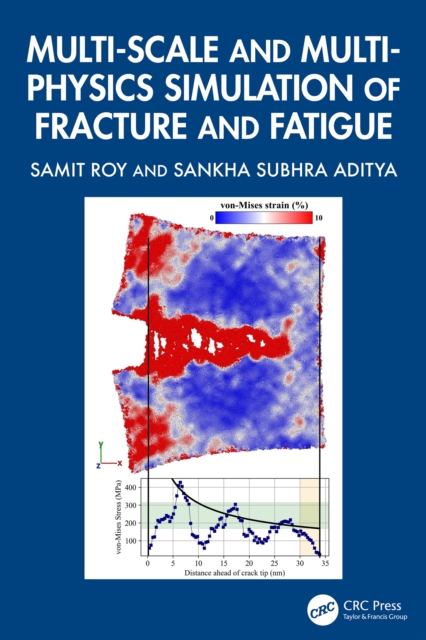
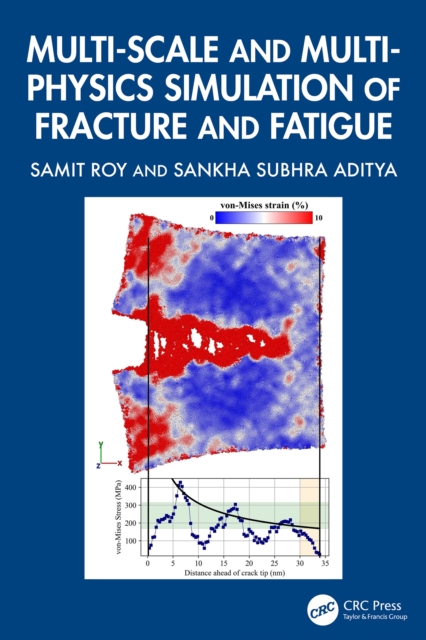
Multi-scale and Multi-physics Simulation of Fracture and Fatigue presents a comprehensive exploration of theoretical and computational methods used in the analysis of fracture and fatigue in materials, effectively bridging length and time scales.
Multi-scale and Multi-physics Simulation of Fracture and Fatigue presents a comprehensive exploration of theoretical and computational methods used in the analysis of fracture and fatigue in materials, effectively bridging length and time scales.
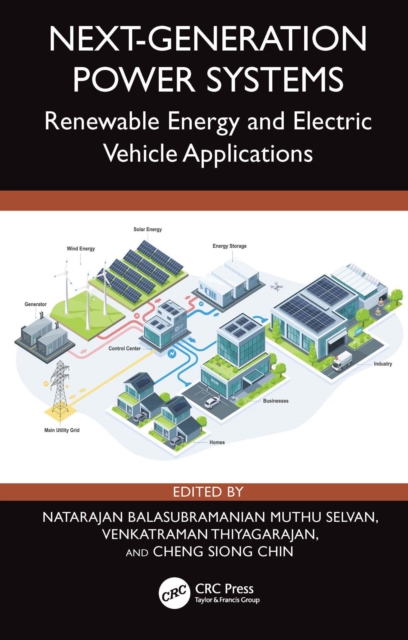
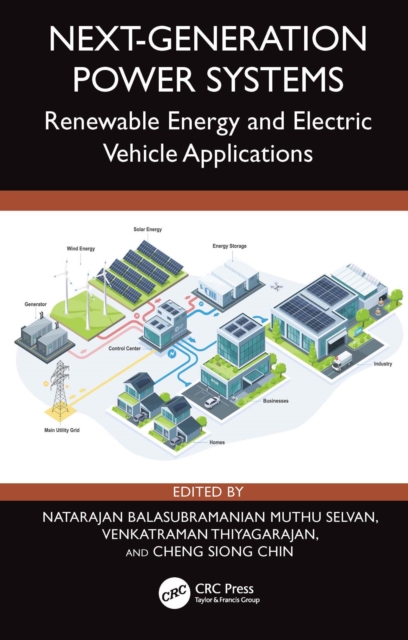
Next Generation Power Systems: Renewable Energy and Electric Vehicle Applications is a comprehensive resource that addresses emerging issues facing the power system industry in its drive toward more sustainable, reliable, and flexible power generation.
Next Generation Power Systems: Renewable Energy and Electric Vehicle Applications is a comprehensive resource that addresses emerging issues facing the power system industry in its drive toward more sustainable, reliable, and flexible power generation.
Energy and Energy Transformation thoroughly examines energy systems, encompassing the analysis, calculation, and practical applications of energy transformation, with an extensive overview of both renewable and nonrenewable energy sources.
Energy and Energy Transformation thoroughly examines energy systems, encompassing the analysis, calculation, and practical applications of energy transformation, with an extensive overview of both renewable and nonrenewable energy sources.
Applied Lubrication, Insulation, and Cooling Fluids for Electrical Power Systems provides evidence-based strategies for selecting, applying, and monitoring lubricants, coolants, and insulating fluids in power systems.
Applied Lubrication, Insulation, and Cooling Fluids for Electrical Power Systems provides evidence-based strategies for selecting, applying, and monitoring lubricants, coolants, and insulating fluids in power systems.
This comprehensive book examines advanced Enhanced Oil Recovery (EOR) methodologies utilizing nanoparticles, polymers, and surfactants as extraction efficiency becomes increasingly critical in depleting oil reserves.
This comprehensive book examines advanced Enhanced Oil Recovery (EOR) methodologies utilizing nanoparticles, polymers, and surfactants as extraction efficiency becomes increasingly critical in depleting oil reserves.