Helping readers understand the complicated laws of nature, Advanced Particle Physics Volume I: Particles, Fields, and Quantum Electrodynamics explains the calculations, experimental procedures, and measuring methods of particle physics.
Helping readers understand the complicated laws of nature, Advanced Particle Physics Volume II: The Standard Model and Beyond explains the calculations, experimental procedures, and measuring methods of particle physics, particularly quantum chromodynamics (QCD).
Covers the State of the Art in Superfluidity and SuperconductivitySuperfluid States of Matter addresses the phenomenon of superfluidity/superconductivity through an emergent, topologically protected constant of motion and covers topics developed over the past 20 years.
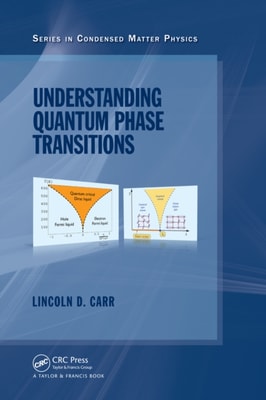
Quantum phase transitions (QPTs) offer wonderful examples of the radical macroscopic effects inherent in quantum physics: phase changes between different forms of matter driven by quantum rather than thermal fluctuations, typically at very low temperatures.
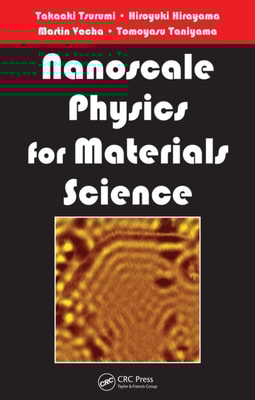
Although there are many books available on the preparation, properties, and characterization of nanomaterials, few provide an interdisciplinary account of the physical phenomena that govern the novel properties of nanomaterials.
The spectroscopy of highly charged ions plays a key role in numerous areas of physics, from quantum electrodynamics (QED) and parity nonconservation (PNC) testing to fusion and plasma physics to x-ray astronomy.
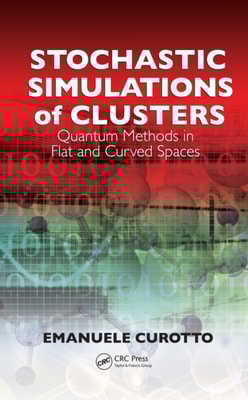
Unravels Complex Problems through Quantum Monte Carlo MethodsClusters hold the key to our understanding of intermolecular forces and how these affect the physical properties of bulk condensed matter.
Up to date and comprehensive in its coverage, Neutrinos in Particle Physics, Astrophysics and Cosmology reviews the whole landscape of neutrino physics, from state-of-the-art experiments to the latest phenomenological and theoretical developments to future advances.
A teaching tool intended to complement existing books on the theory of materials science, metallurgy, and electron microscopy, this text focuses on metals and alloys.
Many bottom-up and top-down techniques for nanomaterial and nanostructure generation have enabled the development of applications in nanoelectronics and nanophotonics.
The tools of nanodiagnostics, nanotherapy, and nanorobotics are expected to revolutionize the future of medicine, leading to presymptomatic diagnosis of disease, highly effective targeted treatment therapy, and minimum side effects.
Covering the key theories, tools, and techniques of this dynamic field, Handbook of Nanophysics: Principles and Methods elucidates the general theoretical principles and measurements of nanoscale systems.
One of the Top Selling Physics Books according to YBP Library ServicesMagnetic Anisotropies in Nanostructured Matter presents a compact summary of all the theoretical means to describe magnetic anisotropies and interlayer exchange coupling in nanosystems.
Discusses the Structure and Properties of Materials and How These Materials Are Used in Diverse ApplicationsBuilding on undergraduate students' backgrounds in mathematics, science, and engineering, Introduction to the Physics and Chemistry of Materials provides the foundation needed for more advanced work in materials science.
One of the Top Selling Physics Books according to YBP Library ServicesOrder can be found in all the structures unfolding around us at different scales, including in the arrangements of matter and in energy flow patterns.
Starting with the simplest semiclassical approaches and ending with the description of complex fully quantum-mechanical methods for quantum transport analysis of state-of-the-art devices, Computational Electronics: Semiclassical and Quantum Device Modeling and Simulation provides a comprehensive overview of the essential techniques and methods for effectively analyzing transport in semiconductor devices.
The understanding and control of transport phenomena in materials processing play an important role in the improvement of conventional processes and in the development of new techniques.
Liquid crystal displays were discovered in the 1960s, and today we continue to enjoy the benefits of that fundamental discovery and its translation into a wide variety of products.
The first book to present a detailed analysis of the electrochemistry, development, modeling, optimization, testing, and technology behind modern zirconia-based sensors, Electrochemistry of Zirconia Gas Sensors explores how to tailor these sensors to meet specific industrial needs.
Uncover the Defects that Compromise Performance and ReliabilityAs microelectronics features and devices become smaller and more complex, it is critical that engineers and technologists completely understand how components can be damaged during the increasingly complicated fabrication processes required to produce them.
Literally thousands of elementary particles have been discovered over the last 50 years, their properties measured, relationships systematized, and existence and behavior explained in a myriad of cleverly constructed theories.
Despite the large quantity of phenomenological information concerning the bulk properties of nematic phase liquid crystals, little is understood about the origin of the surface energy, particularly the surface, interfacial, and anchoring properties of liquid crystals that affect the performance of liquid crystal devices.
Aerospace Materials provides a grounding in state-of-the-art aerospace materials technology, including developments in aluminum, titanium, and nickel alloys, as well as polymers and polymer composites.
In the course of the development of electromagnetic, weak and strong interactions, the concept of (internal) gauge invariance grew up and established itself as an unavoidable dynamical principle in particle physics.
Based on graduate lectures given by the authors, Smectic and Columnar Liquid Crystals: Concepts and Physical Properties Illustrated by Experiments examines lamellar (smectic) and columnar liquid crystals, which, in addition to orientational order, possess 1D, 2D or 3D positional order.
With contributions from leading experts in their respective fields, Metal and Ceramic Matrix Composites provides a comprehensive overview of topics on specific materials and trends.
Written by leading experts in their respective fields, Solidification and Casting provides a comprehensive review of topics fundamental to metallurgy and materials science as well as indicates recent trends.
Theory of Superconductivity: From Weak to Strong Coupling leads the reader from basic principles through detailed derivations and a description of the many interesting phenomena in conventional and high-temperature superconductors.
An area at the intersection of solid mechanics, materials science, and stochastic mathematics, mechanics of materials often necessitates a stochastic approach to grasp the effects of spatial randomness.