This book is a reissue of a classic Oxford text, and provides a comprehensive treatment of electron paramagnetic resonance of ions of the transition groups.
In 1984 physicists discovered a monster in the world of crystallography, a structure that appeared to contain five-fold symmetry axes, which cannot exist in strictly periodic structures.
The terms 'liquid crystal' or 'liquid crystal display' (LCD) are well-known in the context of flat-screen televisions, but the properties and history of liquid crystals are little understood.
The book gives accounts of non-quantum optical phenomena and of instruments and technology based on them, at a level suitable for the last two years of an honours degree in physics and for graduates starting out.
In the modern world of ever smaller devices and nanotechnology, electron crystallography emerges as the most important method capable of determining the structure of minute objects down to the size of individual atoms.
This book provides a guide to modern developments in photographic science and their possible applications to new and exciting areas, including nano-technology, solar cells, and organic semiconductors.
'Superconducting State' provides a very detailed theoretical treatment of the key mechanisms of superconductivity, including the current state of the art (phonons, magnons, and plasmons).
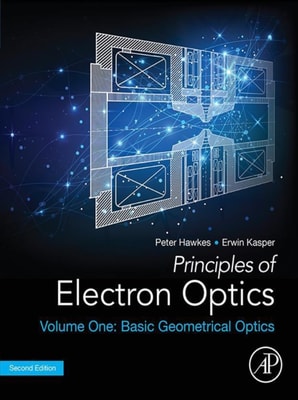
Volume one of Principles of Electron Optics: Basic Geometrical Optics, Second Edition, explores the geometrical optics needed to analyze an extremely wide range of instruments: cathode-ray tubes; the family of electron microscopes, including the fixed-beam and scanning transmission instruments, the scanning electron microscope and the emission microscope; electron spectrometers and mass spectrograph; image converters; electron interferometers and diffraction devices; electron welding machines; and electron-beam lithography devices.
Principles of Electron Optics: Applied Geometrical Optics, Second Edition gives detailed information about the many optical elements that use the theory presented in Volume 1: electrostatic and magnetic lenses, quadrupoles, cathode-lens-based instruments including the new ultrafast microscopes, low-energy-electron microscopes and photoemission electron microscopes and the mirrors found in their systems, Wien filters and deflectors.
Generation of Polymers and Nanomaterials at Liquid-Liquid Interfaces: Application to Crystalline, Light Emitting, and Energy Materials, Second Edition is an innovative guide to the synthesis and processing of materials through liquid-liquid interfaces.
This book presents experimental as well as simulation methodologies for analysis and development of nanostructures for introducing the desirable effects through modifications in the basic structure of select nanomaterials.
This book highlights the importance of Electron Statistics (ES), which occupies a singular position in the arena of solid state sciences, in heavily doped (HD) nanostructures by applying Heisenberg's Uncertainty Principle directly without using the complicated Density-of-States function approach as given in the literature.
Macromolecular Engineering: Design, Synthesis and Application of Polymers explores the role of macromolecular engineering in the development of polymer systems with engineered structures that offer the desired combination of properties for advanced applications.
This book focuses on basic fundamental and applied aspects of micro-LED, ranging from chip fabrication to transfer technology, panel integration, and various applications in fields ranging from optics to electronics to and biomedicine.
This book presents peer-reviewed and selected papers of the International Youth Conference on Electronics, Telecommunications, and Information Technologies (YETI-2021), held in Peter the Great St.
Future Directions in Silicon Photonics, Volume 101 in the Semiconductors and Semimetals series, highlights new advances in the field, with this updated volume presenting the latest developments as discussed by esteemed leaders in the field silicon photonics.
Generation of Polymers and Nanomaterials at Liquid-Liquid Interfaces: Application to Crystalline, Light Emitting, and Energy Materials, Second Edition is an innovative guide to the synthesis and processing of materials through liquid-liquid interfaces.
Professor Freeman Dyson, a great physicist, thinker and futurist, has been very active in scientific, literary and public policy activities throughout his career.
This thesis demonstrates that layered heterostructures of two-dimensional crystals graphene, hexagonal boron nitride, and transition metal dichalcogenides provide new and interesting interlayer transport phenomena.
Self-Healing Polymer-Based Systems presents all aspects of self-healing polymeric materials, offering detailed information on fundamentals, preparation methods, technology, and applications, and drawing on the latest state-of-the-art research.
This book describes the direct and inverse problems of the multidimensional Schrodinger operator with a periodic potential, a topic that is especially important in perturbation theory, constructive determination of spectral invariants and finding the periodic potential from the given Bloch eigenvalues.
This book demonstrates the basic and fundamental aspects of nanotechnology and potential application as a photocatalysis in multiple application especially in environment and energy harvesting.
This book is a comprehensive summary of 50 years of research from theoretical predictions to experimental confirmation of the manifestation of spin exchange in EPR spectroscopy.
This significantly extended second edition addresses the important physical phenomenon of Surface Plasmon Resonance (SPR) or Surface Plasmon Polaritons (SPP) in thin metal films, a phenomenon which is exploited in the design of a large variety of physico-chemical optical sensors.
Over the last decade, techniques for materials preparation and processing at nanometer scale have advanced rapidly, leading to the introduction of novel principles for a new generation of sensors and detectors.
Processing of polymer nanocomposites usually requires special attention since the resultant structure-micro- and nano-level, is directly influenced by among other factors, polymer/nano-additive chemistry and the processing strategy.
Molecular Beam Epitaxy (MBE): From Research to Mass Production, Second Edition, provides a comprehensive overview of the latest MBE research and applications in epitaxial growth, along with a detailed discussion and 'how to' on processing molecular or atomic beams that occur on the surface of a heated crystalline substrate in a vacuum.
Comprehensive coverage of topics in the theory of classical liquidsWidely regarded as the standard text in its field, Theory of Simple Liquids gives an advanced but self-contained account of liquid state theory within the unifying framework provided by classical statistical mechanics.
This book provides new clues for understanding electrostatic charging in solids and liquids, resulting from the surge of research in this active area of science that is taking place since the 1990's but is still largely unknown to most researchers, lecturers and engineers.
In this book, the author determines that a surface is itself a new material for chemical reaction, and the reaction of the surface provides additional new materials on that surface.
This book describes, as simply as possible, the mechanisms of scattering (both elastic and inelastic) of electrons with solid targets (electron-atom, electron-plasmon, and electron-phonon interactions).
The 4th edition of this highly successful textbook features copious material for a complete upper-level undergraduate or graduate course, guiding readers to the point where they can choose a specialized topic and begin supervised research.