Cryocoolers 10 is the premier archival publication of the latest advances and performance of small cryogenic refrigerators designed to provide localized cooling for military, space, semi-conductor, medical, computing, and high-temperature superconductor cryogenic applications in the 2-200 K temperature range.
Although rigidity has been studied since the time of Lagrange (1788) and Maxwell (1864), it is only in the last twenty-five years that it has begun to find applications in the basic sciences.
In this definitive text in the field, the author gives a detailed account of the major problem of applied superconductivitiy-the stability of superconductors.
This book gathers original contributions from a selected group of distinguished researchers that are actively working in the theory and practical applications of solvent effects and chemical reactions.
Self-assembly monolayer (SAM) structures of lipids and macromolecules have been found to play an important role in many industrial and biological phenomena.
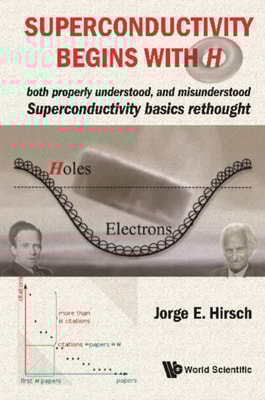
This iconoclastic book proposes that superconductivity is misunderstood in contemporary science and that this hampers scientific and technological development.
Particles, Fields, Space-Time: From Thomson's Electron to Higgs' Boson explores the concepts, ideas, and experimental results that brought us from the discovery of the first elementary particle in the end of the 19th century to the completion of the Standard Model of particle physics in the early 21st century.
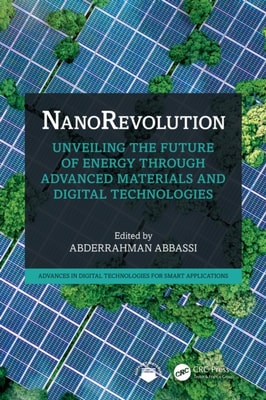
As the global push toward energy accelerates, NanoRevolution: Unveiling the Future of Energy through Advanced Materials and Digital Technologies brings forward a powerful vision of how advanced materials and digital technologies are redefining energy solutions.
As the global push toward energy accelerates, NanoRevolution: Unveiling the Future of Energy through Advanced Materials and Digital Technologies brings forward a powerful vision of how advanced materials and digital technologies are redefining energy solutions.
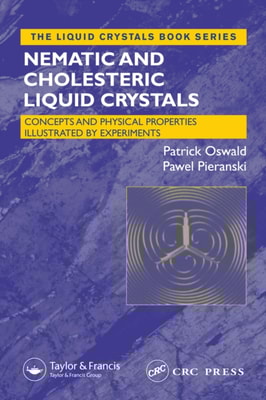
Liquid crystals allow us to perform experiments that provide insight into fundamental problems of modern physics, such as phase transitions, frustration, elasticity, hydrodynamics, defects, growth phenomena, and optics (linear and non linear).
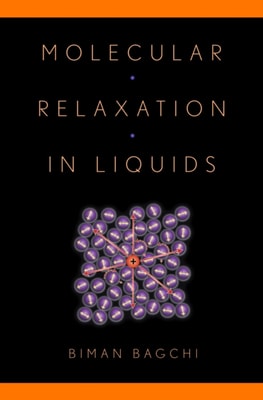
This book brings together many different relaxation phenomena in liquids under a common umbrella and provides a unified view of apparently diverse phenomena.
This monograph, suitable for use as an advanced text, presents the statistical mechanics of solids from the perspective of the material properties of the solid state.
Due to its nondestructive imaging power, scanning tunneling microscopy has found major applications in the fields of physics, chemistry, engineering, and materials science.
Superconductivity has become one of the most intensely studied physical phenomena of our times, with tremendous potential to revolutionize fields as diverse as computing and transportation.
Two topics in the forefront of superconductor research--superconductor-insulator transition in thin films and vortex tunneling in granular, bulk, and high temperature superconductors--have never before been given a unified and deductive treatment.
"e;Mesoscopic physics"e; refers to the physics of structures larger than a nanometer (one billionth of a meter) but smaller than a micrometer (one millionth of a meter).
Continuum Mechanics of Solids is an introductory text for graduate students in the many branches of engineering, covering the basics of kinematics, equilibrium, and material response.
Technological evolution and revolution are both driven by the discovery of new functionalities, new materials and the design of yet smaller, faster, and more energy-efficient components.
Primarily intended for postgraduate students and researchers in the fields of condensed matter science, chemical physics and material science, who plan to use the muon spin rotation, relaxation amd resonance (uSR) techniques, this book combines for the first time a detailed discussion of the physical information contained in the measured polarisation functions with real-life examples taken from the literature.
This book provides the reader with a detailed theoretical treatment of the key mechanisms of superconductivity, up to the current state of the art (phonons, magnons, plasmons).
Physics on Your Feet (2nd Edition) is a significantly expanded collection of physics problems covering the broad range of topics in classical and modern physics that were, or could have been, asked at oral PhD exams at University of California at Berkeley.