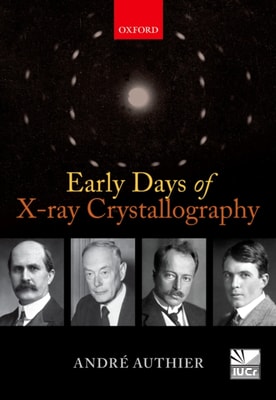
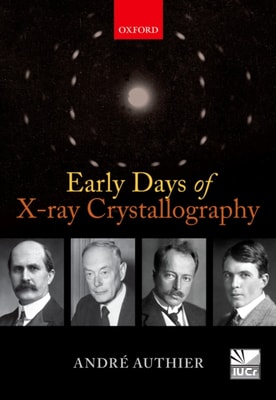
The year 2012 marked the centenary of one of the most significant discoveries of the early twentieth century, the discovery of X-ray diffraction (March 1912, by Laue, Friedrich and Knipping) and of Bragg's law (November 1912).
The year 2012 marked the centenary of one of the most significant discoveries of the early twentieth century, the discovery of X-ray diffraction (March 1912, by Laue, Friedrich and Knipping) and of Bragg's law (November 1912).
Since the discovery by the author and collaborators of superconductivity in the first truly layered compound, TaS2(pyridine)1/2, there have been many types of layered superconductors.
Time-dependent density-functional theory (TDDFT) describes the quantum dynamics of interacting electronic many-body systems formally exactly and in a practical and efficient manner.
Time-dependent density-functional theory (TDDFT) describes the quantum dynamics of interacting electronic many-body systems formally exactly and in a practical and efficient manner.
Since the discovery by the author and collaborators of superconductivity in the first truly layered compound, TaS2(pyridine)1/2, there have been many types of layered superconductors.
In July 2009, many experts in the mathematical modelling of biological sciences gathered in Les Houches for a 4-week summer school on the mechanics and physics of biological systems.
Bio-nanocomposites combine the enhanced properties of commercial polymer nanocomposites with the low environmental impact of biodegradable material, making them a topic of great current interest.
Taking the reader through the underlying principles of molecular translational dynamics, this book outlines the ways in which magnetic resonance, through the use of magnetic field gradients, can reveal those dynamics.
In July 2009, many experts in the mathematical modelling of biological sciences gathered in Les Houches for a 4-week summer school on the mechanics and physics of biological systems.
Bio-nanocomposites combine the enhanced properties of commercial polymer nanocomposites with the low environmental impact of biodegradable material, making them a topic of great current interest.
Taking the reader through the underlying principles of molecular translational dynamics, this book outlines the ways in which magnetic resonance, through the use of magnetic field gradients, can reveal those dynamics.
Rapid development of microfabrication and assembly of nanostructures has opened up many opportunities to miniaturize structures that confine light, producing unusual and extremely interesting optical properties.
The main goal of this work is to familiarize the reader with a tool, the path integral, that offers an alternative point of view on quantum mechanics, but more important, under a generalized form, has become the key to a deeper understanding of quantum field theory and its applications, which extend from particle physics to phase transitions or properties of quantum gases.
Hydrogen bond (H-bond) effects are known: it makes sea water liquid, joins cellulose microfibrils in trees, shapes DNA into genes and polypeptide chains into wool, hair, muscles or enzymes.
Physics was the leading science of the twentieth century and the book retraces important discoveries, made between 1895 and 2001, in 100 self-contained episodes.
The subject of this book is the Casimir effect, a manifestation of zero-point oscillations of the quantum vacuum resulting in forces acting between closely spaced bodies.
Over the last thirty years, the study of liquids containing polymers, surfactants, or colloidal particles has developed from a loose assembly of facts into a coherent discipline with substantial predictive power.
Atomic force microscopy (AFM) is an amazing technique that allies a versatile methodology (that allows measurement of samples in liquid, vacuum or air) to imaging with unprecedented resolution.