This handbook is about a remarkable set of materials that are technically referred to as "e;mesoscopic superconductors"e;, which for all practical purposes are tiny or small in their dimensions, ranging from a few micrometers down to a nanometer.
Metal-semiconductor nanostructures represent an important new class of materials employed in designing advanced optoelectronic and nanophotonic devices, such as plasmonic nanolasers, plasmon-enhanced light-emitting diodes and solar cells, plasmonic emitters of single photons, and quantum devices operating in infrared and terahertz domains.
This book provides an introduction to band theory and the electronic properties of materials at a level suitable for final-year undergraduates or first-year graduate students.
This first volume provides the basic matters needed for understanding the thermophysical properties of metallic liquids and for developing reliable models to accurately predict the thermophysical properties of almost all metallic elements in the liquid state, together with methods for quantitative assessment of models/equations.
Starting from first principles, this book introduces the closely related phenomena of Bose condensation and Cooper pairing, in which a very large number of single particles or pairs of particles are forced to behave in exactly the same way, and explores their consequences in condensed matter systems.
The importance and the beauty of modern quantum field theory resides in the power and variety of its methods and ideas, which find application in domains as different as particle physics, cosmology, condensed matter, statistical mechanics and critical phenomena.
This book is a reissue of the third and last edition of a classic text providing the reader with a comprehensive account at first degree or introductory graduate level of the principles and experimental aspects of electricity and magnetism, together with an elementary account of the underlying atomic theory.
This book is a reissue of the third and last edition of a classic text providing the reader with a comprehensive account at first degree or introductory graduate level of the principles and experimental aspects of electricity and magnetism, together with an elementary account of the underlying atomic theory.
Volume 2 of Novel Superfluids continues the presentation of recent results on superfluids, including novel metallic systems, superfluid liquids, and atomic/molecular gases of bosons and fermions, particularly when trapped in optical lattices.
A complete account of the theory of the diffraction of X-rays by crystals, with particular reference to the processes of determining the structures of protein molecules.
As an introductory account of the theory of phase transitions and critical phenomena, this book reflects lectures given by the authors to graduate students at their departments and is thus classroom-tested to help beginners enter the field.
Recent experimental progress has enabled cold atomic gases to be studied at nano-kelvin temperatures, creating new states of matter where quantum degeneracy occurs - Bose-Einstein condensates and degenerate Fermi gases.
This book deals with an important class of many-body systems: those where the interaction potential decays slowly for large inter-particle distances; in particular, systems where the decay is slower than the inverse inter-particle distance raised to the dimension of the embedding space.
Nanoscience and nanotechnology concern themselves with the research and application of extremely small things and can be used across all scientific fields such as physics, chemistry, biology, material science and engineering.
Since the first edition of this highly successful book the field saw many great developments both in experimental and theoretical studies of electrical properties of non-crystalline solids.
This book is a reissue of a classic Oxford text, and provides a comprehensive treatment of electron paramagnetic resonance of ions of the transition groups.
In 1984 physicists discovered a monster in the world of crystallography, a structure that appeared to contain five-fold symmetry axes, which cannot exist in strictly periodic structures.
The terms 'liquid crystal' or 'liquid crystal display' (LCD) are well-known in the context of flat-screen televisions, but the properties and history of liquid crystals are little understood.
The book gives accounts of non-quantum optical phenomena and of instruments and technology based on them, at a level suitable for the last two years of an honours degree in physics and for graduates starting out.
In the modern world of ever smaller devices and nanotechnology, electron crystallography emerges as the most important method capable of determining the structure of minute objects down to the size of individual atoms.
This book provides a guide to modern developments in photographic science and their possible applications to new and exciting areas, including nano-technology, solar cells, and organic semiconductors.
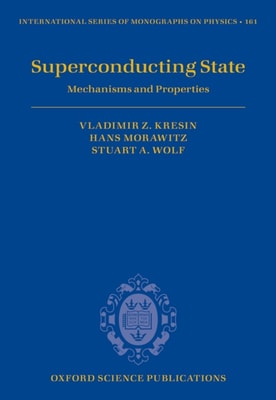
'Superconducting State' provides a very detailed theoretical treatment of the key mechanisms of superconductivity, including the current state of the art (phonons, magnons, and plasmons).
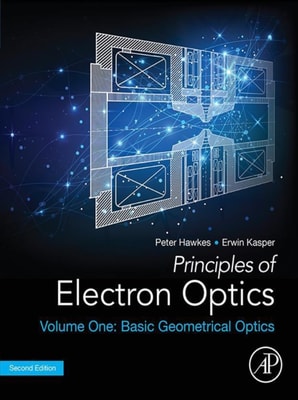
Volume one of Principles of Electron Optics: Basic Geometrical Optics, Second Edition, explores the geometrical optics needed to analyze an extremely wide range of instruments: cathode-ray tubes; the family of electron microscopes, including the fixed-beam and scanning transmission instruments, the scanning electron microscope and the emission microscope; electron spectrometers and mass spectrograph; image converters; electron interferometers and diffraction devices; electron welding machines; and electron-beam lithography devices.
Principles of Electron Optics: Applied Geometrical Optics, Second Edition gives detailed information about the many optical elements that use the theory presented in Volume 1: electrostatic and magnetic lenses, quadrupoles, cathode-lens-based instruments including the new ultrafast microscopes, low-energy-electron microscopes and photoemission electron microscopes and the mirrors found in their systems, Wien filters and deflectors.
Generation of Polymers and Nanomaterials at Liquid-Liquid Interfaces: Application to Crystalline, Light Emitting, and Energy Materials, Second Edition is an innovative guide to the synthesis and processing of materials through liquid-liquid interfaces.
This book presents experimental as well as simulation methodologies for analysis and development of nanostructures for introducing the desirable effects through modifications in the basic structure of select nanomaterials.
This book highlights the importance of Electron Statistics (ES), which occupies a singular position in the arena of solid state sciences, in heavily doped (HD) nanostructures by applying Heisenberg's Uncertainty Principle directly without using the complicated Density-of-States function approach as given in the literature.
Macromolecular Engineering: Design, Synthesis and Application of Polymers explores the role of macromolecular engineering in the development of polymer systems with engineered structures that offer the desired combination of properties for advanced applications.
This book focuses on basic fundamental and applied aspects of micro-LED, ranging from chip fabrication to transfer technology, panel integration, and various applications in fields ranging from optics to electronics to and biomedicine.
This book presents peer-reviewed and selected papers of the International Youth Conference on Electronics, Telecommunications, and Information Technologies (YETI-2021), held in Peter the Great St.
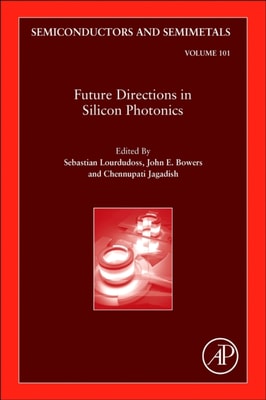
Future Directions in Silicon Photonics, Volume 101 in the Semiconductors and Semimetals series, highlights new advances in the field, with this updated volume presenting the latest developments as discussed by esteemed leaders in the field silicon photonics.