During the past fifteen years there has been a dramatic increase in the number of different surfaces whose structures have been determined experimentally.
Since 1965, Advances in Magnetic and Optical Resonance has provided researchers with timely expositions of fundamental new developments in the theory of, experimentation with, and application of magnetic and optical resonance.
The aim of this book is to provide a timely collection that highlights advances in current research of crystal growth ranging from fundamental aspects to current applications involving a wide range of materials.
This book deals with the electronic and optical properties of two low-dimensional systems: quantum dots and quantum antidots and is divided into two parts.
Since its inception in 1966, the series of numbered volumes known as Semiconductors and Semimetals has distinguished itself through the careful selection of well-known authors, editors, and contributors.
Each chapter presents a detailed background of the described method, its theoretical foundations, and its applicability to different biomedical material.
This text explains how hard disk drives operate, how billions of bytes of digital information are stored and accessed, and where the technology is going.
Although there are many books published in solid state physics, there is a wide gap between the active field of research and the conceptstraditionally taught in solid state courses.
The goal of this Volume "e;Conceptual Foundations of Materials: A standard model for ground- and excited-state properties"e; is to present the fundamentals of electronic structure theory that are central to the understanding and prediction of materials phenomena and properties.
The corresponding-states principle helps the understanding and calculating of thermodynamic, transport, and surface properties of substances in various states, required by our modern lifestyle.
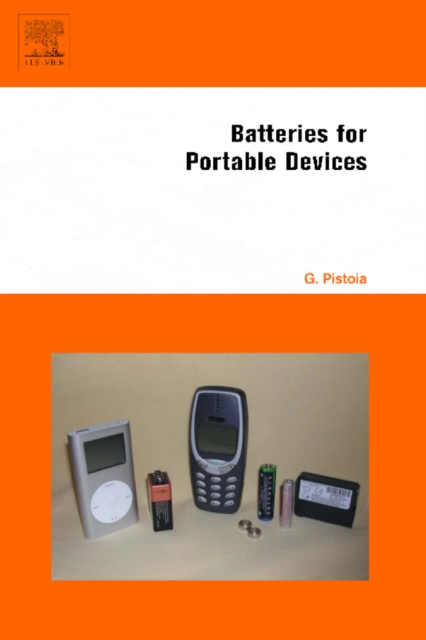
Batteries for Portable Devices provides a comprehensive overview of all batteries used in portable electric and electronic, as well as medical devices.
The generally accepted definitions of acids and bases together with the generalized definition for the solvent system introduced by the author for the description of both molecular and ionic solvents are discussed.