Atmospheric-pressure plasmas continue to attract considerable research interest due to their diverse applications, including high power lasers, opening switches, novel plasma processing applications and sputtering, EM absorbers and reflectors, remediation of gaseous pollutants, excimer lamps, and other noncoherent light sources.
This textbook treats Hydro- and Fluid Dynamics, the engineering science dealing with forces and energies generated by fluids in motion, playing a vital role in everyday life.
Beyond enabling new capabilities, plasma-based techniques, characterized by quantum radicals of feed gases, hold the potential to enhance and improve many processes and applications.
Physics of Continuous Matter: Exotic and Everyday Phenomena in the Macroscopic World, Second Edition provides an introduction to the basic ideas of continuum physics and their application to a wealth of macroscopic phenomena.
Computational Methods for Complex Liquid-Fluid Interfaces highlights key computational challenges involved in the two-way coupling of complex liquid-fluid interfaces.
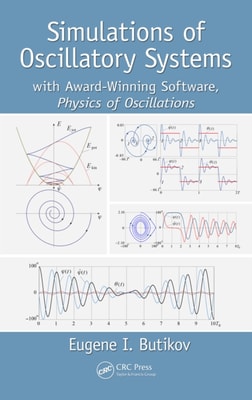
Deepen Your Students' Understanding of Oscillations through Interactive ExperimentsSimulations of Oscillatory Systems: with Award-Winning Software, Physics of Oscillations provides a hands-on way of visualizing and understanding the fundamental concepts of the physics of oscillations.
Extended and revised, Plasma Waves, 2nd Edition provides essential information on basic formulas and categorizes the various possible types of waves and their interactions.
Reflecting new developments in the study of Saint-Venant's problem, Classical and Generalized Models of Elastic Rods focuses on the deformation of elastic cylinders for three models of continuum: classical elastic continuum, Cosserat elastic body, and porous elastic material.
Assuming no prior knowledge of plasma physics or numerical methods, Computational Methods in Plasma Physics covers the computational mathematics and techniques needed to simulate magnetically confined plasmas in modern magnetic fusion experiments and future magnetic fusion reactors.
Fluid Dynamics via Examples and Solutions provides a substantial set of example problems and detailed model solutions covering various phenomena and effects in fluids.
Through its inclusion of specific applications, The Mathematical Theory of Elasticity, Second Edition continues to provide a bridge between the theory and applications of elasticity.
Physics: An Introduction to Physical Dynamics provides an accessible introduction to the fundamentals of physics for science and engineering undergraduates who are studying elementary physics.
Emphasizing a physical understanding with many illustrations, Introduction to the Physics of Highly Charged Ions covers the major areas of x-ray radiation and elementary atomic processes occurring with highly charged ions in hot laboratory and astrophysical plasmas.
Although the origin of Earth's and other celestial bodies' magnetic fields remains unknown, we do know that the motion of electrically conducting fluids generates and maintains these fields, forming the basis of magnetohydrodynamics (MHD) and, to a larger extent, dynamo theory.
Compared to the traditional modeling of computational fluid dynamics, direct numerical simulation (DNS) and large-eddy simulation (LES) provide a very detailed solution of the flow field by offering enhanced capability in predicting the unsteady features of the flow field.
Physics: An Introduction to Physical Dynamics provides an accessible introduction to the fundamentals of physics for science and engineering undergraduates who are studying elementary physics.
Exploring recent developments in continuum mechanics, Configurational Forces: Thermomechanics, Physics, Mathematics, and Numerics presents the general framework for configurational forces.
Modern petroleum and petrotechnical engineering is increasingly challenging due to the inherently scarce and decreasing number of global petroleum resources.
Resulting from ongoing, international research into fusion processes, the International Tokamak Experimental Reactor (ITER) is a major step in the quest for a new energy source.
The spectroscopy of highly charged ions plays a key role in numerous areas of physics, from quantum electrodynamics (QED) and parity nonconservation (PNC) testing to fusion and plasma physics to x-ray astronomy.
Filled with practical examples, Quasilinear Hyperbolic Systems, Compressible Flows, and Waves presents a self-contained discussion of quasilinear hyperbolic equations and systems with applications.
Application of Finite Element Analysis for Fracture and Damage Mechanics focuses on the finite element analysis of various material models and their relevant fracture and damage models using this advanced software.
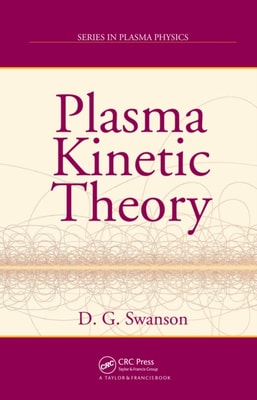
Developed from the lectures of a leading expert in plasma wave research, Plasma Kinetic Theory provides the essential material for an introductory course on plasma physics as well as the basis for a more advanced course on kinetic theory.
Engineering Dimensions, Units, and Conversions delves into the analysis and application of the dimensions, units, and unit conversions in engineering practical use.
Application of Finite Element Analysis for Fracture and Damage Mechanics focuses on the finite element analysis of various material models and their relevant fracture and damage models using this advanced software.
Journeying through fusion in the universe, Fusion: A Voyage Through the Plasma Universe discusses all aspects of fusion and how they relate to our universe.
In addition to introducing the basics of plasma physics, Nonthermal Plasma Chemistry and Physics is a comprehensive presentation of recent developments in the rapidly growing field of nonthermal plasma chemistry.
Following in the footsteps of its popular predecessors, High Power Microwaves, Fourth Edition continues to provide a wide-angle, integrated view of the field of high power microwaves (HPMs).
Expose Your Students to the Elegant World of Physics in an Enticing WayPhysics from Planet Earth - An Introduction to Mechanics provides a one-semester, calculus-based introduction to classical mechanics for first-year undergraduate students studying physics, chemistry, astronomy, or engineering.
The Science of Fluid Mechanics: Applications in Water and Wastewater Operations examines the intricacies of hydrology and hydraulic systems within the context of water and wastewater management.
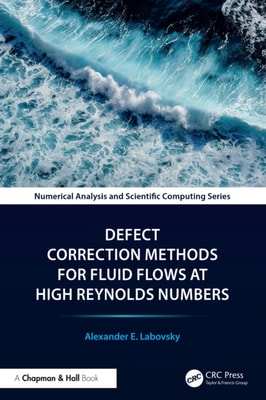
Defect Correction Methods for Fluid Flows at High Reynold's Numbers presents the mathematical development of defect correction methods (DCM) in application to fluid flow problems in various settings.
The second edition of Reverse Engineering of Algebraic Inequalities is a comprehensively updated new edition demonstrating the exploration of new physical realities in various unrelated domains of human activity through reverse engineering of algebraic inequalities.
More than 850 individuals partly forgotten by name, but sometimes found in historical writings, together with many well known or recently deceased persons are presented in terms of bio-data, short career highlights, and main advances made to the profession with a short biography of the main writings.
The second edition of Reverse Engineering of Algebraic Inequalities is a comprehensively updated new edition demonstrating the exploration of new physical realities in various unrelated domains of human activity through reverse engineering of algebraic inequalities.