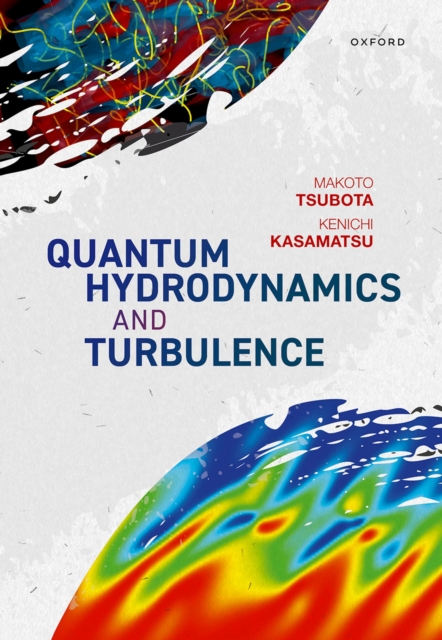
Quantum Hydrodynamics and Turbulence is an essential textbook for graduate students and scientists exploring the intricate physics of superfluid helium and atomic Bose-Einstein condensates (BECs).
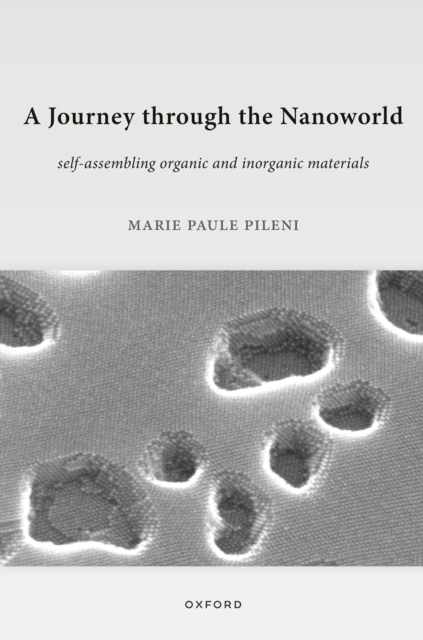
Nanomaterials have been part of our world for centuries, although it is only in the last thirty years that we have come to understand that the color of nanomaterials, for example, is tied directly to their size, opening up a new realm of discovery.
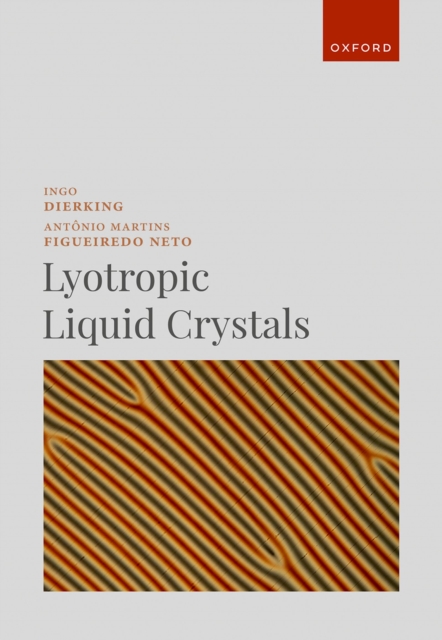
This book aims to review the field of lyotropic liquid crystals from amphiphilic to colloidal systems, bridging the gap between the two worlds of lyotropics and thermotropics by showing that many of the features observed in standard thermotropic liquid crystals may also be observed in lyotropic systems and vice versa.
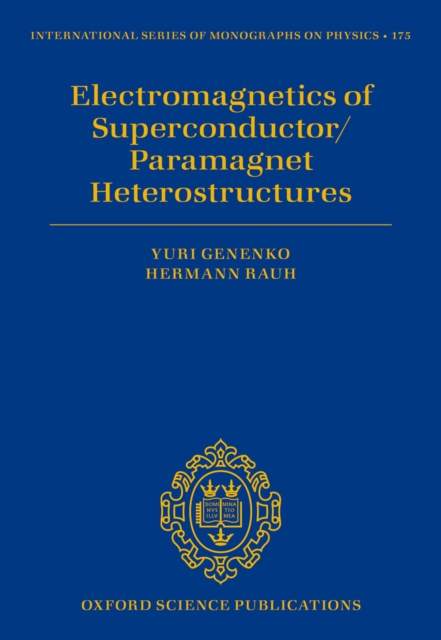
Conditioning of magnetic fields is a novel route to improve type-II superconductor performance in high-current and high-field applications directed at increasing the current-carrying capability and the critical fields of superconductor/paramagnet heterostructures, as well as reducing their hysteretic AC loss.
Atomistic computer simulations are often at the heart of modern attempts to predict and understand the physical properties of real materials, including the vast domain of metals and alloys.
Written by an experimentalist famous for his discovery of stishovite, with vast experience in phase transition studies, this book is devoted to a description of the continuous and discontinuous phase transitions.
Soft matters differ from hard ones essentially due to former's relatively weak interaction which is comparable to kBTrm (Trm = room temperature) - this results in the major characteristics of soft matters such as 'strong reactions upon weak actions'.
Soft matters differ from hard ones essentially due to former's relatively weak interaction which is comparable to kBTrm (Trm = room temperature) - this results in the major characteristics of soft matters such as 'strong reactions upon weak actions'.
Written by an experimentalist famous for his discovery of stishovite, with vast experience in phase transition studies, this book is devoted to a description of the continuous and discontinuous phase transitions.
This book provides a comprehensive overview of the synthesis, properties, and multifunctional applications of g-C3N4, with a strong emphasis on its role in solving critical global challenges.
This book provides a comprehensive exploration of the fundamental principles of thermodynamics and kinetics in materials science, offering a balanced integration of theoretical frameworks, computational methodologies, and real-world applications.
This book provides a comprehensive exploration of the fundamental principles of thermodynamics and kinetics in materials science, offering a balanced integration of theoretical frameworks, computational methodologies, and real-world applications.
This book provides a comprehensive overview of the synthesis, properties, and multifunctional applications of g-C3N4, with a strong emphasis on its role in solving critical global challenges.
This book offers a comprehensive examination of organic thermoelectric conversion and thermocell technologies-two pioneering methods for converting low-temperature waste heat into viable electrical energy.
This book offers a comprehensive examination of organic thermoelectric conversion and thermocell technologies-two pioneering methods for converting low-temperature waste heat into viable electrical energy.
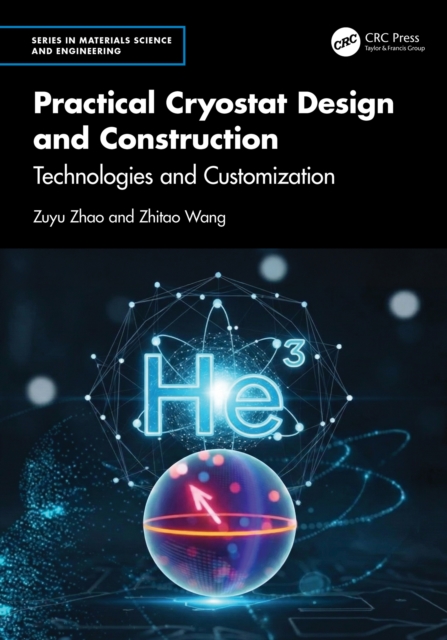
Practical Cryostat Design and Construction: Technologies and Customization introduces the innovative work being done across experiments and applications at cryogenic temperatures.
Random inhomogeneous media may possess unique physical properties that are significantly enhanced and may attain a level of practical importance and versatility that rivals or surpasses their geometrically ordered counterparts.
Recently, the field of quantum computation and information has been developing through a fusion of results from various research fields in theoretical and practical areas.
This book offers a comprehensive and tutorial-based exploration of semiconductor physics, combining the fundamentals of traditional (semiclassical) theory with the latest quantum approaches used to study semiconductor nanostructures.
This book offers a comprehensive and tutorial-based exploration of semiconductor physics, combining the fundamentals of traditional (semiclassical) theory with the latest quantum approaches used to study semiconductor nanostructures.
This thesis focuses on the construction and application of an electron radiation belt kinetic model including various adiabatic and non-adiabatic processes.
Applications of synchrotron radiation in physics, chemistry, materials science, and biology has now matured from an exotic experimental field into a well-established area of science.
This book provides the building blocks for continued exploration of quantum optics in previously inaccessible regimes and more complex simulations of natural phenomena at the quantum frontier.
This book combines the perspectives of materials science of Superplasticity, on the one hand, and those of design and mechanics, on the other, in order to provide a holistic view of materials, design, mechanics and performance which will lead to useful solutions of societal benefits, in addition to providing great intellectual challenges.
This book combines the perspectives of materials science of Superplasticity, on the one hand, and those of design and mechanics, on the other, in order to provide a holistic view of materials, design, mechanics and performance which will lead to useful solutions of societal benefits, in addition to providing great intellectual challenges.
The express purpose of these lecture notes is to go through some aspects of the simplicial quantum gravity model known as the dynamical triangula- tions approach.
This book comprehensively introduces the multiferroic and magnetoelectric materials, details the structural aspect and majorly focuses on the applicability part of the newly emerging non-toxic magnetoelectric and multiferroic materials, green synthesis techniques and energy harvesting applications.