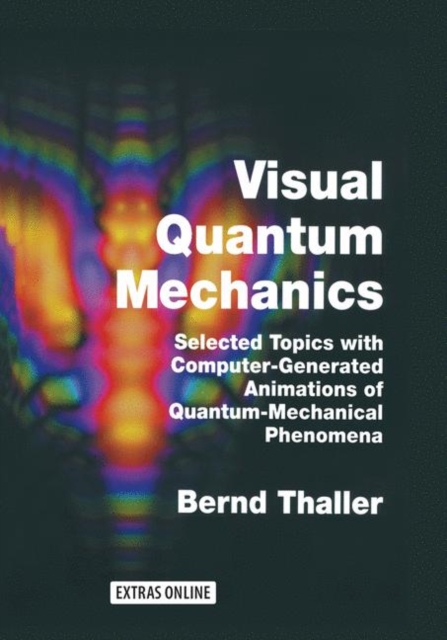
In the strange world of quantum mechanics the application of visualization techniques is particularly rewarding, for it allows us to depict phenomena that cannot be seen by any other means.
Nonlocal continuum field theories are concerned with material bodies whose behavior at any interior point depends on the state of all other points in the body -- rather than only on an effective field resulting from these points -- in addition to its own state and the state of some calculable external field.
Mechanical engineering, an engineering discipline borne of the needs of the industrial revolution, is once again asked to do its substantial share in the call for industrial renewal.
Intended for advanced students of physics, chemistry, and related disciplines, this text treats the quantum theory of atoms and ions within the framework of self-consistent fields.
Although it has long been possible to make organic materials emit light, it has only recently become possible to do so at the level and with the efficiency and control necessary to make the materials a useful basis for illumination in any but the most specialized uses.
Focusing on the purely theoretical aspects of strongly correlated electrons, this volume brings together a variety of approaches to models of the Hubbard type - i.
The 2nd edition emphasizes two areas not emphasized in the 1st edition: 1) high-temperature superconductor (HTS) magnets; 2) NMR (nuclear magnetic resonance) and MRI (magnetic resonance imaging) magnets.
Objects that differ from their mirror images, such as the left and right hands, play an important role in physics at all lengths scales, from elementary particles to macroscopic systems.
Solid State Physics, Volume 73, the latest release in this serial that highlights new advances in the field, presents interesting chapters on a variety of current topics in the field, with each chapter written by an international board of authors.
Solid State Physics, Volume 72, the latest release in this long-running serial, highlights new advances in the field with this new volume presenting interesting and timely chapters authored by an international board of experts.
Topological Insulator and Related Topics, Volume 108 in the Semiconductors and Semimental series, highlights new advances in the field, with this new volume presenting interesting chapters on topics such as Majorana modes at the ends of one dimensional topological superconductors, Optical/electronic properties of Weyl semimetals, High magnetic fields to unveil the electronic structure, magnetic field-induced transitions, and unconventional transport properties of topological semimetals, New aspects of strongly correlated superconductivity in the nearly flat-band regime, Anomalous transport properties in topological semimetals, Pseudo-gauge field and piezo-electromagnetic response in topological materials, Topological Gapped States Protected by Spatial Symmetries, and more.
Electron Dynamics of Diode Regions describes the model construction and analysis of motion of charged particles of diode regions in time-varying fields.
Introduction to Superconductivity differs from the first edition chiefly in Chapter 11, which has been almost completely rewritten to give a more physically-based picture of the effects arising from the long-range coherence of the electron-waves in superconductors and the operation of quantum interference devices.
Electronics in Solids: An Introductory Survey presents a modern picture of electrons in solids using wave properties as the integrating theme of the conceptual background.
Thin Films from Free Atoms and Particles is an eight-chapter text that describes the primary reaction modes of atoms or coordination-deficient particles.
Quantum Theory of the Solid State, Part A, describes the concepts and methods, and introduces some of the central problems of the quantum theory of solids.
Physical Acoustics: Principles and Methods, Volume IV, Part B: Applications to Quantum and Solid State Physics provides an introduction to the various applications of quantum mechanics to acoustics by describing several processes for which such considerations are essential.
Superionic Solids and Solid Electrolytes: Recent Trends describes the fundamental aspects, unique properties, and potential applications of superionic solids and solid electrolytes.
Quantum Theory of the Solid State, Student Edition, describes the concepts and methods, and introduces some of the central problems of the quantum theory of solids.
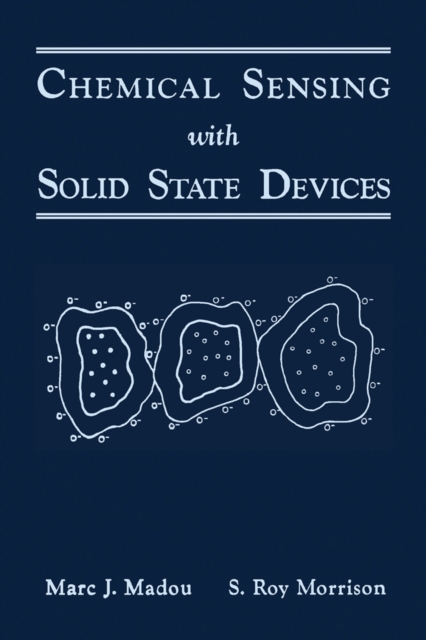
This book is a lucid presentation for chemists, electrical engineers, surface scientists, and solid-state physicists, of the fundamentals underlying the construction of simple and small chemical sensors.
The energetics and mechanisms of diffusion control the kinetics of such diverse phenomena as the fabrication of semiconductors and superconductors, the tempering of steel, geological metamorphism, the precipitation hardening of nonferrous alloys and corrosion of metals and alloys.
Macromolecular Engineering: Design, Synthesis and Application of Polymers explores the role of macromolecular engineering in the development of polymer systems with engineered structures that offer the desired combination of properties for advanced applications.
'If you wish to make an apple pie from scratch, you must first invent the universe' - Carl SaganInspired by Sagan's famous line, How To Make An Apple Pie From Scratch sets out on a journey to unearth everything we know about our universe: how it started, how we found out, and what we still have left to discover .
Since its inception in 1966, the series of numbered volumes known as Semiconductors and Semimetals has distinguished itself through the careful selection of well-known authors, editors, and contributors.
This multi-contributor handbook discusses Molecular Beam Epitaxy (MBE), an epitaxial deposition technique which involves laying down layers of materials with atomic thicknesses on to substrates.
Statistical Thermodynamics of Semiconductor Alloys is the consideration of thermodynamic properties and characteristics of crystalline semiconductor alloys by the methods of statistical thermodynamics.
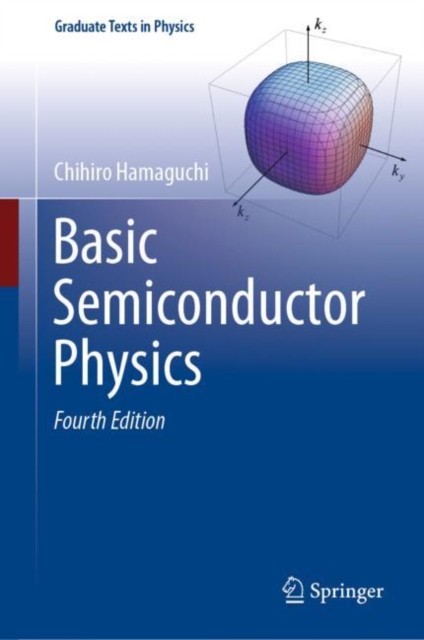
This textbook presents a detailed description of basic semiconductor physics, covering a wide range of important phenomena in semiconductors, from simple to advanced.
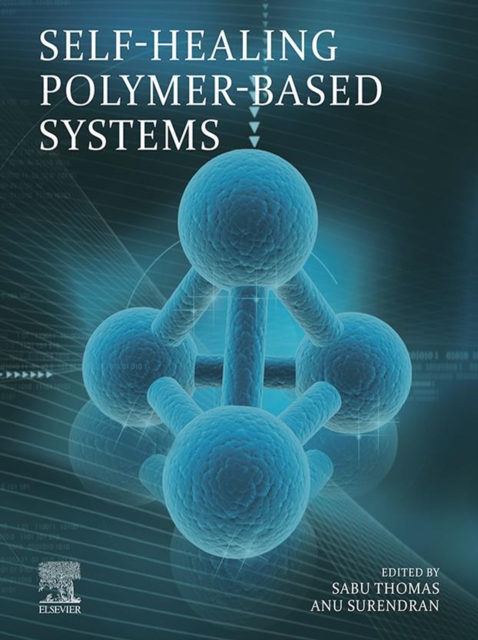
Self-Healing Polymer-Based Systems presents all aspects of self-healing polymeric materials, offering detailed information on fundamentals, preparation methods, technology, and applications, and drawing on the latest state-of-the-art research.
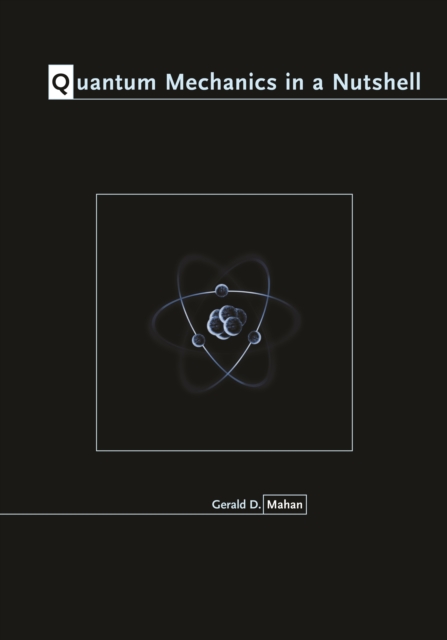
Covering the fundamentals as well as many special topics of current interest, this is the most concise, up-to-date, and accessible graduate-level textbook on quantum mechanics available.
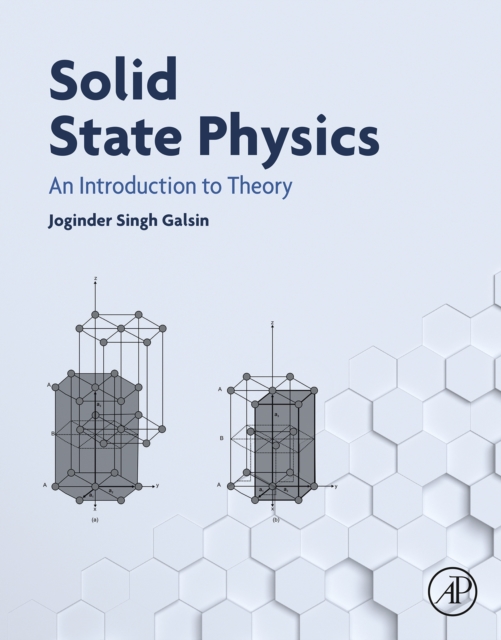
Keeping the mathematics to a minimum yet losing none of the required rigor, Understanding Solid State Physics, Second Edition clearly explains basic physics principles to provide a firm grounding in the subject.
Unifying Physics of Accelerators, Lasers and Plasma introduces the physics of accelerators, lasers and plasma in tandem with the industrial methodology of inventiveness, a technique that teaches that similar problems and solutions appear again and again in seemingly dissimilar disciplines.