Published in 1974: The CRC Handbook of Materials Science provides a current and readily accessible guide to the physical properties of solid state and structural materials.
Published in 1974: The CRC Handbook of Materials Science provides a current and readily accessible guide to the physical properties of solid state and structural materials.
The application of field theoretic techniques to problems in condensed matter physics has generated an array of concepts and mathematical techniques to attack a range of problems such as the theory of quantum phase transitions, the quantum Hall effect, and quantum wires.
Microscopic Dynamics of Plasmas and Chaos discusses the resonant wave-particle interaction in plasmas, provides the tools for chaotic Hamiltonian dynamics, and describes a turbulent macroscopic system through the chaotic classical mechanics of the corresponding N-body problem.
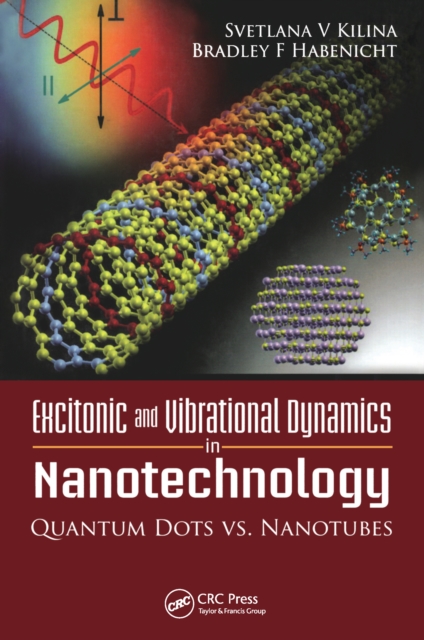
The book investigates QDs and SWCNTs using quantum-chemical calculations that describe intricate details of excited-state phenomena and provides information about the mechanisms that occur on the atomic level and that are extremely difficult, if not impossible, to probe experimentally.
This book, the first of this kind, provides a comprehensive introduction to ultrafast phenomena, covering the fundamentals of ultrafast spin and charge dynamics, femtosecond magnetism, all-optical spin switching, and high-harmonic generation.
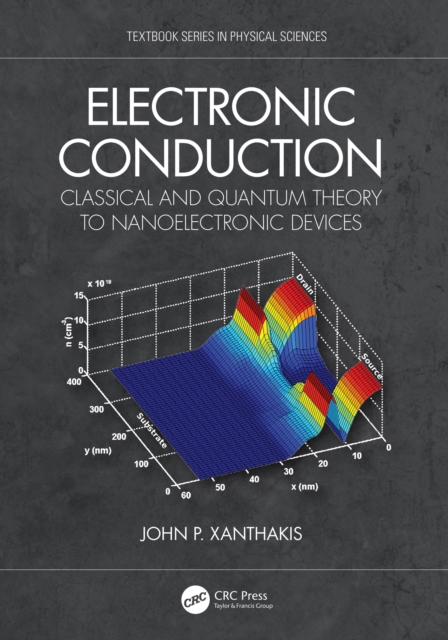
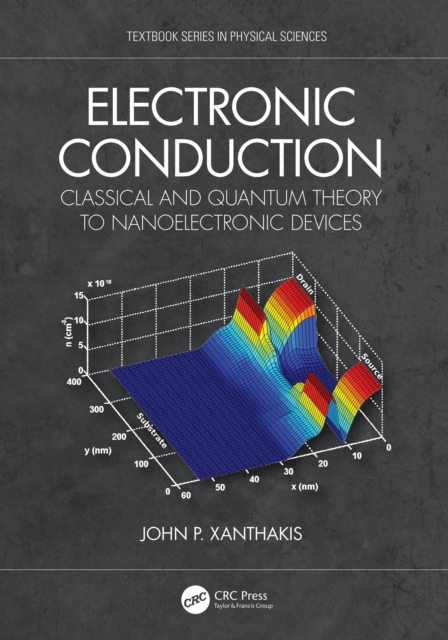
Electronic Conduction: Classical and Quantum Theory to Nanoelectronic Devices provides a concise, complete introduction to the fundamental principles of electronic conduction in microelectronic and nanoelectronic devices, with an emphasis on integrating the quantum aspects of conduction.
Electronic Conduction: Classical and Quantum Theory to Nanoelectronic Devices provides a concise, complete introduction to the fundamental principles of electronic conduction in microelectronic and nanoelectronic devices, with an emphasis on integrating the quantum aspects of conduction.
Fundamentals of Solid State Engineering, 3rd Edition, provides a multi-disciplinary introduction to solid state engineering, combining concepts from physics, chemistry, electrical engineering, materials science and mechanical engineering.
Scanning electr on microscopy (SEM) and x-ray microanalysis can produce magnified images and in situ chemical information from virtually any type of specimen.
Major superconducting properties including zero resistance, Meissner effect, sharp phase change, flux quantization, excitation energy gap, Josephson effects are covered and microscopically explained, using quantum statistical mechanical calculations.
Neutron Imaging and Applications offers an introduction to the basics of neutron beam production in addition to the wide scope of techniques that enhance imaging application capabilities.
Recent developments in the technology of silicon nanocrystals and silicon nanostructures, where quantum-size effects are important, are systematically described including examples of device applications.
Most conventional cryogenic refrigerators and liquefiers operate with pure fluids, the major exception being natural gas liquefiers that use mixed refrigerant processes.
Piezoelectric and Acoustic Materials for Transducer Applications combines discussion of the physical properties of piezoelectric and acoustic materials, with the fundamentals, design principles and fabrication methods, and their application in transducers.
Over the past decade, important advances have been made in the development of nanostructured materials for solid state hydrogen storage used to supply hydrogen to fuel cells in a clean, inexpensive, safe and efficient manner.
Flexible-electronics is rapidly finding many main-stream applications where low-cost, ruggedness, light weight, unconventional form factors and ease of manufacturability are just some of the important advantages over their conventional rigid-substrate counterparts.
One-dimensional (1D) nanostructures, including nanowires, nanotubes and quantum wires, have been regarded as the most promising building blocks for nanoscale electronic and optoelectronic devices.
Ceramic and Glass Materials: Structure, Properties and Processing is a concise and comprehensive guide to the key ceramic and glass materials used in modern technology.
A contemporary book devoted to the topic of transparent electronics would likely employ one of two formats - a monograph or an edited, mul- contributor compilation.
Since the 1980s, a general theme in the study of high-temperature superconductors has been to test the BCS theory and its predictions against new data.
OBJECTIVES The primary purpose of this book is to convey insight into why semiconductors are the way they are, either because of how their atoms bond with one another, because of mistakes in their structure, or because of how they are produced or processed.
In recent years, classical computability has expanded beyond its original scope to address issues related to computability and complexity in algebra, analysis, and physics.