The energetics and mechanisms of diffusion control the kinetics of such diverse phenomena as the fabrication of semiconductors and superconductors, the tempering of steel, geological metamorphism, the precipitation hardening of nonferrous alloys and corrosion of metals and alloys.
Macromolecular Engineering: Design, Synthesis and Application of Polymers explores the role of macromolecular engineering in the development of polymer systems with engineered structures that offer the desired combination of properties for advanced applications.
'If you wish to make an apple pie from scratch, you must first invent the universe' - Carl SaganInspired by Sagan's famous line, How To Make An Apple Pie From Scratch sets out on a journey to unearth everything we know about our universe: how it started, how we found out, and what we still have left to discover .
Since its inception in 1966, the series of numbered volumes known as Semiconductors and Semimetals has distinguished itself through the careful selection of well-known authors, editors, and contributors.
This multi-contributor handbook discusses Molecular Beam Epitaxy (MBE), an epitaxial deposition technique which involves laying down layers of materials with atomic thicknesses on to substrates.
Statistical Thermodynamics of Semiconductor Alloys is the consideration of thermodynamic properties and characteristics of crystalline semiconductor alloys by the methods of statistical thermodynamics.
This textbook presents a detailed description of basic semiconductor physics, covering a wide range of important phenomena in semiconductors, from simple to advanced.
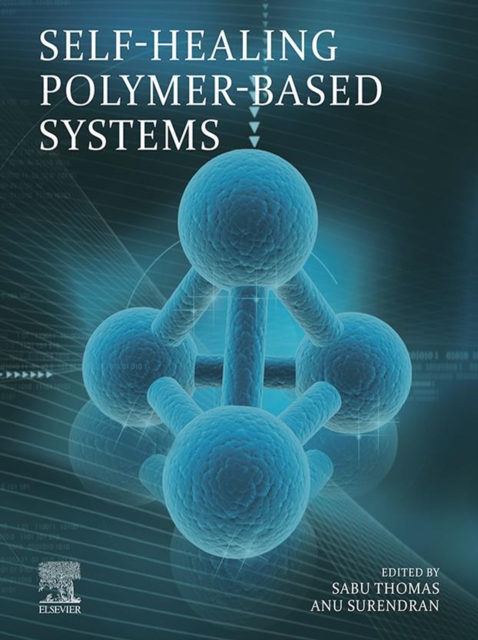
Self-Healing Polymer-Based Systems presents all aspects of self-healing polymeric materials, offering detailed information on fundamentals, preparation methods, technology, and applications, and drawing on the latest state-of-the-art research.
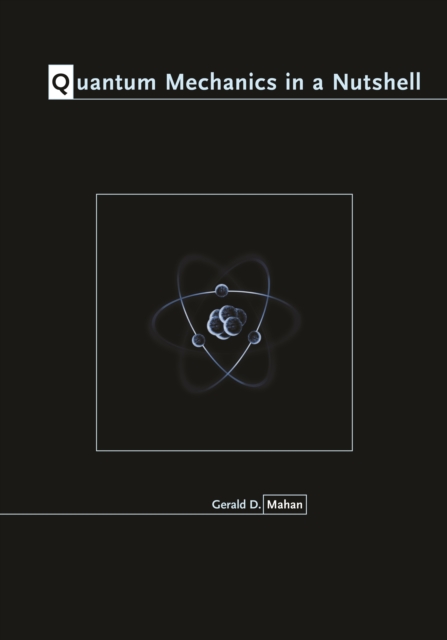
Covering the fundamentals as well as many special topics of current interest, this is the most concise, up-to-date, and accessible graduate-level textbook on quantum mechanics available.
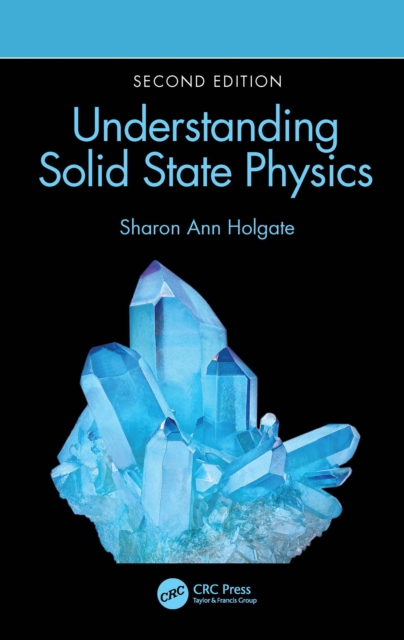
Keeping the mathematics to a minimum yet losing none of the required rigor, Understanding Solid State Physics, Second Edition clearly explains basic physics principles to provide a firm grounding in the subject.
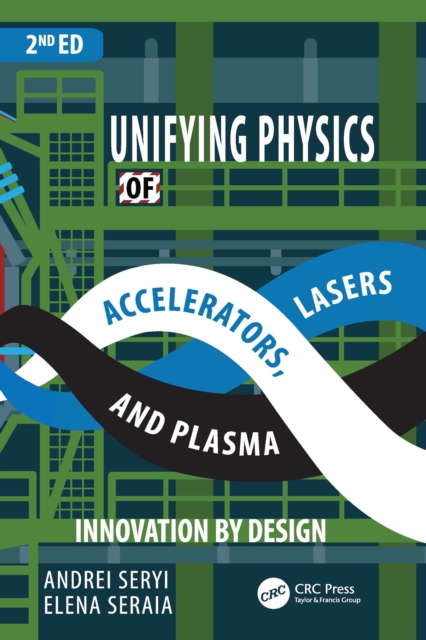
Unifying Physics of Accelerators, Lasers and Plasma introduces the physics of accelerators, lasers and plasma in tandem with the industrial methodology of inventiveness, a technique that teaches that similar problems and solutions appear again and again in seemingly dissimilar disciplines.
Despite a long history of almost 180 years stretching back to the times of Carnot and, later, Clausius and Lord Kelvin, amongst others following him, the subject of thermodynamics has not as yet seen its full maturity, in the sense that the theory of irreversible processes has remained incomplete.
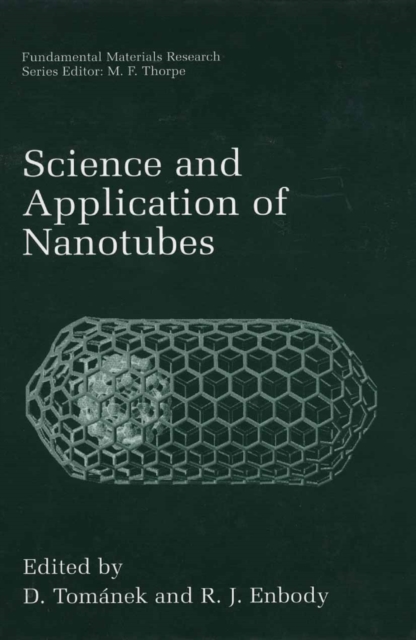
Nanostructures refer to materials that have relevant dimensions on the nanometer length scales and reside in the mesoscopic regime between isolated atoms and molecules in bulk matter.
It may be argued that silicon, carbon, hydrogen, oxygen, and iron are among the most important elements on our planet, because of their involvement in geological, biol- ical, and technological processes and phenomena.
The last two years have witnessed a continuation in the breakthrough shift toward pulse tube cryocoolers for long-life, high-reliability cryocooler applications.
In order to equip hopeful graduate students with the knowledge necessary to pass the qualifying examination, the authors have assembled and solved standard and original problems from major American universities - Boston University, University of Chicago, University of Colorado at Boulder, Columbia, University of Maryland, University of Michigan, Michigan State, Michigan Tech, MIT, Princeton, Rutgers, Stanford, Stony Brook, University of Tennessee at Knoxville, and the University of Wisconsin at Madison - and Moscow Institute of Physics and Technology.
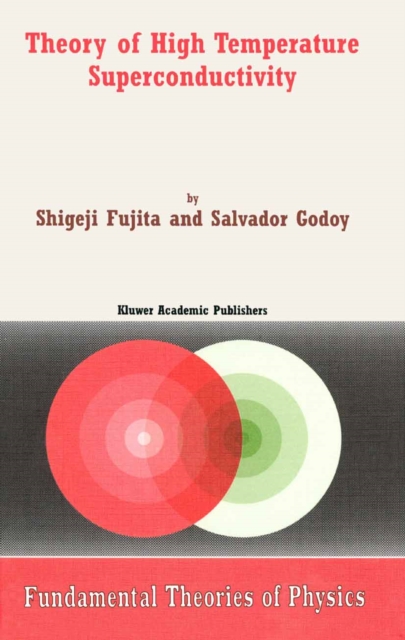
Flux quantization experiments indicate that the carriers, Cooper pairs (pairons), in the supercurrent have charge magnitude 2e, and that they move independently.
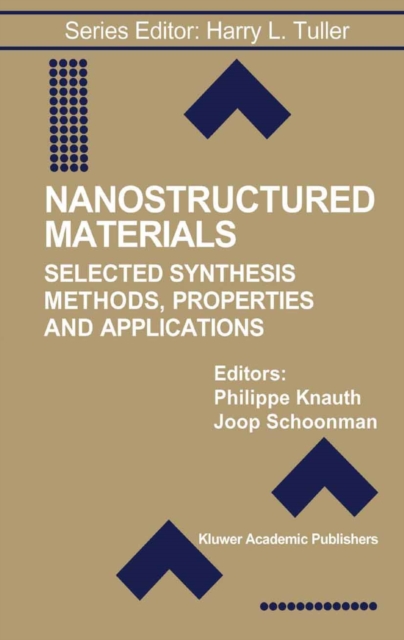
Nanostructured Materials: Selected Synthesis Methods, Properties and Applications presents several important recent advances in synthesis methods for nanostructured materials and processing of nano-objects into macroscopic samples, such as nanocrystalline ceramics.
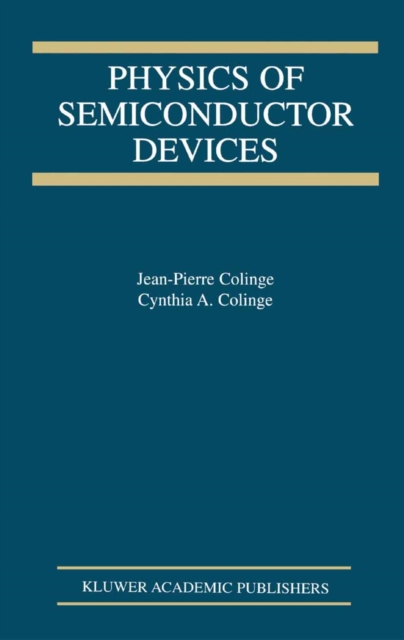
Physics of Semiconductor Devices covers both basic classic topics such as energy band theory and the gradual-channel model of the MOSFET as well as advanced concepts and devices such as MOSFET short-channel effects, low-dimensional devices and single-electron transistors.
This volume is the outgrowth of a workshop held in October, 2000 at the Institute for Theoretical Atomic and Molecular Physics at the Harvard- Smithsonian Center for Astrophysics in Cambridge, MA.
The effect of reduced dimensionality, inherent at the crystallographic level, on the electronic properties of low dimensional materials can be dramatic, leading to structural and electronic instabilities-including supercond- tivity at high temperatures, charge density waves, and localisation-which continue to attract widespread interest.
Cyclic Polymers (Second Edition) reviews the many recent advances in this rapidly expanding subject since the publication of the first edition in 1986.
Over the last two years we have witnessed a continuation in the breakthrough shift toward pulse tube cryocoolers for long-life, high-reliability cryocooler applications.
Oaxaca, Mexico, was the place chosen by a large international group of scientists to meet and discuss on the recent advances on the understanding of the physical prop- ties of low dimensional systems; one of the most active fields of research in condensed matter in the last years.
Cryocoolers 10 is the premier archival publication of the latest advances and performance of small cryogenic refrigerators designed to provide localized cooling for military, space, semi-conductor, medical, computing, and high-temperature superconductor cryogenic applications in the 2-200 K temperature range.
Although rigidity has been studied since the time of Lagrange (1788) and Maxwell (1864), it is only in the last twenty-five years that it has begun to find applications in the basic sciences.